THE ADVENTURE COLLECTIVE® · Independent discovery and booking for outdoor travel

Head into the Arctic dark with a photographer-guide who chases clear skies and teaches night photography techniques. This guided minivan tour balances local weather know-how, warm breaks, and hands-on camera coaching to boost your chances of photographing the Northern Lights.
Head into the Arctic dark with a photographer-guide who chases clear skies and teaches night photography techniques. This guided minivan tour balances local weather know-how, warm breaks, and hands-on camera coaching to boost your chances of photographing the Northern Lights.
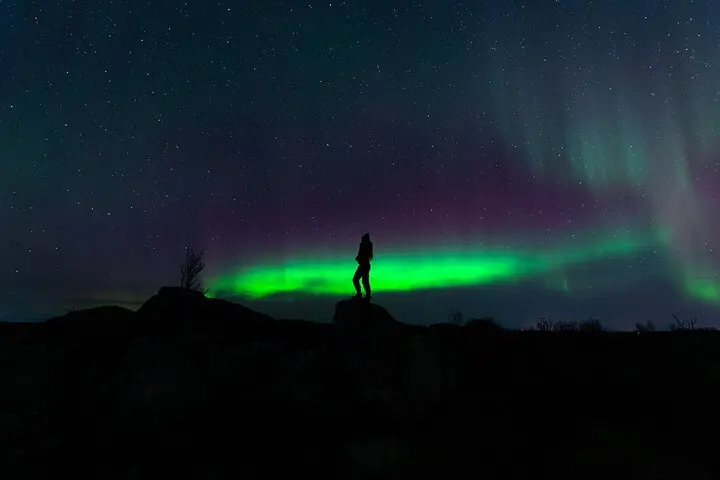
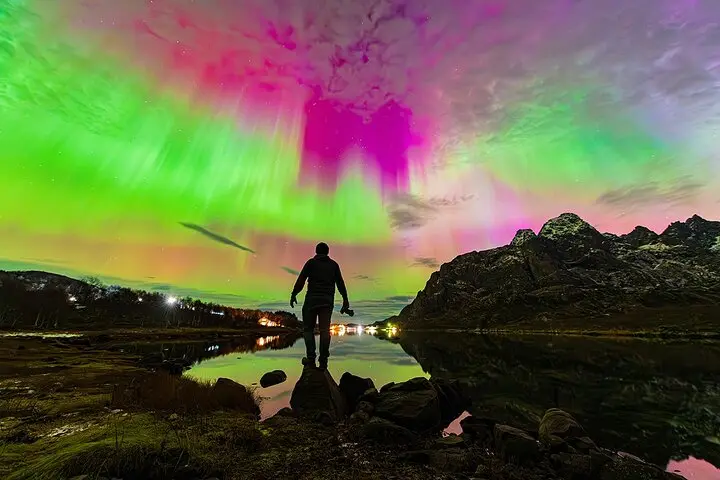
The van pulls away from Svolvær under a thin, cold sky, headlights carving a path between black peaks. Salt-slick fjords flash past, and the guide scans weather models while passengers sip hot coffee, waiting for the sky to decide. Out here the aurora is an active partner—sometimes coy, sometimes explosive—painting the night in slow, breathing curtains of green and violet.
Verified experiences and guided adventures in the surrounding area.
Operated by Lofoten Insight · Svolvær, Nordland
The van pulls away from Svolvær under a thin, cold sky, headlights carving a path between black peaks. Salt-slick fjords flash past, and the guide scans weather models while passengers sip hot coffee, waiting for the sky to decide. Out here the aurora is an active partner—sometimes coy, sometimes explosive—painting the night in slow, breathing curtains of green and violet.
Lofoten’s islands are geologically young in appearance and ancient in origin: jagged gabbro and granite carved by glaciers during the last Ice Age. Fishing villages like Svolvær bear a pragmatic coastal culture shaped by cod, storms, and long winter nights—the same conditions that make this archipelago a prime aurora stage. Local folklore treats the northern lights as omens and storytellers; modern guides add a layer of science and camera technique to the narrative.
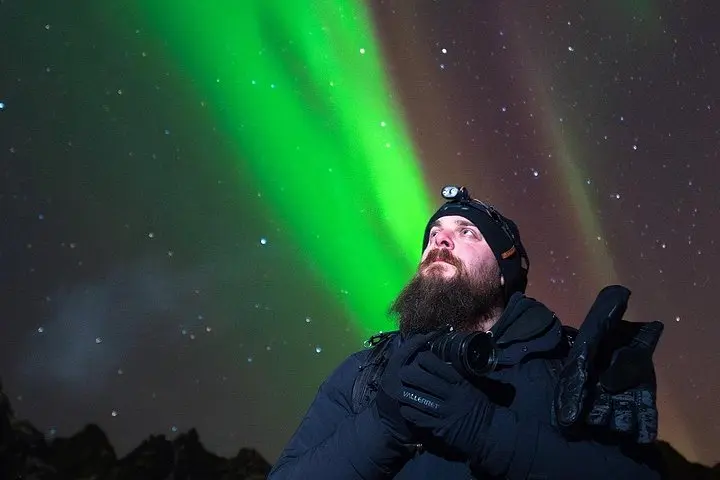
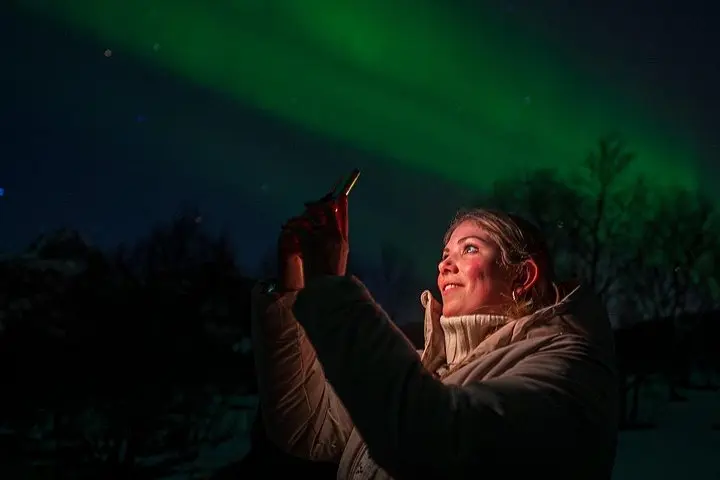
Expect guided stops away from artificial light, short walks across gravel or snow depending on conditions, and a heated minivan between locations. The guide will explain solar activity, camera settings, and framing for portraits beneath the lights. Dress for stillness—standing or crouching for long exposures is part of the program.
Practical tips: plan for 3–5 hours, bring a tripod and fully charged batteries, and allow time after the tour to warm up and review images. While nothing can guarantee an aurora sighting, this style of guided chase increases the odds by combining local weather knowledge, flexible routing, and photography coaching—turning a cold Arctic night into a focused, unforgettable field lesson in light and sky.
Peak visibility runs from late September to early April when nights are longest and skies are dark; clear, cold nights offer the best chances.
No tour can guarantee the aurora—visibility depends on solar activity and local weather—but guides use regional forecasts and flexible routing to improve odds.
No—this tour is suitable for all skill levels; the guide provides basic camera settings and composition tips, though bringing a camera with manual controls is recommended.
Night temperatures can drop below freezing; wear moisture-wicking base layers, insulating mid-layers, a windproof outer shell, warm gloves, and insulated boots.
Lofoten Insight operates guided outdoor trips and adventures with an emphasis on safety, stewardship, and memorable experiences.
The van pulls away from Svolvær under a thin, cold sky, headlights carving a path between black peaks. Salt-slick fjords flash past, and the guide scans weather models while passengers sip hot coffee, waiting for the sky to decide. Out here the aurora is an active partner—sometimes coy, sometimes explosive—painting the night in slow, breathing curtains of green and violet.
The van pulls away from Svolvær under a thin, cold sky, headlights carving a path between black peaks. Salt-slick fjords flash past, and the guide scans weather models while passengers sip hot coffee, waiting for the sky to decide. Out here the aurora is an active partner—sometimes coy, sometimes explosive—painting the night in slow, breathing curtains of green and violet.
Lofoten’s islands are geologically young in appearance and ancient in origin: jagged gabbro and granite carved by glaciers during the last Ice Age. Fishing villages like Svolvær bear a pragmatic coastal culture shaped by cod, storms, and long winter nights—the same conditions that make this archipelago a prime aurora stage. Local folklore treats the northern lights as omens and storytellers; modern guides add a layer of science and camera technique to the narrative.
Expect guided stops away from artificial light, short walks across gravel or snow depending on conditions, and a heated minivan between locations. The guide will explain solar activity, camera settings, and framing for portraits beneath the lights. Dress for stillness—standing or crouching for long exposures is part of the program.
Practical tips: plan for 3–5 hours, bring a tripod and fully charged batteries, and allow time after the tour to warm up and review images. While nothing can guarantee an aurora sighting, this style of guided chase increases the odds by combining local weather knowledge, flexible routing, and photography coaching—turning a cold Arctic night into a focused, unforgettable field lesson in light and sky.