THE ADVENTURE COLLECTIVE® · Independent discovery and booking for outdoor travel

Follow a time‑travel storyline through the City of London, solving 15 location-based puzzles from St Katharine Docks to the Monument. This mobile-driven walking game blends local history with hands-on challenges and is suitable for families and casual explorers.
Follow a time‑travel storyline through the City of London, solving 15 location-based puzzles from St Katharine Docks to the Monument. This mobile-driven walking game blends local history with hands-on challenges and is suitable for families and casual explorers.
You step out of the present and into a London that remembers its dead: cobbled alleys, the hush at the City’s edge and the Thames pulling close like a watchful neighbor. The tour begins at St Katharine Docks, where your first clue arrives on your phone and a 17th-century plague doctor’s plea sets you moving through lanes that still carry echoes of 1665.
Verified experiences and guided adventures in the surrounding area.
Operated by Questo · London, England
You step out of the present and into a London that remembers its dead: cobbled alleys, the hush at the City’s edge and the Thames pulling close like a watchful neighbor. The tour begins at St Katharine Docks, where your first clue arrives on your phone and a 17th-century plague doctor’s plea sets you moving through lanes that still carry echoes of 1665.
This walk threads history and urban fabric — from merchants’ inns and the Jamaica Wine House to the carved plague doctor and Samuel Pepys’s bust. The Great Plague of 1665 devastated a city without modern medicine; this experience uses location-based puzzles to illuminate how people responded, where bodies were buried, and how public health slowly evolved. Geology and city planning play supporting roles: narrow medieval streets funnel sound and crowds, while the Thames determined where markets, docks, and contagion converged.
Expect a hands-on, story-driven game: 15 real-world challenges, mobile access codes, and the freedom to pause and explore. The pace is gentle — mostly flat pavement and short staircases — suitable for families and casual walkers. Bring a charged phone, comfortable shoes, and an eye for carved plaques and quiet churchyards.
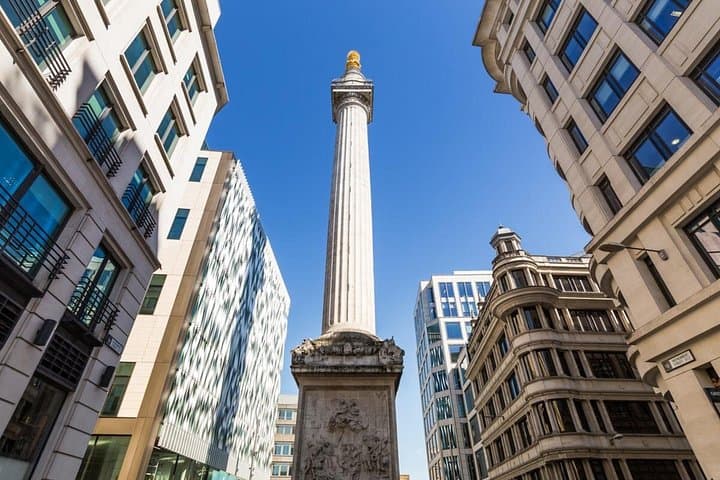
Practical tips: avoid peak commute hours if you prefer quieter clues, allow 70–100 minutes, and use public transport to reach the start. The route finishes at the Monument to the Great Fire, where the narrative and your investigation close together — a neat civic punctuation to a walk that mixes forensic curiosity with urban history.
Plan for 70–100 minutes depending on how long you pause at clues and local sites; you can pause and resume at any point.
Yes — the experience is family-friendly and physically easy, though younger kids may need help with some puzzles.
No — the tour uses a mobile access code delivered at booking, but you can use a printed copy if preferred.
Most of the route is on paved streets; there are some short staircases and uneven stones — stroller access is possible in many parts but check specific points if mobility is a concern.
Questo operates guided outdoor trips and adventures with an emphasis on safety, stewardship, and memorable experiences.


You step out of the present and into a London that remembers its dead: cobbled alleys, the hush at the City’s edge and the Thames pulling close like a watchful neighbor. The tour begins at St Katharine Docks, where your first clue arrives on your phone and a 17th-century plague doctor’s plea sets you moving through lanes that still carry echoes of 1665.
You step out of the present and into a London that remembers its dead: cobbled alleys, the hush at the City’s edge and the Thames pulling close like a watchful neighbor. The tour begins at St Katharine Docks, where your first clue arrives on your phone and a 17th-century plague doctor’s plea sets you moving through lanes that still carry echoes of 1665.
This walk threads history and urban fabric — from merchants’ inns and the Jamaica Wine House to the carved plague doctor and Samuel Pepys’s bust. The Great Plague of 1665 devastated a city without modern medicine; this experience uses location-based puzzles to illuminate how people responded, where bodies were buried, and how public health slowly evolved. Geology and city planning play supporting roles: narrow medieval streets funnel sound and crowds, while the Thames determined where markets, docks, and contagion converged.
Expect a hands-on, story-driven game: 15 real-world challenges, mobile access codes, and the freedom to pause and explore. The pace is gentle — mostly flat pavement and short staircases — suitable for families and casual walkers. Bring a charged phone, comfortable shoes, and an eye for carved plaques and quiet churchyards.
Practical tips: avoid peak commute hours if you prefer quieter clues, allow 70–100 minutes, and use public transport to reach the start. The route finishes at the Monument to the Great Fire, where the narrative and your investigation close together — a neat civic punctuation to a walk that mixes forensic curiosity with urban history.