THE ADVENTURE COLLECTIVE® · Independent discovery and booking for outdoor travel

Walk through South Africa’s justice history on a guided day tour that links the Constitutional Court precinct with the Apartheid Museum. Expect guided storytelling, architecture that holds memory, and 5–8 hours of immersive learning.
Walk through South Africa’s justice history on a guided day tour that links the Constitutional Court precinct with the Apartheid Museum. Expect guided storytelling, architecture that holds memory, and 5–8 hours of immersive learning.
You step out of the air‑conditioned van onto a brick courtyard where iron bars and old cell doors still speak. Constitutional Hill’s redbrick façades and the raw corridors of the Number 4 and 5 prison blocks make history tactile; the guides let the site’s stories do the heavy lifting, tracing footsteps that lead from confinement to South Africa’s modern constitutional court.
Verified experiences and guided adventures in the surrounding area.
Operated by MHLANGANISI TRAVEL AND TOURS · Johannesburg, Gauteng
You step out of the air‑conditioned van onto a brick courtyard where iron bars and old cell doors still speak. Constitutional Hill’s redbrick façades and the raw corridors of the Number 4 and 5 prison blocks make history tactile; the guides let the site’s stories do the heavy lifting, tracing footsteps that lead from confinement to South Africa’s modern constitutional court.
The route moves from the precinct — once a colonial and apartheid prison, now home to the Constitutional Court — to the Apartheid Museum south of the city. The museum’s galleries lay out the legal scaffolding, victims’ stories and the organized resistance that culminated in democratic transition. Together these sites frame Johannesburg’s 19th–20th century industrial boom, urban migration and the policies that shaped spatial and economic patterns still visible in the city today.
Expect 1–2 hours at Constitutional Hill and 2–3 hours at the Apartheid Museum, plus transit between sites; total time runs about 5–8 hours. The day mixes tactile architecture and didactic exhibits: comfortable walking shoes and an attention to context make the difference between a photo stop and a deeper encounter. Guides connect artifacts to neighborhoods, point out nearby cultural stops in Braamfontein and suggest afternoon cafés where conversations continue.
Practicalities: the tour provides private transport, bottled water and onboard Wi‑Fi. It’s accessible to most fitness levels but includes outdoor walking and steps in older buildings. Mid‑morning starts avoid afternoon heat and give you time to process the exhibits — and, importantly, to listen. This is education rendered as journey; bring curiosity and leave space to reflect.
The full experience runs about 5–8 hours with roughly 1–2 hours at Constitutional Hill and 2–3 hours at the Apartheid Museum, plus transit and breaks.
Both sites offer accessible routes and the tour lists wheelchair‑accessible transportation and surfaces, but notify the operator in advance to arrange specific assistance.
This guided tour includes private transport, bottled water and fees and taxes; confirm any special requests when booking.
Photography policies vary — outdoor precincts and public court art are generally photographable; some museum exhibits restrict flash or tripods, so follow onsite signage and staff guidance.
MHLANGANISI TRAVEL AND TOURS operates guided outdoor trips and adventures with an emphasis on safety, stewardship, and memorable experiences.
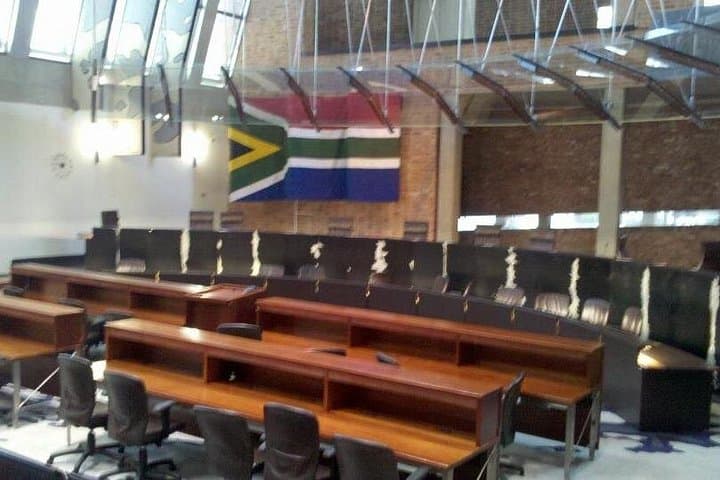

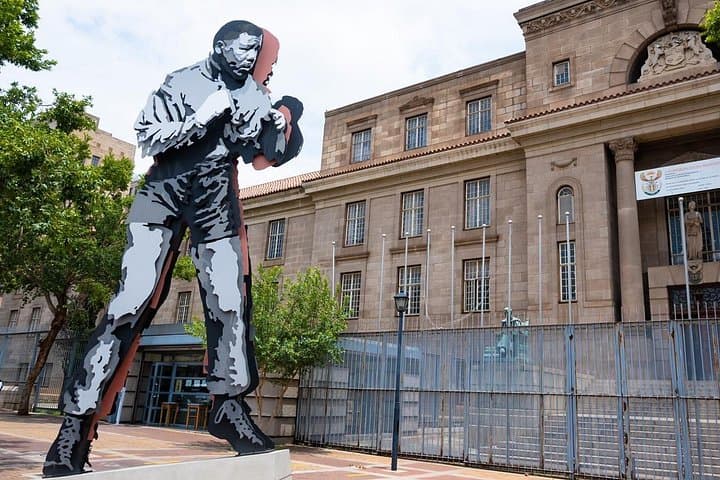

You step out of the air‑conditioned van onto a brick courtyard where iron bars and old cell doors still speak. Constitutional Hill’s redbrick façades and the raw corridors of the Number 4 and 5 prison blocks make history tactile; the guides let the site’s stories do the heavy lifting, tracing footsteps that lead from confinement to South Africa’s modern constitutional court.
You step out of the air‑conditioned van onto a brick courtyard where iron bars and old cell doors still speak. Constitutional Hill’s redbrick façades and the raw corridors of the Number 4 and 5 prison blocks make history tactile; the guides let the site’s stories do the heavy lifting, tracing footsteps that lead from confinement to South Africa’s modern constitutional court.
The route moves from the precinct — once a colonial and apartheid prison, now home to the Constitutional Court — to the Apartheid Museum south of the city. The museum’s galleries lay out the legal scaffolding, victims’ stories and the organized resistance that culminated in democratic transition. Together these sites frame Johannesburg’s 19th–20th century industrial boom, urban migration and the policies that shaped spatial and economic patterns still visible in the city today.
Expect 1–2 hours at Constitutional Hill and 2–3 hours at the Apartheid Museum, plus transit between sites; total time runs about 5–8 hours. The day mixes tactile architecture and didactic exhibits: comfortable walking shoes and an attention to context make the difference between a photo stop and a deeper encounter. Guides connect artifacts to neighborhoods, point out nearby cultural stops in Braamfontein and suggest afternoon cafés where conversations continue.
Practicalities: the tour provides private transport, bottled water and onboard Wi‑Fi. It’s accessible to most fitness levels but includes outdoor walking and steps in older buildings. Mid‑morning starts avoid afternoon heat and give you time to process the exhibits — and, importantly, to listen. This is education rendered as journey; bring curiosity and leave space to reflect.