THE ADVENTURE COLLECTIVE® · Independent discovery and booking for outdoor travel

A private day trip from Guilin to the Longji (Longsheng) Rice Terraces visits Ping’an viewing platforms and a minority village, combining a short hike on steep stone steps with panoramic terrace views and cultural encounters.
A private day trip from Guilin to the Longji (Longsheng) Rice Terraces visits Ping’an viewing platforms and a minority village, combining a short hike on steep stone steps with panoramic terrace views and cultural encounters.
Morning light carves the terraces into ribbons of gold and mirror; a private vehicle unwinds from Guilin toward Longji (Longsheng), the road dropping through karst foothills until stone steps and rice paddies take over. The hike begins at the riverside, threading past flooded paddies, bamboo groves and wooden Zhuang houses before climbing to Viewing Platform No. 2 — the “Seven Stars with the Moon.”
Verified experiences and guided adventures in the surrounding area.
Operated by Guilin Private Tours · Longsheng (Longji), Guangxi
Morning light carves the terraces into ribbons of gold and mirror; a private vehicle unwinds from Guilin toward Longji (Longsheng), the road dropping through karst foothills until stone steps and rice paddies take over. The hike begins at the riverside, threading past flooded paddies, bamboo groves and wooden Zhuang houses before climbing to Viewing Platform No. 2 — the “Seven Stars with the Moon.”
The terraces here are human geology: centuries of hand-edged walls cut into slopes between roughly 600–1,100 meters elevation to trap water and soil. Constructed and maintained by Zhuang and Yao communities over generations, the fields reflect seasonal labor, irrigation skill and local cultural motifs visible in house carvings and daily life in Ping’an and Huangluo (Longhair) villages.
Expect uneven stone steps and a mix of flat connecting paths; the walking sections are short but steep in places. The full day includes a roughly 2‑hour drive each way from Guilin, a 2–3 hour exploration on foot through village lanes and platforms, and a local lunch. Weather shapes the show: flooded terraces in spring, emerald green in summer, golden harvest hues in autumn and quieter, raw outlines in winter.
Practical notes: bring cash for entry/tips, wear grippy footwear for wet steps, and time your visit for early or late light to avoid the busiest hours. Respect private property, stay on marked paths, and consider a local guide to deepen cultural context — the landscape rewards careful attention with expansive views and close cultural encounters.
Expect about 2 hours each way by private vehicle, depending on traffic and your pickup point in Guilin.
Yes if they have moderate mobility; be aware of steep stone steps and bring frequent rest breaks — private pacing helps.
Entry tickets to the terraces are usually paid on site; this tour includes a Chinese lunch but confirm dietary needs in advance.
Early morning or late afternoon light highlights the terraces; spring (flooded fields) and autumn (harvest colors) are especially photogenic.
Guilin Private Tours operates guided outdoor trips and adventures with an emphasis on safety, stewardship, and memorable experiences.
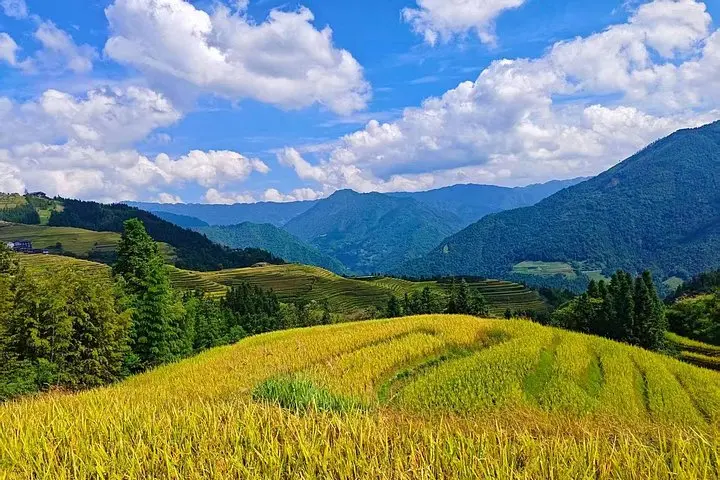

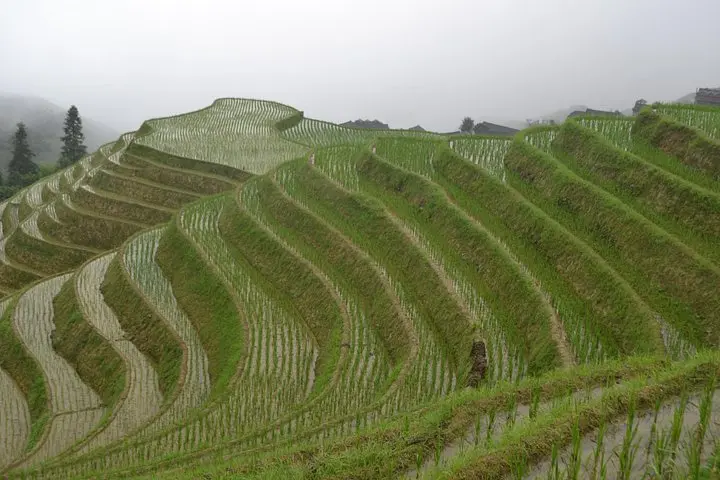
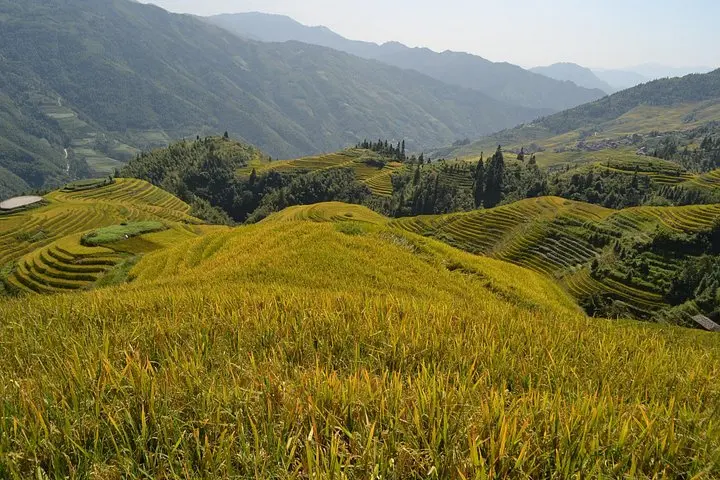
Morning light carves the terraces into ribbons of gold and mirror; a private vehicle unwinds from Guilin toward Longji (Longsheng), the road dropping through karst foothills until stone steps and rice paddies take over. The hike begins at the riverside, threading past flooded paddies, bamboo groves and wooden Zhuang houses before climbing to Viewing Platform No. 2 — the “Seven Stars with the Moon.”
Morning light carves the terraces into ribbons of gold and mirror; a private vehicle unwinds from Guilin toward Longji (Longsheng), the road dropping through karst foothills until stone steps and rice paddies take over. The hike begins at the riverside, threading past flooded paddies, bamboo groves and wooden Zhuang houses before climbing to Viewing Platform No. 2 — the “Seven Stars with the Moon.”
The terraces here are human geology: centuries of hand-edged walls cut into slopes between roughly 600–1,100 meters elevation to trap water and soil. Constructed and maintained by Zhuang and Yao communities over generations, the fields reflect seasonal labor, irrigation skill and local cultural motifs visible in house carvings and daily life in Ping’an and Huangluo (Longhair) villages.
Expect uneven stone steps and a mix of flat connecting paths; the walking sections are short but steep in places. The full day includes a roughly 2‑hour drive each way from Guilin, a 2–3 hour exploration on foot through village lanes and platforms, and a local lunch. Weather shapes the show: flooded terraces in spring, emerald green in summer, golden harvest hues in autumn and quieter, raw outlines in winter.
Practical notes: bring cash for entry/tips, wear grippy footwear for wet steps, and time your visit for early or late light to avoid the busiest hours. Respect private property, stay on marked paths, and consider a local guide to deepen cultural context — the landscape rewards careful attention with expansive views and close cultural encounters.