THE ADVENTURE COLLECTIVE® · Independent discovery and booking for outdoor travel
Board a small boat at Caño Hondo and wind through Los Haitises’ mangrove tunnels to explore caves with Taino petroglyphs, then spend the afternoon swimming in 14 stepped natural pools and eating a hearty Criollo lunch. This full-day trip blends geology, history, and relaxed seaside time.
Board a small boat at Caño Hondo and wind through Los Haitises’ mangrove tunnels to explore caves with Taino petroglyphs, then spend the afternoon swimming in 14 stepped natural pools and eating a hearty Criollo lunch. This full-day trip blends geology, history, and relaxed seaside time.
The motor hums as the boat slips from the Caño Hondo pier and into a corridor of dark mangroves. Sunlight threads through the canopy and throws quicksilver reflections across the water; limestone mogotes rise like bruised knuckles from the bay and the air smells of salt and wet earth. For two hours the landscape changes rhythm—tight channels that dare the pilot to steer, broad bay views where frigatebirds wheel and the coast of Los Haitises unfurls in layered green and gray.
Verified experiences and guided adventures in the surrounding area.
Operated by The Whales Las Ballenas · Sabana de la Mar, Samaná Province
The motor hums as the boat slips from the Caño Hondo pier and into a corridor of dark mangroves. Sunlight threads through the canopy and throws quicksilver reflections across the water; limestone mogotes rise like bruised knuckles from the bay and the air smells of salt and wet earth. For two hours the landscape changes rhythm—tight channels that dare the pilot to steer, broad bay views where frigatebirds wheel and the coast of Los Haitises unfurls in layered green and gray.
Los Haitises National Park is both geological and human archive. The karst hills are porous, riddled with caves that collected freshwater and preserved Taino paintings and petroglyphs for centuries. Guides point out La Arena and La Línea caves, where ochre markings and carved motifs speak to pre-Columbian life and spiritual practice. The park’s mangrove system and endemic flora also play a quiet but crucial role in protecting the nearby fisheries and coastline.
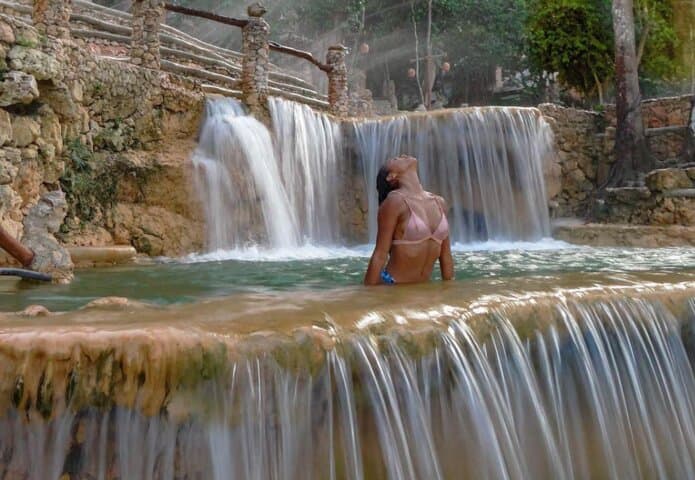
After the grottos, the boat returns to the Caño Hondo area where the Hotel Caño Hondo’s fourteen natural pools await—small basins stepped by rock and waterfall, each with its own current and depth. The water is cool and clear; some pools let you float in near silence, others nudge you along with a steady push. A Criollo lunch follows: fried fish fillets, moro de gandules con coco, chicharrón de pollo, and a sweet coconut dessert—the kind of substantial, home-cooked meal that recharges both body and appetite after salt and sun.
Practical notes: the full experience runs about eight hours with roughly two hours of boat time, cave visits, and four hours for the pools and lunch. Paths near the pools can be slick; wear water shoes with good traction. Bring reef-safe sunscreen, a dry bag for electronics, and cash for tips—the small community around Caño Hondo depends on these visits. The activity is suitable for most fitness levels but not recommended for those with serious back problems due to boat motion and uneven terrain.
Culturally, this day trip ties the modern visitor to a landscape that supported Taino settlements and, later, fishing communities that still interpret the sea and mangroves as livelihood. Environmentally, operators often emphasize low-impact travel—stick to marked paths, don’t touch cave art, and avoid single-use plastics.
For travelers looking to mix a relaxed swim with a dose of natural history and coastal geology, this trip delivers a compact, sensory-rich afternoon: mangrove tunnels, cliff caves, and a plate of Dominican comfort food waiting at the end.
Expect about two hours of boat travel through the park, split across channels and bay crossings as the guide navigates to caves and lookouts.
Guides lead short visits to cave mouths and chambers with petroglyphs; avoid touching art and follow the guide’s safety instructions for footing and lighting.
Yes—this tour is family-friendly, though parents should supervise children near water and on slippery paths.
Yes, a traditional Criollo lunch at Hotel Caño Hondo is included in the tour price.
No—swimming in the pools is optional; there are shallow areas and places to sit if you prefer to stay dry.
The operator cancels if weather threatens safety; you can receive a full refund if you cancel at least 24 hours before departure.
The Whales Las Ballenas operates guided outdoor trips and adventures with an emphasis on safety, stewardship, and memorable experiences.
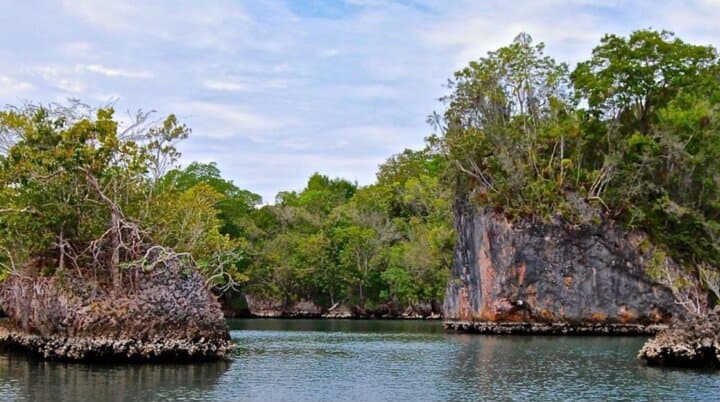
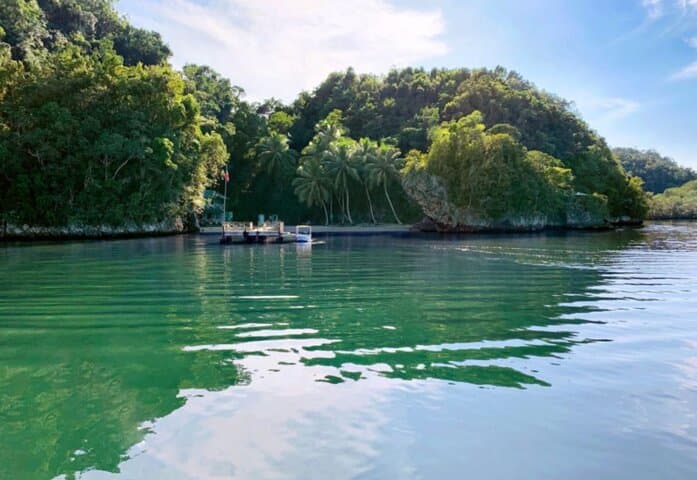
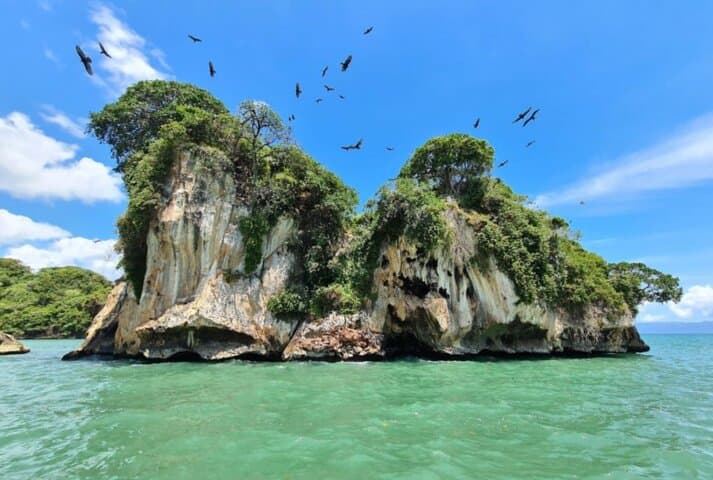
The motor hums as the boat slips from the Caño Hondo pier and into a corridor of dark mangroves. Sunlight threads through the canopy and throws quicksilver reflections across the water; limestone mogotes rise like bruised knuckles from the bay and the air smells of salt and wet earth. For two hours the landscape changes rhythm—tight channels that dare the pilot to steer, broad bay views where frigatebirds wheel and the coast of Los Haitises unfurls in layered green and gray.
The motor hums as the boat slips from the Caño Hondo pier and into a corridor of dark mangroves. Sunlight threads through the canopy and throws quicksilver reflections across the water; limestone mogotes rise like bruised knuckles from the bay and the air smells of salt and wet earth. For two hours the landscape changes rhythm—tight channels that dare the pilot to steer, broad bay views where frigatebirds wheel and the coast of Los Haitises unfurls in layered green and gray.
Los Haitises National Park is both geological and human archive. The karst hills are porous, riddled with caves that collected freshwater and preserved Taino paintings and petroglyphs for centuries. Guides point out La Arena and La Línea caves, where ochre markings and carved motifs speak to pre-Columbian life and spiritual practice. The park’s mangrove system and endemic flora also play a quiet but crucial role in protecting the nearby fisheries and coastline.
After the grottos, the boat returns to the Caño Hondo area where the Hotel Caño Hondo’s fourteen natural pools await—small basins stepped by rock and waterfall, each with its own current and depth. The water is cool and clear; some pools let you float in near silence, others nudge you along with a steady push. A Criollo lunch follows: fried fish fillets, moro de gandules con coco, chicharrón de pollo, and a sweet coconut dessert—the kind of substantial, home-cooked meal that recharges both body and appetite after salt and sun.
Practical notes: the full experience runs about eight hours with roughly two hours of boat time, cave visits, and four hours for the pools and lunch. Paths near the pools can be slick; wear water shoes with good traction. Bring reef-safe sunscreen, a dry bag for electronics, and cash for tips—the small community around Caño Hondo depends on these visits. The activity is suitable for most fitness levels but not recommended for those with serious back problems due to boat motion and uneven terrain.
Culturally, this day trip ties the modern visitor to a landscape that supported Taino settlements and, later, fishing communities that still interpret the sea and mangroves as livelihood. Environmentally, operators often emphasize low-impact travel—stick to marked paths, don’t touch cave art, and avoid single-use plastics.
For travelers looking to mix a relaxed swim with a dose of natural history and coastal geology, this trip delivers a compact, sensory-rich afternoon: mangrove tunnels, cliff caves, and a plate of Dominican comfort food waiting at the end.
