THE ADVENTURE COLLECTIVE® · Independent discovery and booking for outdoor travel

Turn the Louvre into a game: a two‑hour, guide‑led treasure hunt that turns iconic masterpieces into clues for kids and parents. Learn where to go, what to expect, and how to plan a smooth family visit to Paris's most visited museum.
Turn the Louvre into a game: a two‑hour, guide‑led treasure hunt that turns iconic masterpieces into clues for kids and parents. Learn where to go, what to expect, and how to plan a smooth family visit to Paris's most visited museum.
You step through a glass pyramid into a cool hall where stone faces and painted eyes meet you at every turn. The Louvre's rooms unfold like chapters in a storybook — marble staircases that once served kings, vaulted ceilings that still hold courtly echoes, and corridors where guides pull children into playful puzzles about gods, queens, and the odd stolen smile.
Verified experiences and guided adventures in the surrounding area.
Operated by Meeting the French · Paris, Île-de-France
You step through a glass pyramid into a cool hall where stone faces and painted eyes meet you at every turn. The Louvre's rooms unfold like chapters in a storybook — marble staircases that once served kings, vaulted ceilings that still hold courtly echoes, and corridors where guides pull children into playful puzzles about gods, queens, and the odd stolen smile.
Originally a 12th‑century fortress turned royal palace, the Louvre became a public museum after the French Revolution; its galleries chart Western art from antiquity to the 19th century. The Treasure Hunt frames that sweep of history into hands‑on prompts: find the Winged Victory's missing arm, track where Mona Lisa sat during her 1911 theft, and compare ancient sculpted animals to the Great Sphinx of Tanis.
Expect a two‑hour pace aimed at families — lively, question‑driven, and intentionally short to keep kids engaged. The guide balances story, close‑up observation, and simple art history, pointing out scale changes from tiny cameos to the vast Coronation of Napoleon. Practical notes: busy rooms, quiet rules, and artwork conservation mean limited running and no flash photos near fragile pieces.
For planning, arrive with museum tickets and a lightweight bag, pick a midweek morning if possible, and set a clear meeting spot in a large gallery — the pyramid hall is the default. The experience is best for curious children aged roughly 5–12, and it’s wheelchair‑accessible. Leave time after the hunt to let kids sketch a favorite piece or to browse the museum shop for a small memento.
Yes — guides tailor activities to younger ages, but the ideal age range is roughly 5–12; infants in strollers are accommodated.
The tour notes a €22 adult entrance ticket is included; verify whether child tickets are covered at booking.
Yes — the museum and this private tour are described as wheelchair and stroller accessible, but notify organizers of mobility needs ahead of time.
Photography without flash is generally allowed in many rooms, but restrictions apply near sensitive works — follow the guide's directions on camera use.
Meeting the French operates guided outdoor trips and adventures with an emphasis on safety, stewardship, and memorable experiences.
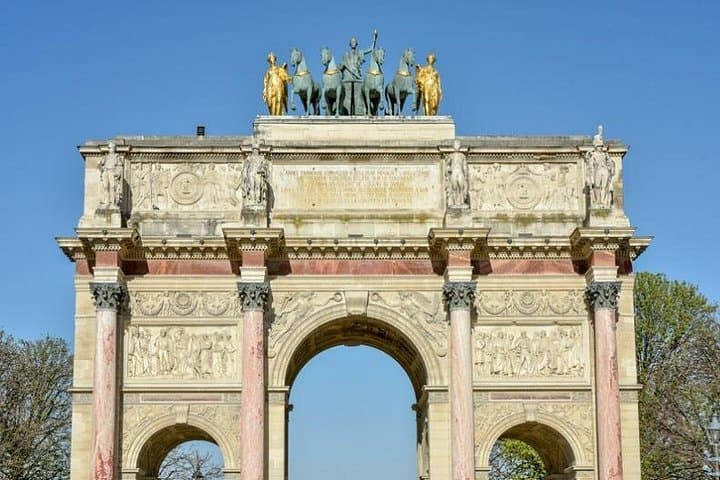

You step through a glass pyramid into a cool hall where stone faces and painted eyes meet you at every turn. The Louvre's rooms unfold like chapters in a storybook — marble staircases that once served kings, vaulted ceilings that still hold courtly echoes, and corridors where guides pull children into playful puzzles about gods, queens, and the odd stolen smile.
You step through a glass pyramid into a cool hall where stone faces and painted eyes meet you at every turn. The Louvre's rooms unfold like chapters in a storybook — marble staircases that once served kings, vaulted ceilings that still hold courtly echoes, and corridors where guides pull children into playful puzzles about gods, queens, and the odd stolen smile.
Originally a 12th‑century fortress turned royal palace, the Louvre became a public museum after the French Revolution; its galleries chart Western art from antiquity to the 19th century. The Treasure Hunt frames that sweep of history into hands‑on prompts: find the Winged Victory's missing arm, track where Mona Lisa sat during her 1911 theft, and compare ancient sculpted animals to the Great Sphinx of Tanis.
Expect a two‑hour pace aimed at families — lively, question‑driven, and intentionally short to keep kids engaged. The guide balances story, close‑up observation, and simple art history, pointing out scale changes from tiny cameos to the vast Coronation of Napoleon. Practical notes: busy rooms, quiet rules, and artwork conservation mean limited running and no flash photos near fragile pieces.
For planning, arrive with museum tickets and a lightweight bag, pick a midweek morning if possible, and set a clear meeting spot in a large gallery — the pyramid hall is the default. The experience is best for curious children aged roughly 5–12, and it’s wheelchair‑accessible. Leave time after the hunt to let kids sketch a favorite piece or to browse the museum shop for a small memento.