THE ADVENTURE COLLECTIVE® · Independent discovery and booking for outdoor travel

Walk through Lower Manhattan with a map of 1667 in hand and stand where New Amsterdam once stood. This guided small-group tour peels back the layers of colonial streets, Stone Street cobbles, and the origins of Wall Street while offering practical tips for photographers and first-time visitors.
Walk through Lower Manhattan with a map of 1667 in hand and stand where New Amsterdam once stood. This guided small-group tour peels back the layers of colonial streets, Stone Street cobbles, and the origins of Wall Street while offering practical tips for photographers and first-time visitors.
You step off the subway into afternoon light and the city rearranges itself: granite towers lean away, a gust from the Hudson pushes paper against a cast-iron fence, and beneath your feet the cobbles of Stone Street still remember the clatter of hooves. That is the first contraction of time this walking tour asks of you — to stand where Manhattan was small and then watch the city expand around it.
Verified experiences and guided adventures in the surrounding area.
Operated by Untapped New York · New York, New York
You step off the subway into afternoon light and the city rearranges itself: granite towers lean away, a gust from the Hudson pushes paper against a cast-iron fence, and beneath your feet the cobbles of Stone Street still remember the clatter of hooves. That is the first contraction of time this walking tour asks of you — to stand where Manhattan was small and then watch the city expand around it.
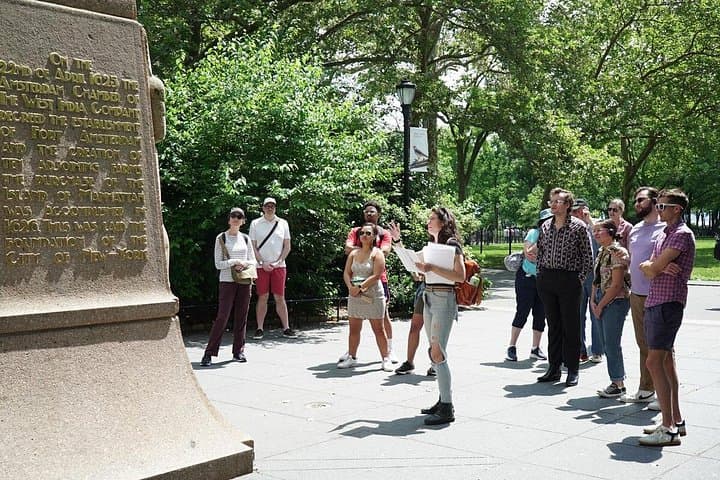
The route begins at the National Museum of the American Indian near Bowling Green, where a licensed guide unfurls a facsimile of Manhattan’s 1667 map. The map is not an antique curiosity here; it is the key. With it, you trace the Dutch grid when the island was New Amsterdam — a place of canals, fortified palisades and a market that would become the seed of today’s Financial District. You’ll hear how Bowling Green earned its name as a public green for games and parades and why it became a political flashpoint during colonial rebellions.
Geology in Manhattan reads differently: bedrock close to the surface shaped early streets and enabled skyscrapers. In the Financial District you’ll see where the island’s bedrock forced streets into narrow corridors, concentrating trade and fortifying markets like the original Amsterdam slipways. Cultural stitches follow: Stone Street’s 17th-century pavement, the vanished fortifications near Whitehall, the rise of Wall Street from a literal wall to the world’s principal exchange.
The tour threads past the New York Stock Exchange, the Fearless Girl, and the Charging Bull, pausing in alleys and plazas that survive as oddly quiet pockets amid honking traffic. Guides point out architecture, old Dutch doorways repurposed behind modern facades, and the harbor’s constant role as both highway and lifeline.
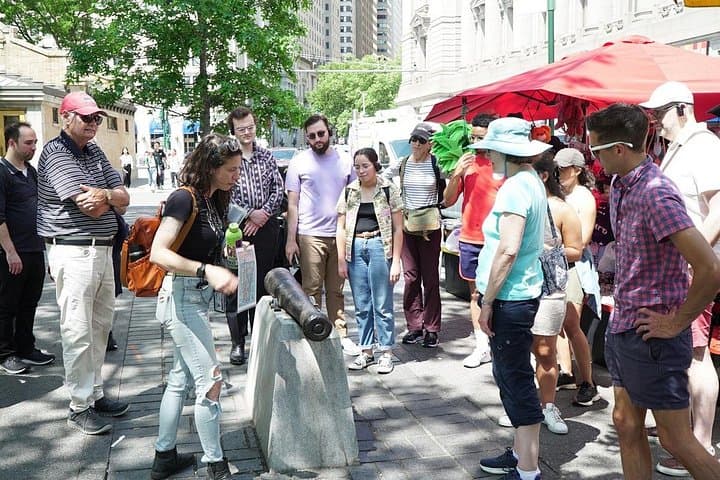
Practical side: expect a 3½-hour walk totaling several miles at a gentle pace with plenty of stops; ear pieces are provided so you’ll hear the guide even in crowded plazas. The tour is wheelchair- and stroller-accessible but wear good walking shoes — some surfaces are uneven. Mornings bring softer light for photos and fewer tourists; late afternoons let you feel the financial district’s shift from office bustle to after-work calm.
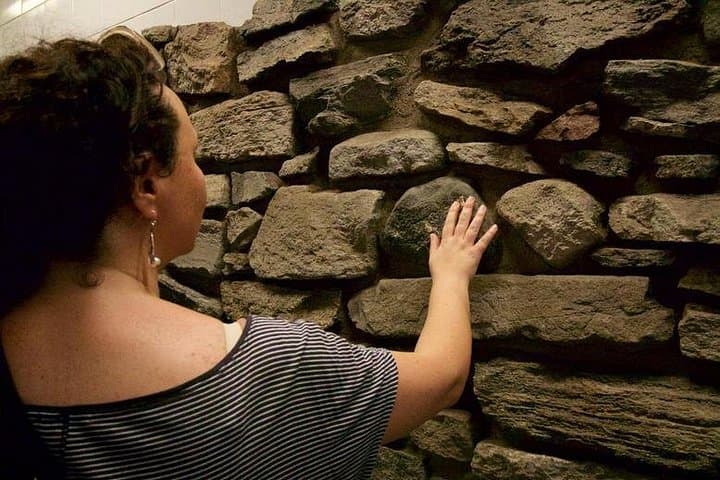
Bring a refillable water bottle, a charged phone for maps and photos, and a MetroCard or transit app — public transportation is the smoothest way to arrive and depart. If you want a quieter experience, book a weekday slot; weekends are lively but can be congested. The tour is an excellent primer for anyone who wants to understand how an outpost of New Netherland became New York, and to physically touch the layers of history beneath the city’s modern rhythm.
The meeting point is on the steps outside the National Museum of the American Indian at Bowling Green; look for the guide and your confirmation instructions.
Yes — the itinerary notes wheelchair accessibility with most stops on flat surfaces; inform the operator of any special requirements when booking.
Expect several miles over 3–3.5 hours with frequent short stops; the pace is gentle but continuous.
Yes — ear pieces are provided so you can hear the guide clearly in busy outdoor spaces.
Yes — children can join, and strollers are permitted; content is historical and suitable for school-age kids.
A smartphone or compact camera is fine; bring a small tripod or wide-angle lens for architecture if you want higher-quality shots.
Untapped New York operates guided outdoor trips and adventures with an emphasis on safety, stewardship, and memorable experiences.

You step off the subway into afternoon light and the city rearranges itself: granite towers lean away, a gust from the Hudson pushes paper against a cast-iron fence, and beneath your feet the cobbles of Stone Street still remember the clatter of hooves. That is the first contraction of time this walking tour asks of you — to stand where Manhattan was small and then watch the city expand around it.
You step off the subway into afternoon light and the city rearranges itself: granite towers lean away, a gust from the Hudson pushes paper against a cast-iron fence, and beneath your feet the cobbles of Stone Street still remember the clatter of hooves. That is the first contraction of time this walking tour asks of you — to stand where Manhattan was small and then watch the city expand around it.
The route begins at the National Museum of the American Indian near Bowling Green, where a licensed guide unfurls a facsimile of Manhattan’s 1667 map. The map is not an antique curiosity here; it is the key. With it, you trace the Dutch grid when the island was New Amsterdam — a place of canals, fortified palisades and a market that would become the seed of today’s Financial District. You’ll hear how Bowling Green earned its name as a public green for games and parades and why it became a political flashpoint during colonial rebellions.
Geology in Manhattan reads differently: bedrock close to the surface shaped early streets and enabled skyscrapers. In the Financial District you’ll see where the island’s bedrock forced streets into narrow corridors, concentrating trade and fortifying markets like the original Amsterdam slipways. Cultural stitches follow: Stone Street’s 17th-century pavement, the vanished fortifications near Whitehall, the rise of Wall Street from a literal wall to the world’s principal exchange.
The tour threads past the New York Stock Exchange, the Fearless Girl, and the Charging Bull, pausing in alleys and plazas that survive as oddly quiet pockets amid honking traffic. Guides point out architecture, old Dutch doorways repurposed behind modern facades, and the harbor’s constant role as both highway and lifeline.
Practical side: expect a 3½-hour walk totaling several miles at a gentle pace with plenty of stops; ear pieces are provided so you’ll hear the guide even in crowded plazas. The tour is wheelchair- and stroller-accessible but wear good walking shoes — some surfaces are uneven. Mornings bring softer light for photos and fewer tourists; late afternoons let you feel the financial district’s shift from office bustle to after-work calm.
Bring a refillable water bottle, a charged phone for maps and photos, and a MetroCard or transit app — public transportation is the smoothest way to arrive and depart. If you want a quieter experience, book a weekday slot; weekends are lively but can be congested. The tour is an excellent primer for anyone who wants to understand how an outpost of New Netherland became New York, and to physically touch the layers of history beneath the city’s modern rhythm.