THE ADVENTURE COLLECTIVE® · Independent discovery and booking for outdoor travel

Spend a full day tracing Luanda’s history from the Fortress of São Miguel and the Museum of Slavery to the Mausoleum of Agostinho Neto and the otherworldly Moon Viewpoint. This private tour blends civic history, coastal culture, and dramatic geology into a single, accessible day trip.
Spend a full day tracing Luanda’s history from the Fortress of São Miguel and the Museum of Slavery to the Mausoleum of Agostinho Neto and the otherworldly Moon Viewpoint. This private tour blends civic history, coastal culture, and dramatic geology into a single, accessible day trip.
Morning light spills across Luanda Bay as the city wakes — fishermen haul nets on the island, and the obelisk of the Mausoleum of Agostinho Neto punctures the skyline. On a single-day circuit, this guided tour moves from waterfront battlements to red-washed cliffs, stitching together the human stories and the raw geology that shape Angola’s capital.
Verified experiences and guided adventures in the surrounding area.
Operated by Guilherme · Luanda, Luanda Province
Morning light spills across Luanda Bay as the city wakes — fishermen haul nets on the island, and the obelisk of the Mausoleum of Agostinho Neto punctures the skyline. On a single-day circuit, this guided tour moves from waterfront battlements to red-washed cliffs, stitching together the human stories and the raw geology that shape Angola’s capital.
The route visits the 16th-century Fortress of São Miguel, a Portuguese stronghold with cannons and bay views, then threads to the National Museum of Slavery at Morro da Cruz, housed in an old chapel where the transatlantic narrative is made tangible. The Mausoleum honors Angola’s first president and offers exhibits on the independence era. Beyond urban history, the Moon Viewpoint — a 40 km drive from the city — exposes wind- and rain-sculpted sandstone in rust and ochre, a landscape that seems to push the visitor toward quiet reflection.
Along the way, the Luanda Handicraft Market and Luanda Island provide cultural color: artisans, seafood stalls, and seaside rhythms that reveal modern Angolan life.
Practical guidance: expect an 8-hour private tour with vehicle transfers, bottled water, and short walks at each stop. Bring sun protection and sturdy shoes for uneven fortress ramps and dusty vantage points. Photographers should plan for morning or late-afternoon light; midday is harsh and hot. Accessibility is reasonable for most travelers, but some sites have steps and unpaved areas. Respect memorial spaces by keeping noise low and follow your guide’s instructions at sensitive historical sites. This itinerary balances civic history and raw coastal geology, giving a compact, informative window into Luanda’s past and present.
The tour runs about 8 hours, typically covering five to seven stops with vehicle transfers and short walking segments.
Many sites offer access to vehicle drop-offs and some paved areas, but historic buildings and the Moon Viewpoint include steps or unpaved trails; check specific accessibility needs when booking.
Bottled water and soda are included; full meals are not usually provided—there are stops on Luanda Island and at local eateries where you can buy lunch.
Guides commonly speak Portuguese; English-language guides can be available but should be requested in advance.
Guilherme operates guided outdoor trips and adventures with an emphasis on safety, stewardship, and memorable experiences.
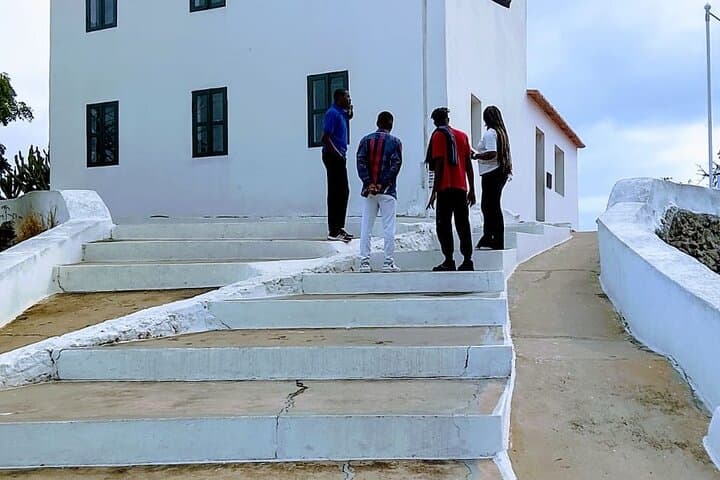


Morning light spills across Luanda Bay as the city wakes — fishermen haul nets on the island, and the obelisk of the Mausoleum of Agostinho Neto punctures the skyline. On a single-day circuit, this guided tour moves from waterfront battlements to red-washed cliffs, stitching together the human stories and the raw geology that shape Angola’s capital.
Morning light spills across Luanda Bay as the city wakes — fishermen haul nets on the island, and the obelisk of the Mausoleum of Agostinho Neto punctures the skyline. On a single-day circuit, this guided tour moves from waterfront battlements to red-washed cliffs, stitching together the human stories and the raw geology that shape Angola’s capital.
The route visits the 16th-century Fortress of São Miguel, a Portuguese stronghold with cannons and bay views, then threads to the National Museum of Slavery at Morro da Cruz, housed in an old chapel where the transatlantic narrative is made tangible. The Mausoleum honors Angola’s first president and offers exhibits on the independence era. Beyond urban history, the Moon Viewpoint — a 40 km drive from the city — exposes wind- and rain-sculpted sandstone in rust and ochre, a landscape that seems to push the visitor toward quiet reflection.
Along the way, the Luanda Handicraft Market and Luanda Island provide cultural color: artisans, seafood stalls, and seaside rhythms that reveal modern Angolan life.
Practical guidance: expect an 8-hour private tour with vehicle transfers, bottled water, and short walks at each stop. Bring sun protection and sturdy shoes for uneven fortress ramps and dusty vantage points. Photographers should plan for morning or late-afternoon light; midday is harsh and hot. Accessibility is reasonable for most travelers, but some sites have steps and unpaved areas. Respect memorial spaces by keeping noise low and follow your guide’s instructions at sensitive historical sites. This itinerary balances civic history and raw coastal geology, giving a compact, informative window into Luanda’s past and present.