THE ADVENTURE COLLECTIVE® · Independent discovery and booking for outdoor travel

Walk Lucerne’s timber bridge, medieval walls and lakeshore with a private guide who tailors history and hidden corners to your interests. This 2–3 hour customizable tour gives an efficient, local’s-eye introduction to the city’s architecture, monuments and lakeside views.
Walk Lucerne’s timber bridge, medieval walls and lakeshore with a private guide who tailors history and hidden corners to your interests. This 2–3 hour customizable tour gives an efficient, local’s-eye introduction to the city’s architecture, monuments and lakeside views.
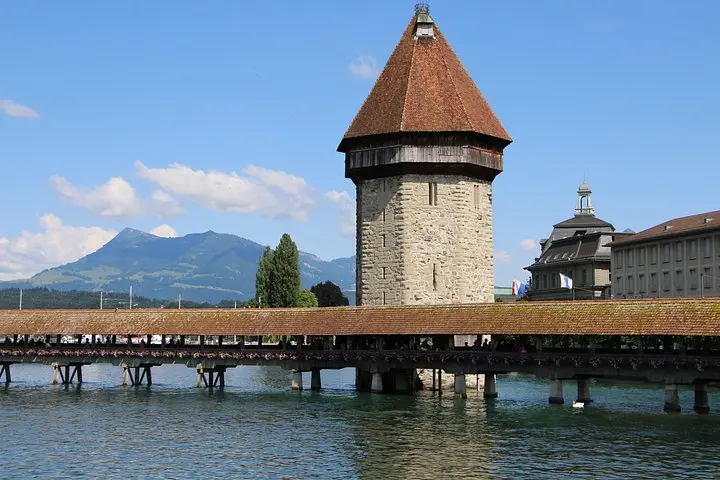
You step onto the Kapellbrücke and the timber planks dampen the city’s noise; the River Reuss nudges the bridge’s pilings and seems to hurry you toward the old town. From the bridge, the lion carved in stone watches like a memory refusing to sink, while distant alpine ridgelines frame the lake’s cool sweep.
Verified experiences and guided adventures in the surrounding area.
Operated by Suisse Plus Travel · Lucerne, Canton of Lucerne
You step onto the Kapellbrücke and the timber planks dampen the city’s noise; the River Reuss nudges the bridge’s pilings and seems to hurry you toward the old town. From the bridge, the lion carved in stone watches like a memory refusing to sink, while distant alpine ridgelines frame the lake’s cool sweep.
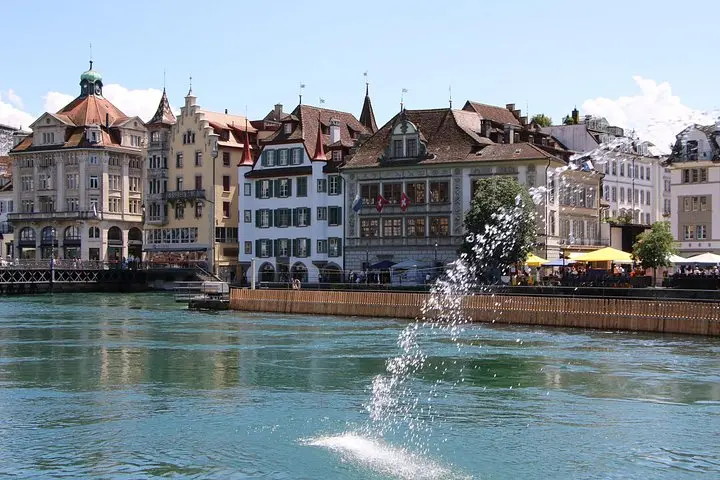
Lucerne grew from a medieval riverside market into a fortified town—Musegg Wall and its towers still ring the Old Town. The Lion Monument commemorates Swiss Guards who died in 1792, and Jesuit Church showcases Baroque flourishes introduced when the city regained prominence in the 17th century. Geologically, Lake Lucerne sits in a glacially carved basin, its mismatched shores and sudden mountain shoulders a reminder of the last Ice Age.
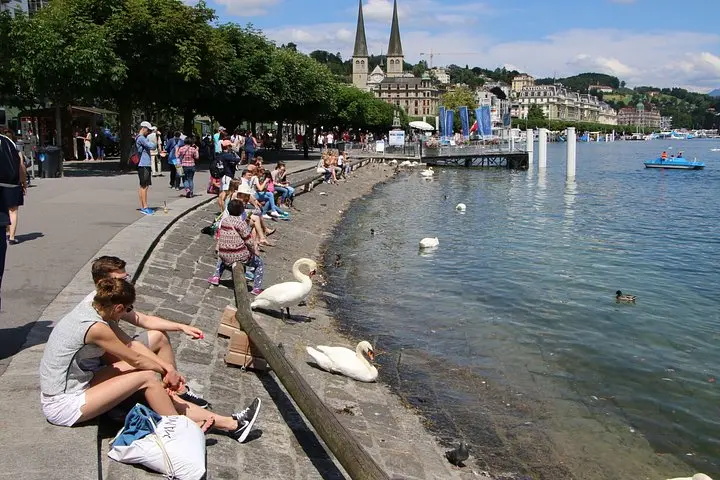
A private, 2–3 hour walking tour covers Chapel Bridge, Musegg Wall (towers closed Nov–Mar), Spreuer Bridge, and the KKL concert hall, with optional detours to local markets or the lakeside Ufschötti for a quick view. Guides can be local storytellers or professional historians—choose based on whether you want neighborhood tips or deeper context.
Practicalities: Expect 2–4 km of mostly flat walking with short stair sections at viewpoints. Wear supportive shoes, layer for changeable alpine weather, and carry water—fountains are common. Meetups are typically at Bachmann bakery or under the Torbogen by the train station; public transit links are excellent if plans change. Private tours scale easily for family groups and are wheelchair accessible on most routes, though some historic tower access is limited seasonally.
Plan morning slots for softer light and fewer crowds, and use the tour to orient yourself: a guided walk is the fastest, most efficient way to read Lucerne’s streets and decide where to return.
Tours run about 2–3 hours and cover roughly 2–4 km, mostly flat with brief stairs to viewpoints.
No — Musegg Wall towers and some walkable sections are closed from November to March and can only be viewed from outside in winter.
Common meeting points are in front of Bachmann bakery or under the Torbogen arch at the main train station; the operator confirms your pickup point when booking.
Most routes through the Old Town and lakeside promenades are wheelchair accessible, but access to historic towers and certain narrow alleys may be restricted.
Suisse Plus Travel operates guided outdoor trips and adventures with an emphasis on safety, stewardship, and memorable experiences.

You step onto the Kapellbrücke and the timber planks dampen the city’s noise; the River Reuss nudges the bridge’s pilings and seems to hurry you toward the old town. From the bridge, the lion carved in stone watches like a memory refusing to sink, while distant alpine ridgelines frame the lake’s cool sweep.
You step onto the Kapellbrücke and the timber planks dampen the city’s noise; the River Reuss nudges the bridge’s pilings and seems to hurry you toward the old town. From the bridge, the lion carved in stone watches like a memory refusing to sink, while distant alpine ridgelines frame the lake’s cool sweep.
Lucerne grew from a medieval riverside market into a fortified town—Musegg Wall and its towers still ring the Old Town. The Lion Monument commemorates Swiss Guards who died in 1792, and Jesuit Church showcases Baroque flourishes introduced when the city regained prominence in the 17th century. Geologically, Lake Lucerne sits in a glacially carved basin, its mismatched shores and sudden mountain shoulders a reminder of the last Ice Age.
A private, 2–3 hour walking tour covers Chapel Bridge, Musegg Wall (towers closed Nov–Mar), Spreuer Bridge, and the KKL concert hall, with optional detours to local markets or the lakeside Ufschötti for a quick view. Guides can be local storytellers or professional historians—choose based on whether you want neighborhood tips or deeper context.
Practicalities: Expect 2–4 km of mostly flat walking with short stair sections at viewpoints. Wear supportive shoes, layer for changeable alpine weather, and carry water—fountains are common. Meetups are typically at Bachmann bakery or under the Torbogen by the train station; public transit links are excellent if plans change. Private tours scale easily for family groups and are wheelchair accessible on most routes, though some historic tower access is limited seasonally.
Plan morning slots for softer light and fewer crowds, and use the tour to orient yourself: a guided walk is the fastest, most efficient way to read Lucerne’s streets and decide where to return.