THE ADVENTURE COLLECTIVE® · Independent discovery and booking for outdoor travel
Explore Lucerne’s Old Town at a relaxed pace on this private two-hour walking tour. See Chapel Bridge, the Lion Monument, Musegg Wall views and uncover the stories behind the frescoed facades.
Explore Lucerne’s Old Town at a relaxed pace on this private two-hour walking tour. See Chapel Bridge, the Lion Monument, Musegg Wall views and uncover the stories behind the frescoed facades.
The walk begins beneath the Torbogen arch, where the river’s edge and the first wooden beams of the Chapel Bridge frame a city that wears its history visibly: painted facades, guild-house eaves, and the Alps cut like a distant promise across the lake.
Verified experiences and guided adventures in the surrounding area.
Operated by Questland CH · Lucerne, Canton of Lucerne
The walk begins beneath the Torbogen arch, where the river’s edge and the first wooden beams of the Chapel Bridge frame a city that wears its history visibly: painted facades, guild-house eaves, and the Alps cut like a distant promise across the lake.
You’ll move at a calm pace through 800 years of civic life — from the wooden span of Kapellbrücke, rebuilt after the 1993 fire, to the quieter Spreuer Bridge with its dramatic 17th‑century paintings. The guide threads stories of mercantile guilds, Reformation-era shifts, and Lucerne’s role as a crossroads on the north-south Alpine route. Geologically, the city sits at the outflow of Lake Lucerne where sedimentary shores meet glacially scoured valleys; views from the KKL terrace make the alpine backdrop immediate and instructive.
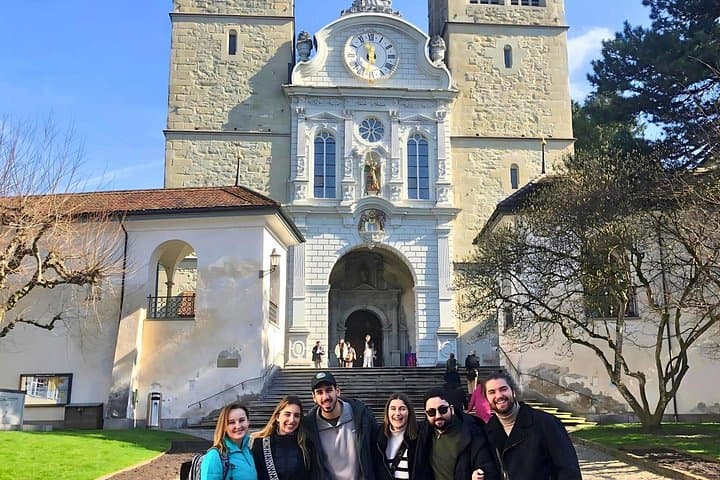
Cultural highlights include the baroque Jesuit Church, the low-slung Lion Monument carved into the rock as a mournful national memory, and the Musegg Wall towers that still punctuate the skyline. Local insights include the best vantage points for sunrise over the lake and quieter side streets where frescoed façades go unnoticed by hurried tourists.
Practically: the tour runs two hours on mostly flat cobblestones with one hill to view the Musegg Wall (towers closed Nov–Apr). It’s largely wheelchair accessible except for the hill portion. Aim for morning or late afternoon light for photos, wear supportive shoes, and plan to use Lucerne’s compact public-transport network before or after the tour. Guides adapt the route to interest, making this a solid primer on Lucerne’s past and present.
The tour lasts about 2 hours and covers roughly 1.5–2 km at a relaxed pace, with frequent stops for commentary and photos.
You can view the exterior year-round, but several Musegg towers may be closed to visitors from November through April; the guide still provides panoramic views from the hill.
Yes—strollers are generally OK on most surfaces; bring a lightweight stroller for cobblestones and expect some tighter passages.
Full refunds are available if cancelled at least 24 hours before the scheduled departure; same-day cancellations are non-refundable.
Questland CH operates guided outdoor trips and adventures with an emphasis on safety, stewardship, and memorable experiences.
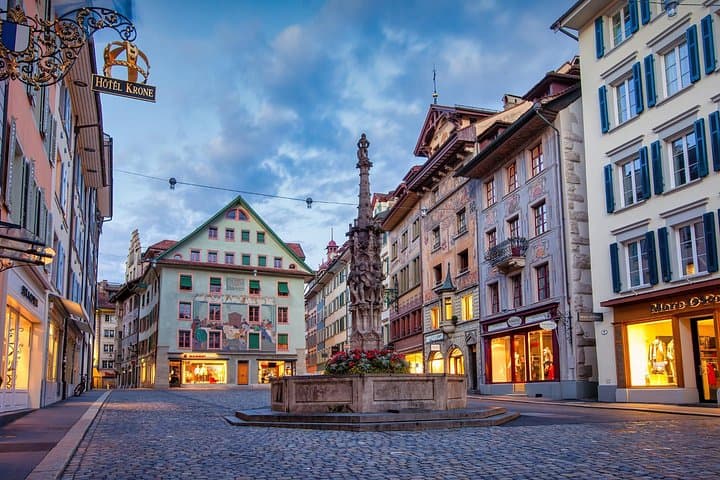
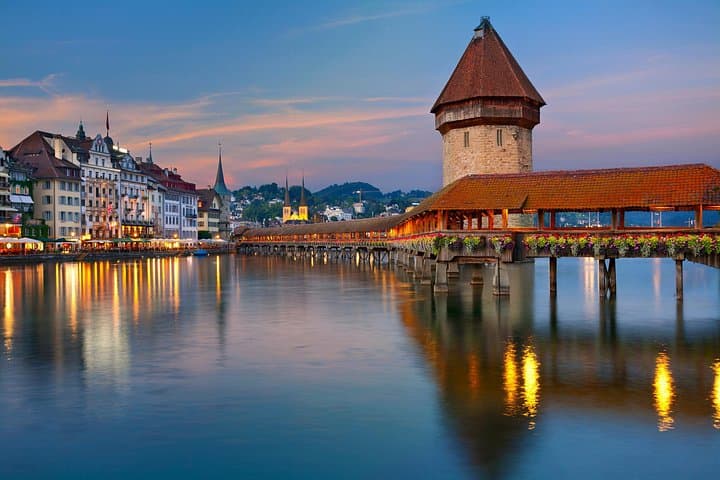

The walk begins beneath the Torbogen arch, where the river’s edge and the first wooden beams of the Chapel Bridge frame a city that wears its history visibly: painted facades, guild-house eaves, and the Alps cut like a distant promise across the lake.
The walk begins beneath the Torbogen arch, where the river’s edge and the first wooden beams of the Chapel Bridge frame a city that wears its history visibly: painted facades, guild-house eaves, and the Alps cut like a distant promise across the lake.
You’ll move at a calm pace through 800 years of civic life — from the wooden span of Kapellbrücke, rebuilt after the 1993 fire, to the quieter Spreuer Bridge with its dramatic 17th‑century paintings. The guide threads stories of mercantile guilds, Reformation-era shifts, and Lucerne’s role as a crossroads on the north-south Alpine route. Geologically, the city sits at the outflow of Lake Lucerne where sedimentary shores meet glacially scoured valleys; views from the KKL terrace make the alpine backdrop immediate and instructive.
Cultural highlights include the baroque Jesuit Church, the low-slung Lion Monument carved into the rock as a mournful national memory, and the Musegg Wall towers that still punctuate the skyline. Local insights include the best vantage points for sunrise over the lake and quieter side streets where frescoed façades go unnoticed by hurried tourists.
Practically: the tour runs two hours on mostly flat cobblestones with one hill to view the Musegg Wall (towers closed Nov–Apr). It’s largely wheelchair accessible except for the hill portion. Aim for morning or late afternoon light for photos, wear supportive shoes, and plan to use Lucerne’s compact public-transport network before or after the tour. Guides adapt the route to interest, making this a solid primer on Lucerne’s past and present.
