THE ADVENTURE COLLECTIVE® · Independent discovery and booking for outdoor travel

Stroll through Lucerne’s compact old town with a private guide: cross centuries-old wooden bridges, feel the Reuss breeze, and see the Lion Monument and Bourbaki Panorama. This two-hour walk blends architecture, lake views, and local history into an easy, photo-friendly tour.
Stroll through Lucerne’s compact old town with a private guide: cross centuries-old wooden bridges, feel the Reuss breeze, and see the Lion Monument and Bourbaki Panorama. This two-hour walk blends architecture, lake views, and local history into an easy, photo-friendly tour.
The first steps out of Torbogen Luzern railway station put you on a 19th-century threshold: cobbles underfoot, the Reuss river tugging at the city’s edges, and two wooden bridges that seem to hold stories in their beams. A private guide threads history into the streets, pointing out painted panels on the Spreuer Bridge and the turned timbers of the Chapel Bridge as gulls and swans keep watch on the lake that dares you to linger.
Verified experiences and guided adventures in the surrounding area.
Operated by BlackBuck Travels · Lucerne, Canton of Lucerne
The first steps out of Torbogen Luzern railway station put you on a 19th-century threshold: cobbles underfoot, the Reuss river tugging at the city’s edges, and two wooden bridges that seem to hold stories in their beams. A private guide threads history into the streets, pointing out painted panels on the Spreuer Bridge and the turned timbers of the Chapel Bridge as gulls and swans keep watch on the lake that dares you to linger.
Lucerne’s center grew where Alpine runoff met lowland trade routes; the Chapel Bridge dates to the 14th century and its triangular paintings record civic life and calamity. Nearby the Lion Monument, carved into sandstone, commemorates Swiss Guards lost during the French Revolution — Mark Twain called it the most mournful stone in the world. Geologically the area sits at the foot of the Swiss Alps, where glacial action carved terraces and left the Glacier Garden’s mirrored rock formations.
Culturally the city balances Swiss civic pride with lakefront leisure: promenades, market squares like Weinmarkt, and the Bourbaki Panorama — a 19th-century cyclorama depicting wartime retreat. Local guides tie architecture to guild histories and the canton’s role in Swiss neutrality.
Practical guidance: this private, two-hour stroll covers paved streets and short stairs — easy pace but wear supportive shoes. Start in the morning for softer light on the lake and fewer crowds on bridges. Carry a light rain layer and a water bottle; public transport connects directly to the meeting point. If you value photographs, ask your guide about quieter side alleys like Mühlenplatz and the small courtyards around the Hofkirche.
The guide meets in front of the Torbogen Luzern railway station entrance, near the clock; look for a signboard.
Yes — mobile or paper tickets are accepted for this private walking tour.
Yes — the route is easy with short distances and a steady pace, but participants with limited mobility should notify the operator ahead of time.
No — the tour visits viewpoints and exteriors; separate admission may be required for indoor entries like the Panorama or museums.
BlackBuck Travels operates guided outdoor trips and adventures with an emphasis on safety, stewardship, and memorable experiences.
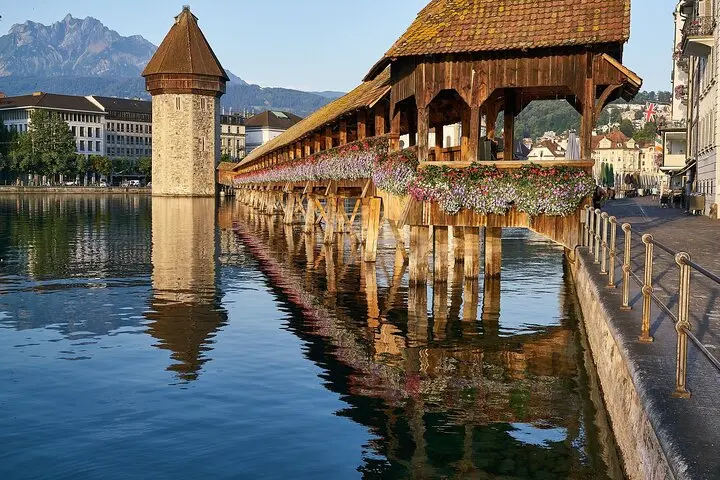
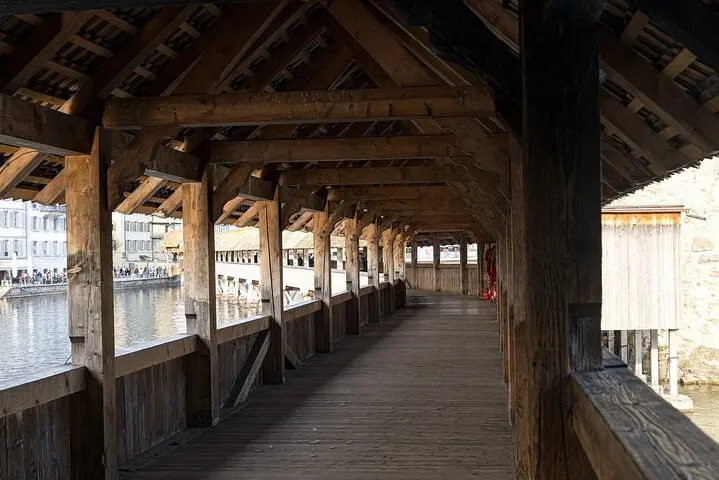
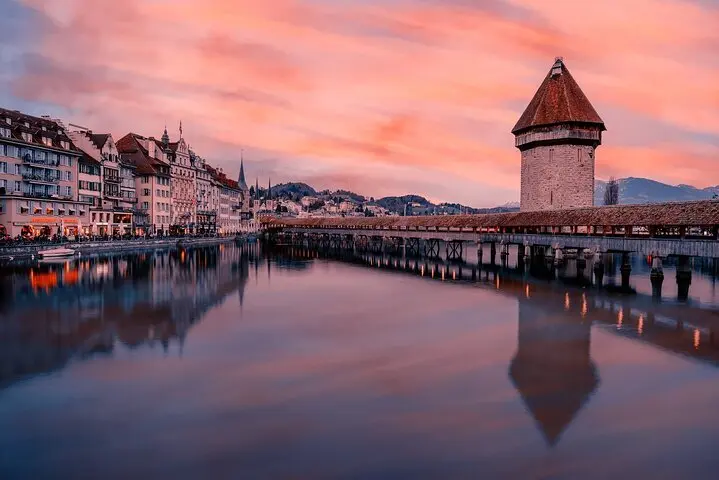
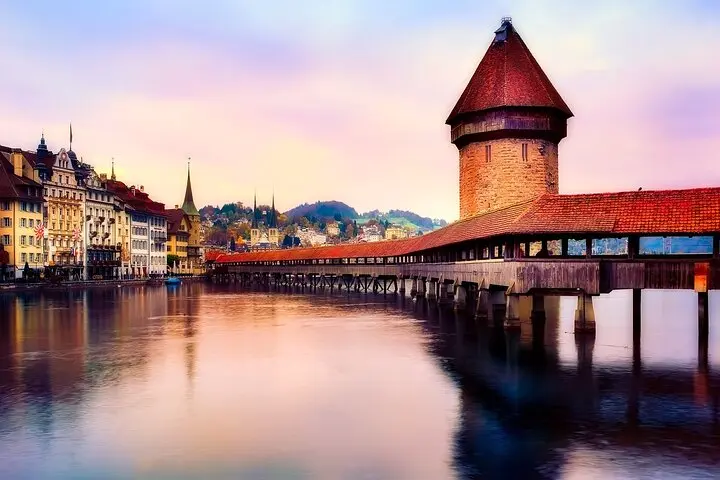
The first steps out of Torbogen Luzern railway station put you on a 19th-century threshold: cobbles underfoot, the Reuss river tugging at the city’s edges, and two wooden bridges that seem to hold stories in their beams. A private guide threads history into the streets, pointing out painted panels on the Spreuer Bridge and the turned timbers of the Chapel Bridge as gulls and swans keep watch on the lake that dares you to linger.
The first steps out of Torbogen Luzern railway station put you on a 19th-century threshold: cobbles underfoot, the Reuss river tugging at the city’s edges, and two wooden bridges that seem to hold stories in their beams. A private guide threads history into the streets, pointing out painted panels on the Spreuer Bridge and the turned timbers of the Chapel Bridge as gulls and swans keep watch on the lake that dares you to linger.
Lucerne’s center grew where Alpine runoff met lowland trade routes; the Chapel Bridge dates to the 14th century and its triangular paintings record civic life and calamity. Nearby the Lion Monument, carved into sandstone, commemorates Swiss Guards lost during the French Revolution — Mark Twain called it the most mournful stone in the world. Geologically the area sits at the foot of the Swiss Alps, where glacial action carved terraces and left the Glacier Garden’s mirrored rock formations.
Culturally the city balances Swiss civic pride with lakefront leisure: promenades, market squares like Weinmarkt, and the Bourbaki Panorama — a 19th-century cyclorama depicting wartime retreat. Local guides tie architecture to guild histories and the canton’s role in Swiss neutrality.
Practical guidance: this private, two-hour stroll covers paved streets and short stairs — easy pace but wear supportive shoes. Start in the morning for softer light on the lake and fewer crowds on bridges. Carry a light rain layer and a water bottle; public transport connects directly to the meeting point. If you value photographs, ask your guide about quieter side alleys like Mühlenplatz and the small courtyards around the Hofkirche.