
Lucerne Walking Photography Tour — Capture Chapel Bridge, City Walls & Lake Views
Walk Lucerne with a photographer as your guide: compose Chapel Bridge, cross medieval walls and freeze lake-and-Alps panoramas in two hours. This small-group tour focuses on craft and local vantage points suited to phones and DSLRs alike.
An Adventure In Lucerne.
Walk Lucerne with a photographer as your guide: compose Chapel Bridge, cross medieval walls and freeze lake-and-Alps panoramas in two hours. This small-group tour focuses on craft and local vantage points suited to phones and DSLRs alike.
Read the full experience
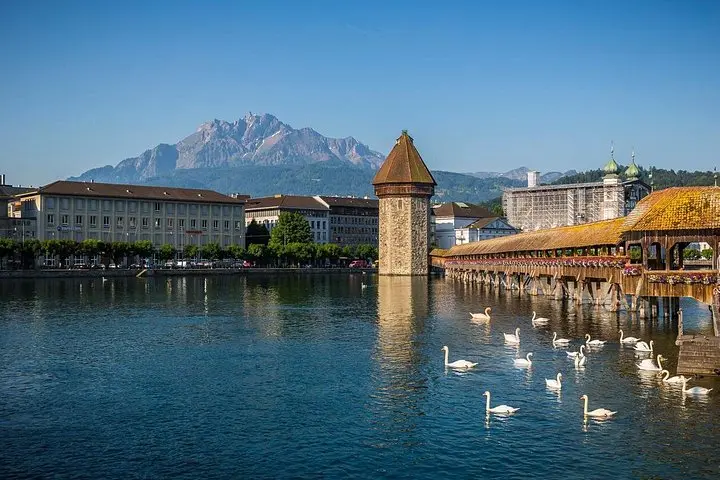
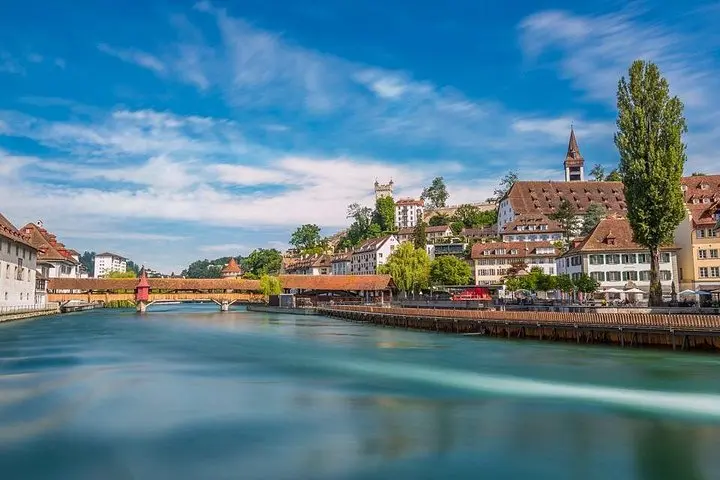
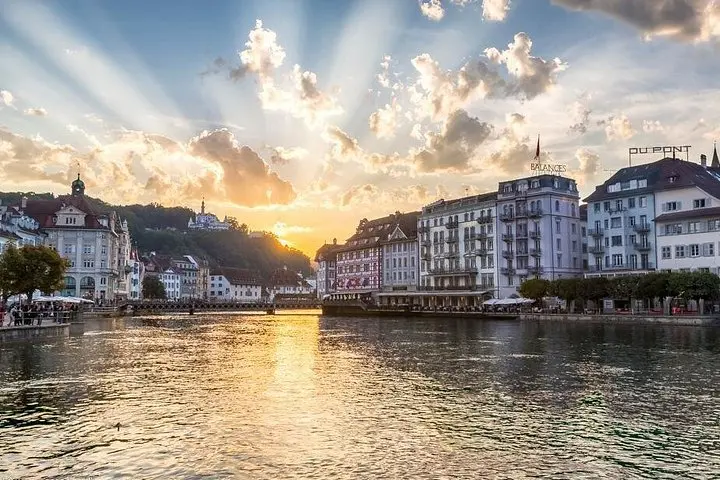
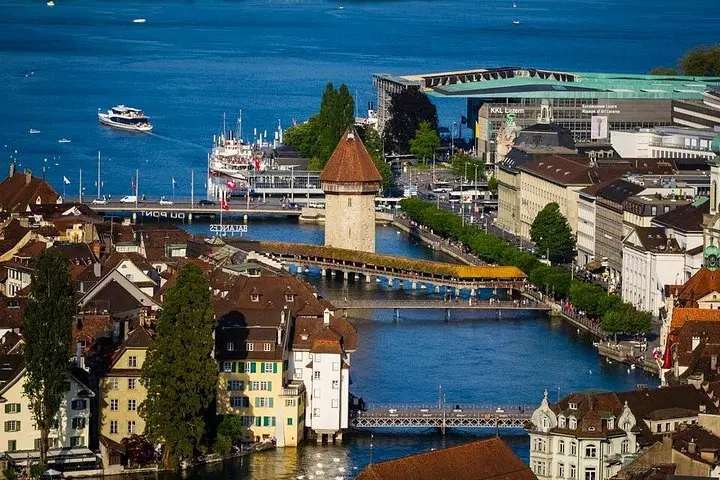
You step out of Lucerne’s train station and the city opens in angles and light: cobblestone alleys, timbered facades, and a river that seems to challenge you to frame it well. For two hours a small group moves at a photographer’s pace, pausing where perspectives tighten — at the Chapel Bridge’s painted roof, along the Musegg city wall, and at viewpoints that splice the town against the Alps.
You step out of Lucerne’s train station and the city opens in angles and light: cobblestone alleys, timbered facades, and a river that seems to challenge you to frame it well. For two hours a small group moves at a photographer’s pace, pausing where perspectives tighten — at the Chapel Bridge’s painted roof, along the Musegg city wall, and at viewpoints that splice the town against the Alps.
Lucerne’s core is medieval and practical: the Kapellbrücke dates to the 14th century and the Museggmauer’s towers still mark defensive lines. Geologically, the city sits at the foot of steep alpine ramps that funnel morning mist into Lake Lucerne; that interaction of lake and mountain gives you the layered light photographers prize. Culturally the city balances Swiss civic order with visual surprises — market stalls, public sculptures and the disciplined geometry of the lakefront promenade.
Expect mixed terrain: even streets and short stair climbs up the fortifications, roughly 2–3 km of walking with about 50–100 m of cumulative ascent if you climb to panoramic points. The guide is a professional photographer who offers technical tips for composition, exposure and low-light shooting; phone cameras to full-frame DSLRs are suitable. Practical notes: golden hour yields the richest color, cobbles can be slippery when wet, and some views require quick lens swaps to capture both city detail and distant peaks. Bring comfortable walking shoes, a compact tripod or stabilizer if you want long exposures, and enough battery power — the day moves quickly and so should your memory cards.
Frequently asked questions
The tour meets at the big arch monument in front of Lucerne train station (Bahnhofplatz), a short walk from regional and intercity trains.
No — compact cameras and smartphones are suitable; the guide adapts tips to your device and skill level.
The route includes cobblestones and some stairs to reach the city wall viewpoints; children and people with limited mobility may find parts challenging.
The tour operates in light rain; heavy weather may change viewpoints or require cancellations according to the operator’s policy (full refund if canceled 24+ hours before).
About This Experience
Passenger Diaries Switzerland Tours & Experiences operates guided outdoor trips and adventures with an emphasis on safety, stewardship, and memorable experiences.
Adventure tips
Recommended gear
- Compact tripod or travel monopod: Enables long exposures and low-light stability for lake and bridge shots.
- Comfortable walking shoes: Good traction on cobbles and stairs reduces slip risk and fatigue.
- Wide-angle lens (24–35mm) + short tele (50–85mm): Wide for cityscapes, short tele for compressed mountain views and portraits.
- Extra batteries / power bank: Keeps cameras and phones running through extended shooting sessions.
Photos of the experience
Related adventures & guides
Read the full experience
You step out of Lucerne’s train station and the city opens in angles and light: cobblestone alleys, timbered facades, and a river that seems to challenge you to frame it well. For two hours a small group moves at a photographer’s pace, pausing where perspectives tighten — at the Chapel Bridge’s painted roof, along the Musegg city wall, and at viewpoints that splice the town against the Alps.
You step out of Lucerne’s train station and the city opens in angles and light: cobblestone alleys, timbered facades, and a river that seems to challenge you to frame it well. For two hours a small group moves at a photographer’s pace, pausing where perspectives tighten — at the Chapel Bridge’s painted roof, along the Musegg city wall, and at viewpoints that splice the town against the Alps.
Lucerne’s core is medieval and practical: the Kapellbrücke dates to the 14th century and the Museggmauer’s towers still mark defensive lines. Geologically, the city sits at the foot of steep alpine ramps that funnel morning mist into Lake Lucerne; that interaction of lake and mountain gives you the layered light photographers prize. Culturally the city balances Swiss civic order with visual surprises — market stalls, public sculptures and the disciplined geometry of the lakefront promenade.
Expect mixed terrain: even streets and short stair climbs up the fortifications, roughly 2–3 km of walking with about 50–100 m of cumulative ascent if you climb to panoramic points. The guide is a professional photographer who offers technical tips for composition, exposure and low-light shooting; phone cameras to full-frame DSLRs are suitable. Practical notes: golden hour yields the richest color, cobbles can be slippery when wet, and some views require quick lens swaps to capture both city detail and distant peaks. Bring comfortable walking shoes, a compact tripod or stabilizer if you want long exposures, and enough battery power — the day moves quickly and so should your memory cards.
Make a day of it nearby.
Verified experiences and guided adventures in the surrounding area.