THE ADVENTURE COLLECTIVE® · Independent discovery and booking for outdoor travel

Travel from Cairo to Luxor for a two-day sweep of Egypt’s greatest monuments: the Valley of the Kings, Hatshepsut’s temple, Karnak and Luxor Temple. Practical routing, guided exploration and included transfer options make this a compact introduction to Thebes’ ruins.
Travel from Cairo to Luxor for a two-day sweep of Egypt’s greatest monuments: the Valley of the Kings, Hatshepsut’s temple, Karnak and Luxor Temple. Practical routing, guided exploration and included transfer options make this a compact introduction to Thebes’ ruins.
The air tastes of dust and spice as the train eases toward the Nile valley and Luxor’s stone giants begin to dominate the horizon.
Verified experiences and guided adventures in the surrounding area.
Operated by Sheba Tours · Luxor, Luxor Governorate
The air tastes of dust and spice as the train eases toward the Nile valley and Luxor’s stone giants begin to dominate the horizon.
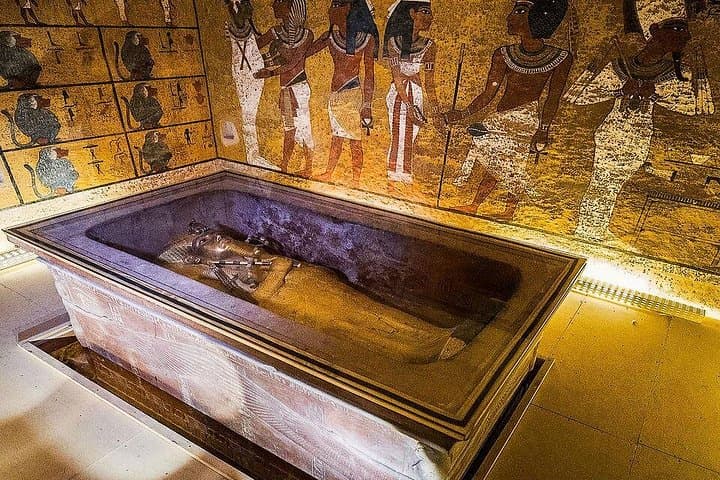
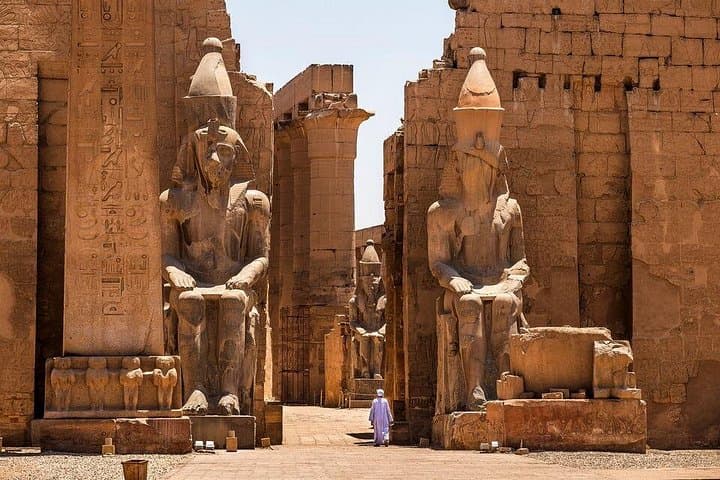
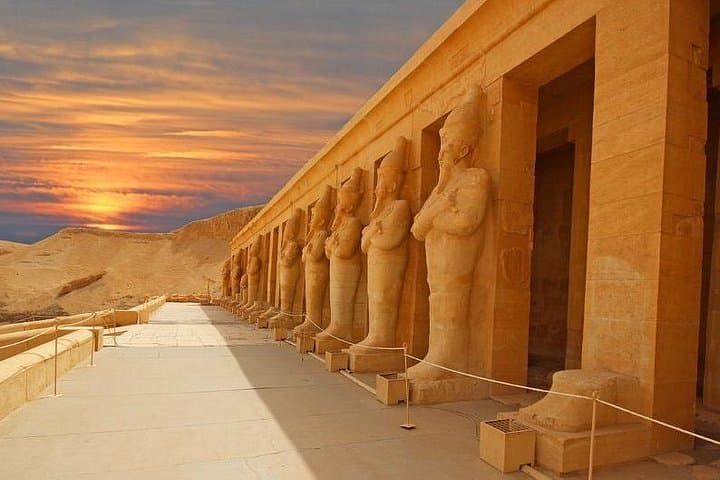
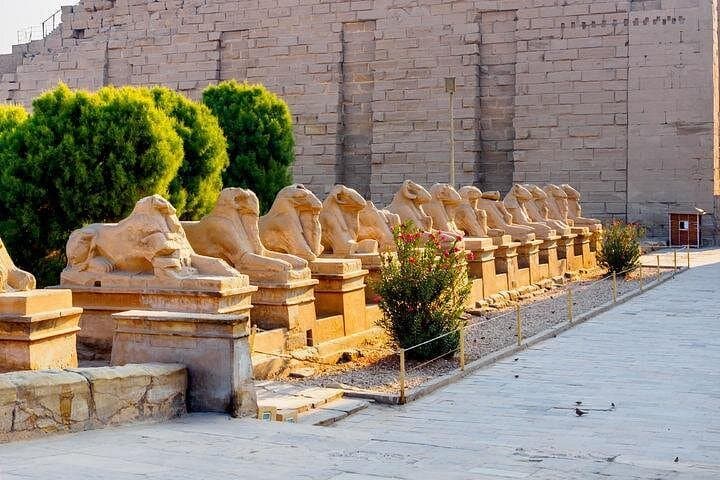
Arriving from Cairo, travelers move from modern city sprawl into the remains of Thebes, where colossi and pylons loom like pages from living history. The itinerary stitches together the West Bank’s tomb-lined cliffs and the East Bank’s sprawling temple complexes: the Valley of the Kings’ sun-baked tomb entrances, Hatshepsut’s terraced mortuary temple, the Colossi of Memnon, then Karnak’s forest of columns and the evening glow of Luxor Temple.
Geology here is simple and direct — limestone and sandstone carved against a backdrop of Nile silt plains — which helped ancient builders cut chambers into the West Bank hills. Culturally, Luxor carries millennia of ritual life; guides will point out pharaonic inscriptions, later Coptic touches and Ottoman-era additions as part of a continuous occupation.
Practical guidance matters: bring a refillable water bottle, sun protection and comfortable shoes for uneven stone and loose sand. Expect long walks and standing during guided explanations; pacing is slow around fragile tombs and controlled by restoration schedules, so specific tomb access can vary. The transfer includes a first-class rail or bus option and private vehicle touring on arrival, with hotel pick-up and train-station drop-off arranged.
Timing your visit for early morning or late afternoon light both reduces heat and reveals the carvings’ depth. Respect site rules: no touching painted reliefs, use a local guide to add context, and carry small cash for lunch, tips and minor purchases. This is a two-day compact of Egypt’s most concentrated antiquity, pragmatic in planning and intoxicating in scale.
Yes; the tour includes a first-class seat on a shared bus or sleeping train cabin depending on the option you book, plus pick-up from Cairo or Giza hotels.
The itinerary includes admissions to the East and West Bank highlights, but access to specific royal tombs can change with restoration; your guide will prioritize the best three open tombs.
Yes; the schedule includes a lunch stop (own expense) and short breaks, though days can be long—pack snacks and water for between stops.
The tour is listed as stroller-accessible and suitable for all fitness levels, but parents should expect uneven surfaces at archaeological sites and long walking segments for older children.
Sheba Tours operates guided outdoor trips and adventures with an emphasis on safety, stewardship, and memorable experiences.
The air tastes of dust and spice as the train eases toward the Nile valley and Luxor’s stone giants begin to dominate the horizon.
The air tastes of dust and spice as the train eases toward the Nile valley and Luxor’s stone giants begin to dominate the horizon.
Arriving from Cairo, travelers move from modern city sprawl into the remains of Thebes, where colossi and pylons loom like pages from living history. The itinerary stitches together the West Bank’s tomb-lined cliffs and the East Bank’s sprawling temple complexes: the Valley of the Kings’ sun-baked tomb entrances, Hatshepsut’s terraced mortuary temple, the Colossi of Memnon, then Karnak’s forest of columns and the evening glow of Luxor Temple.
Geology here is simple and direct — limestone and sandstone carved against a backdrop of Nile silt plains — which helped ancient builders cut chambers into the West Bank hills. Culturally, Luxor carries millennia of ritual life; guides will point out pharaonic inscriptions, later Coptic touches and Ottoman-era additions as part of a continuous occupation.
Practical guidance matters: bring a refillable water bottle, sun protection and comfortable shoes for uneven stone and loose sand. Expect long walks and standing during guided explanations; pacing is slow around fragile tombs and controlled by restoration schedules, so specific tomb access can vary. The transfer includes a first-class rail or bus option and private vehicle touring on arrival, with hotel pick-up and train-station drop-off arranged.
Timing your visit for early morning or late afternoon light both reduces heat and reveals the carvings’ depth. Respect site rules: no touching painted reliefs, use a local guide to add context, and carry small cash for lunch, tips and minor purchases. This is a two-day compact of Egypt’s most concentrated antiquity, pragmatic in planning and intoxicating in scale.