THE ADVENTURE COLLECTIVE® · Independent discovery and booking for outdoor travel

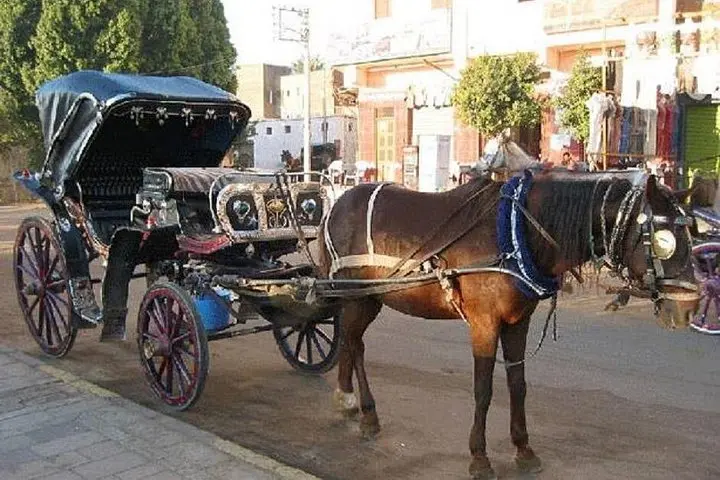
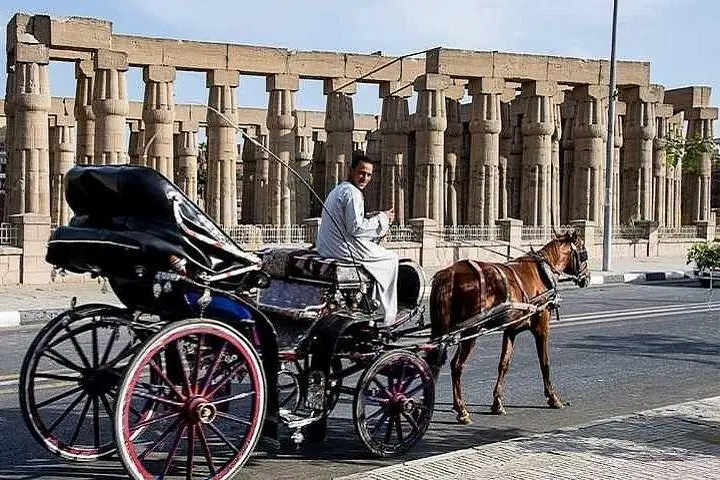
Take an hour-long horse-drawn carriage around Luxor’s East Bank to see Karnak and Luxor Temples, the Nile corniche, and bustling market lanes. It’s an accessible, low-effort way to layer ancient sites and modern street life into a single, photogenic circuit.
Take an hour-long horse-drawn carriage around Luxor’s East Bank to see Karnak and Luxor Temples, the Nile corniche, and bustling market lanes. It’s an accessible, low-effort way to layer ancient sites and modern street life into a single, photogenic circuit.
You step into a slow-moving pocket of the city as the carriage rolls off — wooden wheels thumping on pocked stone, the horse’s breath fogging in the early air. The corniche unfurls to your left, the Nile bright and patient, while minarets and temple walls rise to the right, their sandstone faces catching the sun.
Verified experiences and guided adventures in the surrounding area.
Operated by Balloon First Trip · Luxor, Luxor Governorate
You step into a slow-moving pocket of the city as the carriage rolls off — wooden wheels thumping on pocked stone, the horse’s breath fogging in the early air. The corniche unfurls to your left, the Nile bright and patient, while minarets and temple walls rise to the right, their sandstone faces catching the sun.
Luxor’s East Bank grew around the pharaonic axis of Karnak and Luxor Temples; the carriage offers a compact way to take the city’s layers in at walking pace. Built on the remains of Thebes, the avenues here are deeply historical: columns, sphinx-lined approaches and Ottoman-era houses that hint at centuries of trade. Geologically the area sits on Nile silt overlying limestone bedrock, which gives the city its flat, river-carved profile.
Culturally, the ride threads through daily life — vendors calling, shopkeepers arranging spices — offering a living contrast to the ancient stones. Locals still use horse-drawn transport for short runs, and the tour’s route intentionally passes the major temple façades and the lively souq.
Practical guidance: the tour is an easy, low-impact way to see central Luxor without long walks; it lasts about an hour and includes hotel pickup and bottled water. Dress for sun and dust — lightweight long sleeves, a hat, and closed shoes are practical. Keep a small amount of local currency for small purchases and tips for the driver; if animal welfare concerns you, ask about the stable practices before booking. Early morning or late afternoon slots balance cooler temperatures and softer light for photography.
The scheduled tour lasts about one hour and includes hotel pickup and drop-off within central Luxor.
Yes — infant seats are available and the experience is rated easy for all fitness levels; indicate needs when booking.
This carriage tour passes the main façades and nearby areas; temple admissions are not included, so check the itinerary if you want to go inside.
You can cancel for a full refund up to 24 hours before departure; bookings within 24 hours are nonrefundable.
Balloon First Trip operates guided outdoor trips and adventures with an emphasis on safety, stewardship, and memorable experiences.
You step into a slow-moving pocket of the city as the carriage rolls off — wooden wheels thumping on pocked stone, the horse’s breath fogging in the early air. The corniche unfurls to your left, the Nile bright and patient, while minarets and temple walls rise to the right, their sandstone faces catching the sun.
You step into a slow-moving pocket of the city as the carriage rolls off — wooden wheels thumping on pocked stone, the horse’s breath fogging in the early air. The corniche unfurls to your left, the Nile bright and patient, while minarets and temple walls rise to the right, their sandstone faces catching the sun.
Luxor’s East Bank grew around the pharaonic axis of Karnak and Luxor Temples; the carriage offers a compact way to take the city’s layers in at walking pace. Built on the remains of Thebes, the avenues here are deeply historical: columns, sphinx-lined approaches and Ottoman-era houses that hint at centuries of trade. Geologically the area sits on Nile silt overlying limestone bedrock, which gives the city its flat, river-carved profile.
Culturally, the ride threads through daily life — vendors calling, shopkeepers arranging spices — offering a living contrast to the ancient stones. Locals still use horse-drawn transport for short runs, and the tour’s route intentionally passes the major temple façades and the lively souq.
Practical guidance: the tour is an easy, low-impact way to see central Luxor without long walks; it lasts about an hour and includes hotel pickup and bottled water. Dress for sun and dust — lightweight long sleeves, a hat, and closed shoes are practical. Keep a small amount of local currency for small purchases and tips for the driver; if animal welfare concerns you, ask about the stable practices before booking. Early morning or late afternoon slots balance cooler temperatures and softer light for photography.