THE ADVENTURE COLLECTIVE® · Independent discovery and booking for outdoor travel

Two days in Luxor cover the valley tombs of pharaohs, Hatshepsut’s temple, Karnak’s Hypostyle Hall and optional ballooning — all with an Egyptologist guide and airport transfer. This practical guide tells you what to expect, when to go, and what to pack.
Two days in Luxor cover the valley tombs of pharaohs, Hatshepsut’s temple, Karnak’s Hypostyle Hall and optional ballooning — all with an Egyptologist guide and airport transfer. This practical guide tells you what to expect, when to go, and what to pack.
Dawn breaks over the Nile and the desert cools as a private car pulls into a low-slung airport terminal — you step into Luxor, where the past still moves in broad, deliberate gestures.
Verified experiences and guided adventures in the surrounding area.
Operated by Luxor Travels · Luxor, Luxor Governorate
Dawn breaks over the Nile and the desert cools as a private car pulls into a low-slung airport terminal — you step into Luxor, where the past still moves in broad, deliberate gestures.
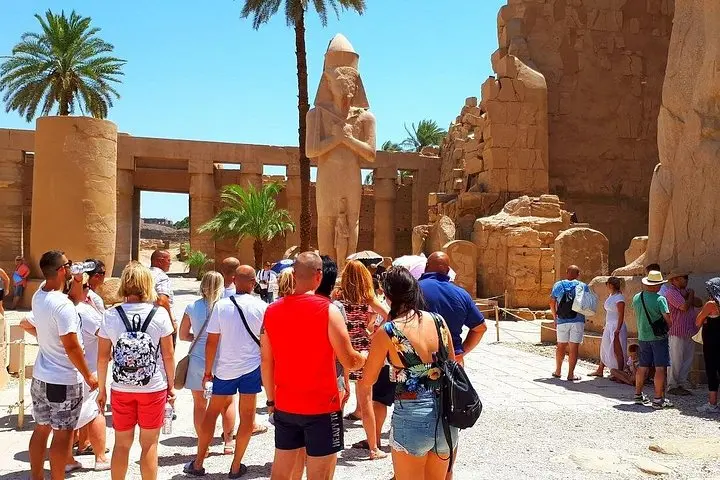
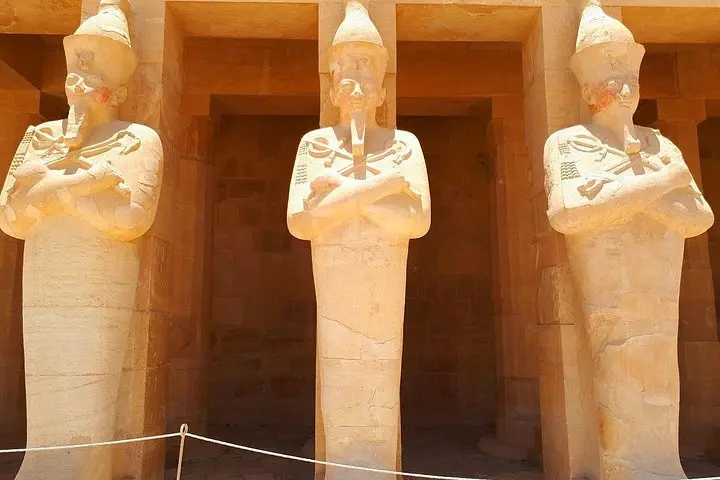
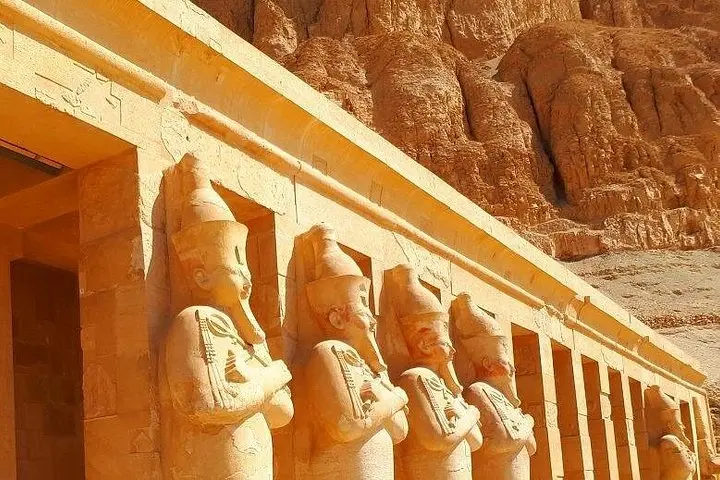
This compact two-day itinerary threads the city’s great sites into a manageable loop: the royal necropolis on the West Bank (Valley of the Kings, Hatshepsut’s mortuary temple, Medinat Habu), the Colossi of Memnon, and the monumental complexes on the East Bank (Karnak and Luxor Temples), plus the small but revealing Luxor Museum.
Geology and history intersect here: the limestone cliffs of the West Bank were carved by Nile-fed plains and became the stone canvas for New Kingdom tomb builders; the East Bank’s ceremonial avenues grew where river silts allowed grander, heavier construction. Culturally, Luxor — ancient Thebes — was the political and religious heart of Egypt during the New Kingdom, and its sites chart shifts in royal ideology and funerary practice.
Practical guidance: expect long walking days on uneven stone floors, sun exposure, and tight tomb corridors. Start early to avoid heat and crowds; temple visits often include long shaded colonnades but little airflow. Photography rules and restricted areas are enforced, and hot-air ballooning is offered as an optional extra on day two when weather permits.
Bring sun protection, comfortable closed shoes, and a refillable water bottle. Guide time is valuable here — an Egyptologist-led tour turns reliefs into legible history and keeps logistics smooth, including airport transfers and transport between East and West Banks.
This product title indicates domestic flights are included; confirm at booking and check baggage rules with the operator.
Hot-air ballooning is offered as an optional extra on day two and depends on weather and availability; it is not included in the standard itinerary.
The itinerary marks admissions for major sites as included for the listed visits, but always verify what entrance tickets are covered at the time of booking.
The tour is listed as suitable for all fitness levels, but many sites have uneven surfaces and steps; contact the operator to discuss specific accessibility needs.
Luxor Travels operates guided outdoor trips and adventures with an emphasis on safety, stewardship, and memorable experiences.
Dawn breaks over the Nile and the desert cools as a private car pulls into a low-slung airport terminal — you step into Luxor, where the past still moves in broad, deliberate gestures.
Dawn breaks over the Nile and the desert cools as a private car pulls into a low-slung airport terminal — you step into Luxor, where the past still moves in broad, deliberate gestures.
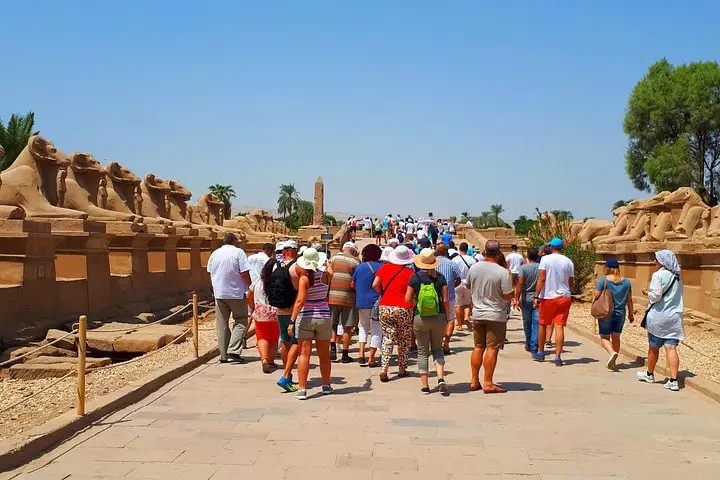
This compact two-day itinerary threads the city’s great sites into a manageable loop: the royal necropolis on the West Bank (Valley of the Kings, Hatshepsut’s mortuary temple, Medinat Habu), the Colossi of Memnon, and the monumental complexes on the East Bank (Karnak and Luxor Temples), plus the small but revealing Luxor Museum.
Geology and history intersect here: the limestone cliffs of the West Bank were carved by Nile-fed plains and became the stone canvas for New Kingdom tomb builders; the East Bank’s ceremonial avenues grew where river silts allowed grander, heavier construction. Culturally, Luxor — ancient Thebes — was the political and religious heart of Egypt during the New Kingdom, and its sites chart shifts in royal ideology and funerary practice.
Practical guidance: expect long walking days on uneven stone floors, sun exposure, and tight tomb corridors. Start early to avoid heat and crowds; temple visits often include long shaded colonnades but little airflow. Photography rules and restricted areas are enforced, and hot-air ballooning is offered as an optional extra on day two when weather permits.
Bring sun protection, comfortable closed shoes, and a refillable water bottle. Guide time is valuable here — an Egyptologist-led tour turns reliefs into legible history and keeps logistics smooth, including airport transfers and transport between East and West Banks.