THE ADVENTURE COLLECTIVE® · Independent discovery and booking for outdoor travel

Fly from Cairo and spend a focused day exploring Luxor’s East and West Banks—Valley of the Kings, Hatshepsut’s temple, Karnak and Luxor Temple—guided by a private Egyptologist. This full-day itinerary balances efficient logistics with deep historical context.
Fly from Cairo and spend a focused day exploring Luxor’s East and West Banks—Valley of the Kings, Hatshepsut’s temple, Karnak and Luxor Temple—guided by a private Egyptologist. This full-day itinerary balances efficient logistics with deep historical context.
You step off the short domestic flight and the Nile seems to pull you toward a city that made kings. In the cool morning light the columns of Karnak throw long, deliberate shadows; later the dry wind of the West Bank will push dust across royal thresholds as you move from tomb to temple.
Verified experiences and guided adventures in the surrounding area.
Operated by tripco · Luxor, Luxor Governorate
You step off the short domestic flight and the Nile seems to pull you toward a city that made kings. In the cool morning light the columns of Karnak throw long, deliberate shadows; later the dry wind of the West Bank will push dust across royal thresholds as you move from tomb to temple.
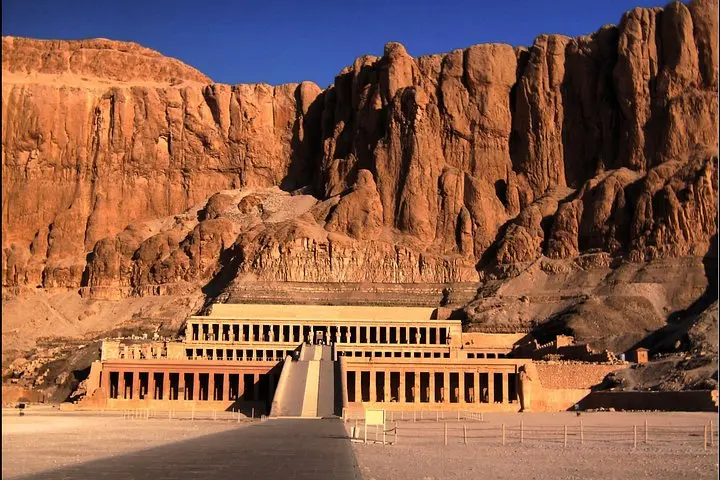
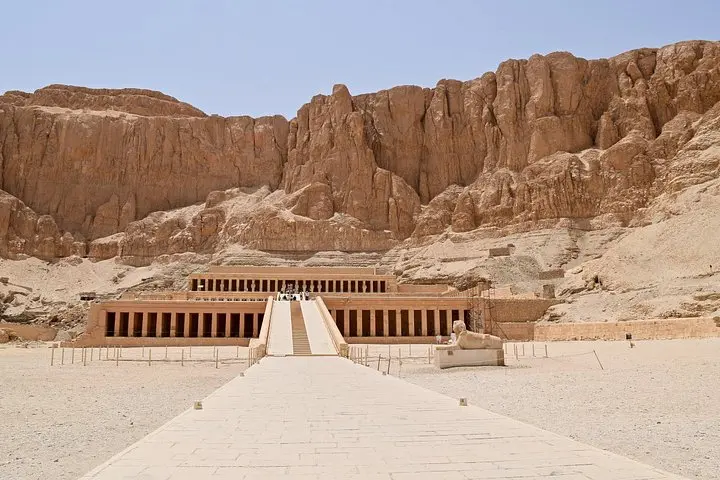
Luxor was ancient Thebes, the administrative and ritual heart of Egypt’s New Kingdom. Geologically the valley sits where the desert shelves down to the Nile floodplain, leaving exposed limestone cliffs that pharaohs carved into burial chambers. Culturally the monuments—Valley of the Kings, Hatshepsut’s terraced mortuary, Colossi of Memnon, Karnak’s hypostyle hall and Luxor Temple—trace state religion, royal propaganda and funerary practices across millennia.
Practically, this is a full 13‑hour day: hotel pickup in Cairo, ~1‑hour flight each way, and guided time at each site (Valley of the Kings ~2 hours, Karnak ~2 hours). Expect mostly flat walking on packed paths, stone steps and uneven rock in tombs; little elevation gain but many steps. Heat, sun and reflective stone are constant companions—move deliberately between shade and open courtyards.
Plan for comfortable, closed-toe shoes, sun protection, water and a light layer for early-morning and evening airport transfers. Bring cash for tipping and small museum purchases, and a camera with extra battery—the light changes quickly. Your Egyptologist guide handles logistics and context; you handle sunscreen, pacing and wonder.
Yes—round-trip flights from Cairo to Luxor are included in the tour price.
Entry fees are listed as available upon request—confirm whether tomb or special-chamber tickets (e.g., Tutankhamun’s) are covered before booking.
Expect several hours of walking across flat temple precincts and uneven tomb interiors with stair sections; total walking distance is moderate but can be taxing in heat.
The itinerary is rated physically easy and suitable for most ages, but passengers should be able to manage short flights, transfers and walking on uneven ground.
tripco operates guided outdoor trips and adventures with an emphasis on safety, stewardship, and memorable experiences.
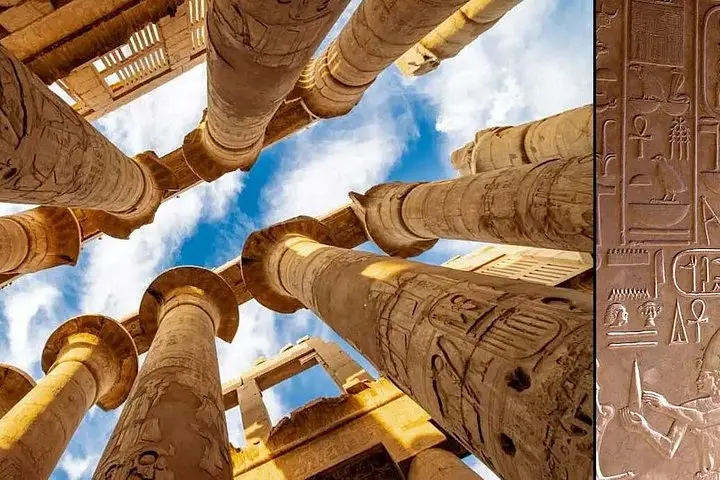
You step off the short domestic flight and the Nile seems to pull you toward a city that made kings. In the cool morning light the columns of Karnak throw long, deliberate shadows; later the dry wind of the West Bank will push dust across royal thresholds as you move from tomb to temple.
You step off the short domestic flight and the Nile seems to pull you toward a city that made kings. In the cool morning light the columns of Karnak throw long, deliberate shadows; later the dry wind of the West Bank will push dust across royal thresholds as you move from tomb to temple.
Luxor was ancient Thebes, the administrative and ritual heart of Egypt’s New Kingdom. Geologically the valley sits where the desert shelves down to the Nile floodplain, leaving exposed limestone cliffs that pharaohs carved into burial chambers. Culturally the monuments—Valley of the Kings, Hatshepsut’s terraced mortuary, Colossi of Memnon, Karnak’s hypostyle hall and Luxor Temple—trace state religion, royal propaganda and funerary practices across millennia.
Practically, this is a full 13‑hour day: hotel pickup in Cairo, ~1‑hour flight each way, and guided time at each site (Valley of the Kings ~2 hours, Karnak ~2 hours). Expect mostly flat walking on packed paths, stone steps and uneven rock in tombs; little elevation gain but many steps. Heat, sun and reflective stone are constant companions—move deliberately between shade and open courtyards.
Plan for comfortable, closed-toe shoes, sun protection, water and a light layer for early-morning and evening airport transfers. Bring cash for tipping and small museum purchases, and a camera with extra battery—the light changes quickly. Your Egyptologist guide handles logistics and context; you handle sunscreen, pacing and wonder.