THE ADVENTURE COLLECTIVE® · Independent discovery and booking for outdoor travel

Experience Karnak after dark as floodlights and narration reanimate pharaonic history. This guided evening tour pairs transport with a multilingual sound-and-light presentation and a lakeside finale at the Great Sacred Lake.
Experience Karnak after dark as floodlights and narration reanimate pharaonic history. This guided evening tour pairs transport with a multilingual sound-and-light presentation and a lakeside finale at the Great Sacred Lake.
As dusk settles over the Nile floodplain, the columns and pylons of Karnak take on a new role: they become actors in a long-running drama. Visitors file into courtyards and between colonnades as the audio narration threads through the ruins and floodlit reliefs; the show stages centuries of pharaonic ambition against the clear desert sky. Sitting by the Great Sacred Lake for the finale, the stones feel older, and the past seems close enough to touch.
Verified experiences and guided adventures in the surrounding area.
Operated by Get Luxor Tours · Luxor, Luxor Governorate
As dusk settles over the Nile floodplain, the columns and pylons of Karnak take on a new role: they become actors in a long-running drama. Visitors file into courtyards and between colonnades as the audio narration threads through the ruins and floodlit reliefs; the show stages centuries of pharaonic ambition against the clear desert sky. Sitting by the Great Sacred Lake for the finale, the stones feel older, and the past seems close enough to touch.
Karnak grew over more than a thousand years—construction from the Middle Kingdom through the New Kingdom and later dynasties left a patchwork of temples, obelisks and chapels. The complex is primarily dedicated to Amun-Ra and is one of the largest religious sites ever built; the hypostyle hall, with its towering columns, is an architectural highlight. Culturally, Karnak was the ceremonial heart of Thebes (modern Luxor), where processions, offerings and state rituals shaped ancient Egyptian civic life.
For practical planning: the official sound-and-light presentation runs about an hour and is typically packaged into a 2.5–3 hour excursion including pickup and return. Expect uneven stone paths and steps—comfortable, flat-soled shoes help. Shows are narrated in multiple languages—confirm your preferred language when booking—and earphones are usually supplied. Summer nights remain warm but can be breezy by the lake; bring a light layer. Photography is allowed but avoid high-powered tripods that block walkways. Arrival time for pickup is often 30–45 minutes before the start; a private transfer is commonly included in organized tours. With a mix of history and theater, the Karnak sound-and-light show is as much about perspective—on scale, time and the way light reshapes stone—as it is about facts and dates.
The narrated presentation itself is about 60 minutes; typical bookings include pickup and return, bringing the total excursion to approximately 2.5–3 hours.
Yes—most providers supply earphones and offer narration in multiple languages; confirm your language when booking or at check-in.
The site has uneven stone surfaces and steps; some operators can accommodate limited mobility but contact them ahead to discuss vehicle drop-off points and walking distances.
You may take photos, but avoid flash that disturbs other guests and be mindful that tripods or large equipment are often restricted during performances.
Get Luxor Tours operates guided outdoor trips and adventures with an emphasis on safety, stewardship, and memorable experiences.

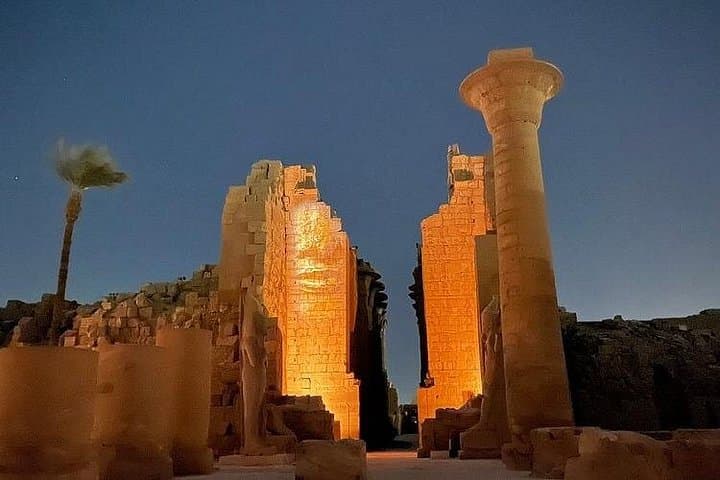

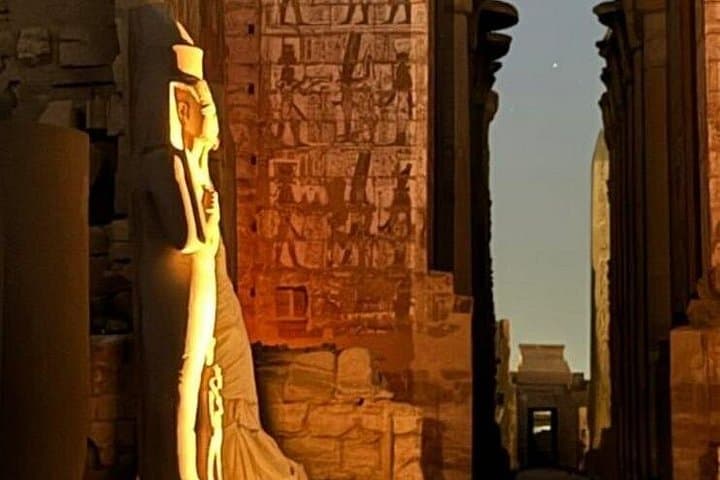
As dusk settles over the Nile floodplain, the columns and pylons of Karnak take on a new role: they become actors in a long-running drama. Visitors file into courtyards and between colonnades as the audio narration threads through the ruins and floodlit reliefs; the show stages centuries of pharaonic ambition against the clear desert sky. Sitting by the Great Sacred Lake for the finale, the stones feel older, and the past seems close enough to touch.
As dusk settles over the Nile floodplain, the columns and pylons of Karnak take on a new role: they become actors in a long-running drama. Visitors file into courtyards and between colonnades as the audio narration threads through the ruins and floodlit reliefs; the show stages centuries of pharaonic ambition against the clear desert sky. Sitting by the Great Sacred Lake for the finale, the stones feel older, and the past seems close enough to touch.
Karnak grew over more than a thousand years—construction from the Middle Kingdom through the New Kingdom and later dynasties left a patchwork of temples, obelisks and chapels. The complex is primarily dedicated to Amun-Ra and is one of the largest religious sites ever built; the hypostyle hall, with its towering columns, is an architectural highlight. Culturally, Karnak was the ceremonial heart of Thebes (modern Luxor), where processions, offerings and state rituals shaped ancient Egyptian civic life.
For practical planning: the official sound-and-light presentation runs about an hour and is typically packaged into a 2.5–3 hour excursion including pickup and return. Expect uneven stone paths and steps—comfortable, flat-soled shoes help. Shows are narrated in multiple languages—confirm your preferred language when booking—and earphones are usually supplied. Summer nights remain warm but can be breezy by the lake; bring a light layer. Photography is allowed but avoid high-powered tripods that block walkways. Arrival time for pickup is often 30–45 minutes before the start; a private transfer is commonly included in organized tours. With a mix of history and theater, the Karnak sound-and-light show is as much about perspective—on scale, time and the way light reshapes stone—as it is about facts and dates.