THE ADVENTURE COLLECTIVE® · Independent discovery and booking for outdoor travel

Fly from Cairo for an overnight in Luxor to see Karnak, Luxor Temple, the Valley of the Kings and Hatshepsut’s mortuary temple. This private 2-day itinerary pairs expert guiding with efficient transfers so you can experience major pharaonic sites without a long overland trip.
Fly from Cairo for an overnight in Luxor to see Karnak, Luxor Temple, the Valley of the Kings and Hatshepsut’s mortuary temple. This private 2-day itinerary pairs expert guiding with efficient transfers so you can experience major pharaonic sites without a long overland trip.
You step out of the airport into a dry, warm wind and the Nile suddenly feels close — a broad green ribbon threading an ochre desert. On day one your guide leads you through Karnak’s avenue of columns where stone giants still throw long shadows; later, Luxor Temple’s sandstone walls hold the faint gloss of millennia of offerings.
Verified experiences and guided adventures in the surrounding area.
Operated by Hesham Egypt tour guide · Luxor, Luxor Governorate
You step out of the airport into a dry, warm wind and the Nile suddenly feels close — a broad green ribbon threading an ochre desert. On day one your guide leads you through Karnak’s avenue of columns where stone giants still throw long shadows; later, Luxor Temple’s sandstone walls hold the faint gloss of millennia of offerings.
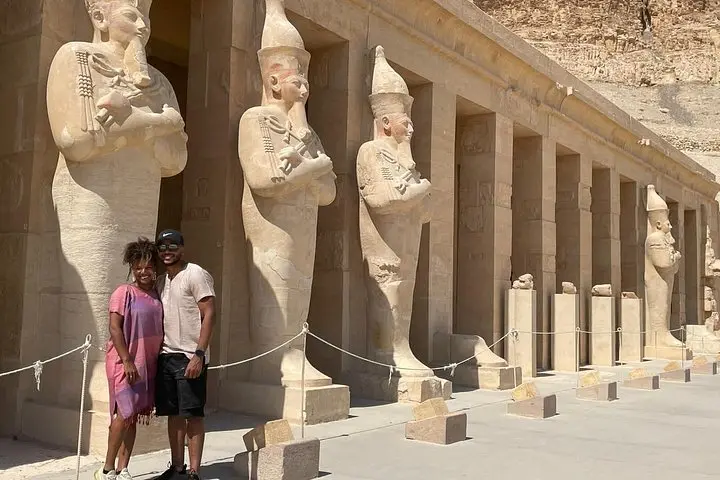
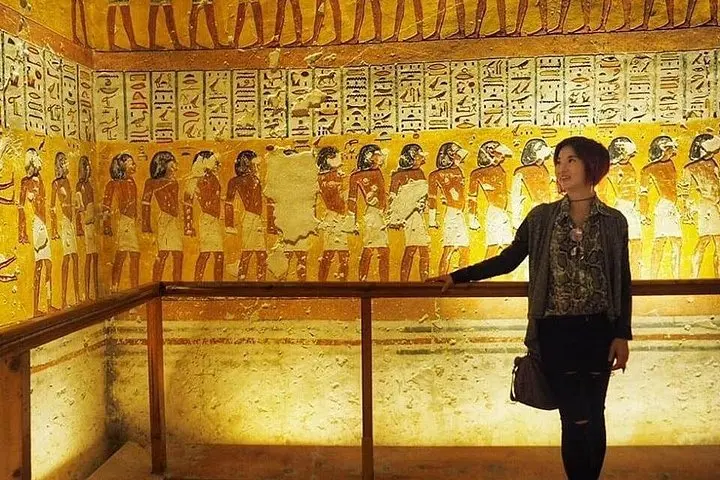
Luxor occupies the site of ancient Thebes, a complex of Pharaonic, Coptic and Islamic layers. Geologically the West Bank’s valley is a band of softer limestone cut by wadi and wind, which made it a practical place to carve tombs; 62 royal tombs sit within the Valley of the Kings, their painted chambers revealing funerary texts and star maps. Hatshepsut’s terraced mortuary temple at Deir el-Bahari climbs like a human-made cliff, while the Karnak complex grew over 1,500 years as rulers added pylons and sanctuaries.
Culturally expect a rhythm of bargaining, small coffees on the quay, and Egyptologists who read hieroglyphs like weather reports. Practically: the tour uses a round flight Cairo–Luxor, one-night lodging (Lotus Hotel), and an air-conditioned vehicle for transfers. Sightseeing involves mostly paved temple complexes and short climbs; allow early starts to avoid midday heat, carry water, and keep modest dress for sacred sites. Photography rules and entry fees vary by tomb—your guide handles tickets but bring local cash for small purchases.
This itinerary packs key monuments into one efficient overnight: immersive history balanced with enough downtime along the Nile to feel the contrast between desert and river life.
This tour includes the round-trip flight Cairo–Luxor; confirmation and timings are provided at booking and transfers are arranged to/from airports and hotels.
The guide typically handles admissions as part of the private tour, but certain tombs or optional sites may require additional onsite fees — carry some local cash.
Sites have uneven stone, steps, and limited ramps; while general fitness is low-impact, full mobility is helpful. Contact the operator about specific accessibility needs.
Tipping is customary; plan modest tip amounts for your guide and driver based on service and local norms — your guide can advise an appropriate sum.
Hesham Egypt tour guide operates guided outdoor trips and adventures with an emphasis on safety, stewardship, and memorable experiences.
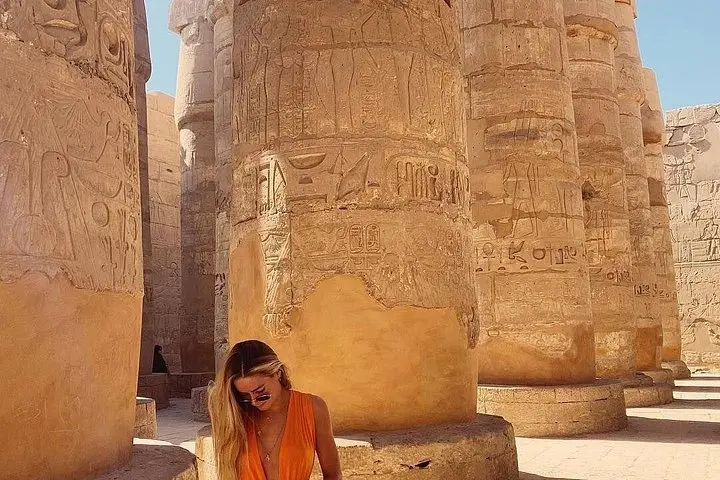
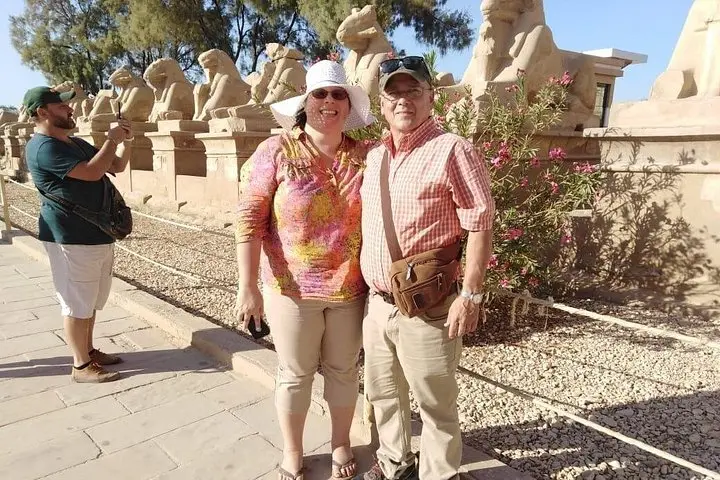
You step out of the airport into a dry, warm wind and the Nile suddenly feels close — a broad green ribbon threading an ochre desert. On day one your guide leads you through Karnak’s avenue of columns where stone giants still throw long shadows; later, Luxor Temple’s sandstone walls hold the faint gloss of millennia of offerings.
You step out of the airport into a dry, warm wind and the Nile suddenly feels close — a broad green ribbon threading an ochre desert. On day one your guide leads you through Karnak’s avenue of columns where stone giants still throw long shadows; later, Luxor Temple’s sandstone walls hold the faint gloss of millennia of offerings.
Luxor occupies the site of ancient Thebes, a complex of Pharaonic, Coptic and Islamic layers. Geologically the West Bank’s valley is a band of softer limestone cut by wadi and wind, which made it a practical place to carve tombs; 62 royal tombs sit within the Valley of the Kings, their painted chambers revealing funerary texts and star maps. Hatshepsut’s terraced mortuary temple at Deir el-Bahari climbs like a human-made cliff, while the Karnak complex grew over 1,500 years as rulers added pylons and sanctuaries.
Culturally expect a rhythm of bargaining, small coffees on the quay, and Egyptologists who read hieroglyphs like weather reports. Practically: the tour uses a round flight Cairo–Luxor, one-night lodging (Lotus Hotel), and an air-conditioned vehicle for transfers. Sightseeing involves mostly paved temple complexes and short climbs; allow early starts to avoid midday heat, carry water, and keep modest dress for sacred sites. Photography rules and entry fees vary by tomb—your guide handles tickets but bring local cash for small purchases.
This itinerary packs key monuments into one efficient overnight: immersive history balanced with enough downtime along the Nile to feel the contrast between desert and river life.