THE ADVENTURE COLLECTIVE® · Independent discovery and booking for outdoor travel

Float over the Valley of the Kings at dawn, then let a felucca carry you along the Nile at sunset — a two-part Luxor experience that pairs aerial perspective with river-level calm. Expect a crisp morning ascent, historic panoramas, and a relaxed evening sail.
Float over the Valley of the Kings at dawn, then let a felucca carry you along the Nile at sunset — a two-part Luxor experience that pairs aerial perspective with river-level calm. Expect a crisp morning ascent, historic panoramas, and a relaxed evening sail.
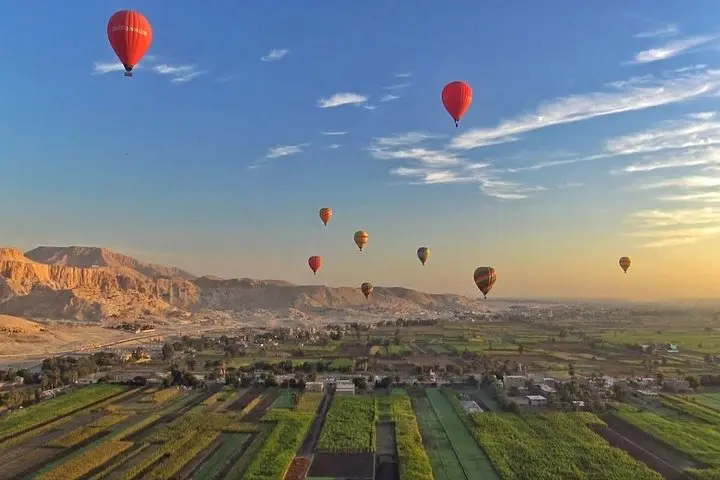
You lift off before the city wakes, the balloon’s flame punctuating a pale sky while the Nile below unspools like a living ribbon. From 300–600 metres the West Bank’s tomb-topped ridges, the rectangular terraces of Hatshepsut’s mortuary temple and the scattered pylons of the Valley of the Kings read like a slow-moving map. The wind carries the burner’s pulse; distant fields and palm-groves slide by, the desert pushing its ochres toward the river’s green.
Verified experiences and guided adventures in the surrounding area.
Operated by Egypt Private Trips · Luxor, Luxor Governorate
You lift off before the city wakes, the balloon’s flame punctuating a pale sky while the Nile below unspools like a living ribbon. From 300–600 metres the West Bank’s tomb-topped ridges, the rectangular terraces of Hatshepsut’s mortuary temple and the scattered pylons of the Valley of the Kings read like a slow-moving map. The wind carries the burner’s pulse; distant fields and palm-groves slide by, the desert pushing its ochres toward the river’s green.
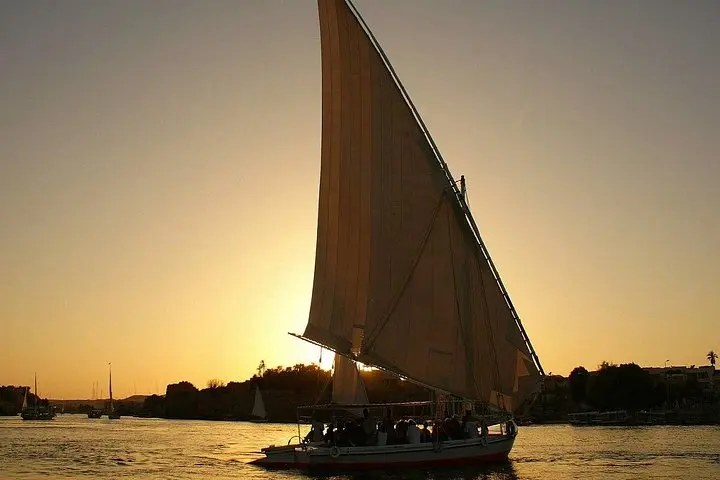
Luxor sits on the ruins of ancient Thebes, built where the fertile Nile floodplain meets limestone cliffs carved by millennia of wind and water. Balloon flights give a direct view of that geology: calcified ridges, arid plateau and the irrigated plots that have sustained civilization here for millennia. Come evening, the felucca reintroduces a human scale — traditional sailors trim a single triangular sail and the river tugs you along as villages and temple silhouettes scroll past.
Practicalities are straightforward: expect a 45-minute balloon segment and roughly an hour on the felucca, with total door-to-door timing commonly 2–4 hours. Pickup and private air-conditioned transfers are usually included; drink water and wear sun protection. Dress in layers for cool mornings and hot afternoons, secure cameras with straps, and listen to crew safety briefings — boarding and landing require attention. Book early in high season; visibility and wind determine flight availability. This pairing delivers two complementary perspectives on Luxor: the wide, aerial sweep of antiquity, and the intimate, river-level rhythm that has shaped daily life here for generations.
The standard airborne time is about 45 minutes, though the full pickup-to-return window is longer to cover transfers and ground briefings.
Infants are permitted but must sit on an adult’s lap; operators may have age or weight restrictions — confirm at booking.
Typical inclusions are hotel pickup and return by private air-conditioned vehicle, a professional guide, balloon flight, felucca ride, bottled water and applicable service charges and taxes.
Many operators allow full refunds for cancellations made at least 24 hours before departure; verify the exact policy when you book.
Egypt Private Trips operates guided outdoor trips and adventures with an emphasis on safety, stewardship, and memorable experiences.
You lift off before the city wakes, the balloon’s flame punctuating a pale sky while the Nile below unspools like a living ribbon. From 300–600 metres the West Bank’s tomb-topped ridges, the rectangular terraces of Hatshepsut’s mortuary temple and the scattered pylons of the Valley of the Kings read like a slow-moving map. The wind carries the burner’s pulse; distant fields and palm-groves slide by, the desert pushing its ochres toward the river’s green.
You lift off before the city wakes, the balloon’s flame punctuating a pale sky while the Nile below unspools like a living ribbon. From 300–600 metres the West Bank’s tomb-topped ridges, the rectangular terraces of Hatshepsut’s mortuary temple and the scattered pylons of the Valley of the Kings read like a slow-moving map. The wind carries the burner’s pulse; distant fields and palm-groves slide by, the desert pushing its ochres toward the river’s green.
Luxor sits on the ruins of ancient Thebes, built where the fertile Nile floodplain meets limestone cliffs carved by millennia of wind and water. Balloon flights give a direct view of that geology: calcified ridges, arid plateau and the irrigated plots that have sustained civilization here for millennia. Come evening, the felucca reintroduces a human scale — traditional sailors trim a single triangular sail and the river tugs you along as villages and temple silhouettes scroll past.
Practicalities are straightforward: expect a 45-minute balloon segment and roughly an hour on the felucca, with total door-to-door timing commonly 2–4 hours. Pickup and private air-conditioned transfers are usually included; drink water and wear sun protection. Dress in layers for cool mornings and hot afternoons, secure cameras with straps, and listen to crew safety briefings — boarding and landing require attention. Book early in high season; visibility and wind determine flight availability. This pairing delivers two complementary perspectives on Luxor: the wide, aerial sweep of antiquity, and the intimate, river-level rhythm that has shaped daily life here for generations.