THE ADVENTURE COLLECTIVE® · Independent discovery and booking for outdoor travel

A five-day luxury Nile cruise from Hurghada to Abu Simbel that combines guided visits to Luxor, Edfu, Kom Ombo and Aswan with comfortable onboard accommodations. Ideal for travelers who want immersive history with seamless logistics and hotel pick-up from Hurghada.
A five-day luxury Nile cruise from Hurghada to Abu Simbel that combines guided visits to Luxor, Edfu, Kom Ombo and Aswan with comfortable onboard accommodations. Ideal for travelers who want immersive history with seamless logistics and hotel pick-up from Hurghada.
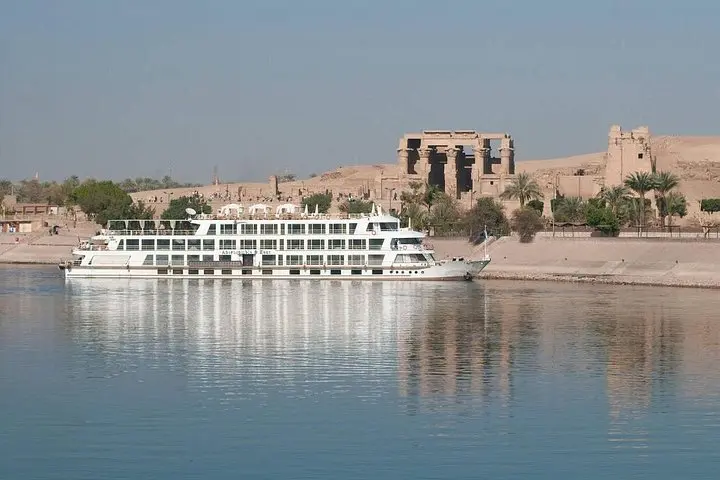
The sun rises over the river as the cruise slips away from Luxor, the Nile lifting the ship like a slow-moving timeline of human history. Deck chairs catch the first light, palm-lined banks and small feluccas drifting by while an Egyptologist points out temple silhouettes that have watched the water for millennia.
Verified experiences and guided adventures in the surrounding area.
Operated by Cleopatra Travel · Luxor, Luxor Governorate
The sun rises over the river as the cruise slips away from Luxor, the Nile lifting the ship like a slow-moving timeline of human history. Deck chairs catch the first light, palm-lined banks and small feluccas drifting by while an Egyptologist points out temple silhouettes that have watched the water for millennia.
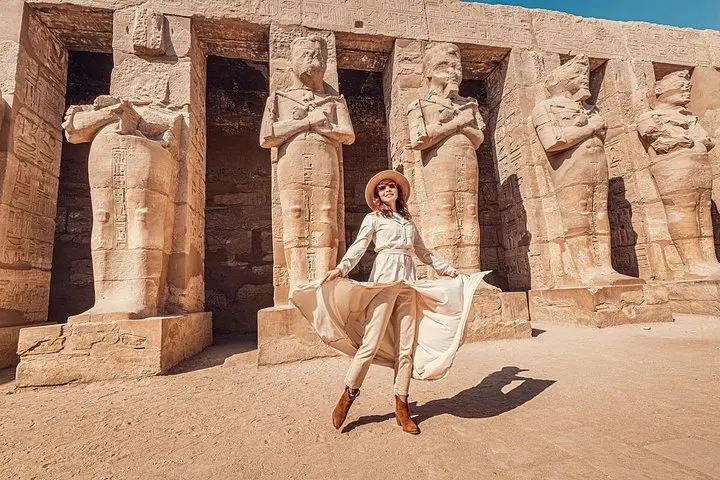
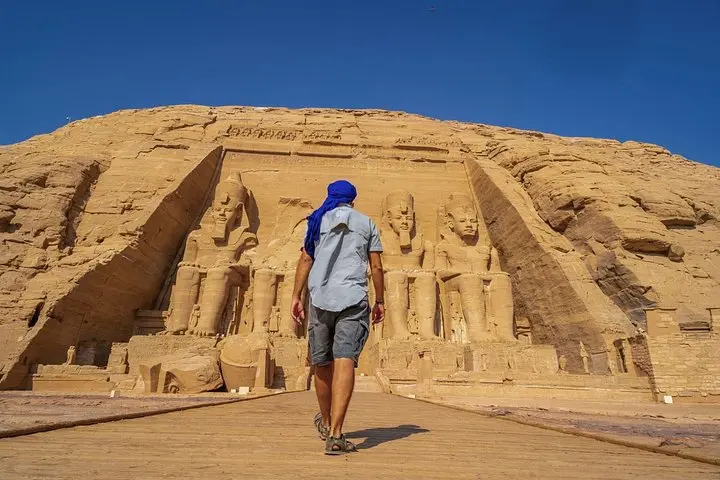
This five-day route threads the Nile between Luxor and Aswan before a dawn return to Abu Simbel. Geologically, the river cuts through sedimentary layers of sandstone and limestone that Egyptian builders carved into temples and tombs; culturally, the route crosses the heartland of Pharaonic power—Karnak’s hypostyle halls, the Valley of the Kings’ painted chambers, Hatshepsut’s terraced mortuary, and the twin sanctuaries of Kom Ombo. Modern history is present too: the Aswan High Dam reshaped the landscape and prompted the international rescue of Abu Simbel in the 1960s.
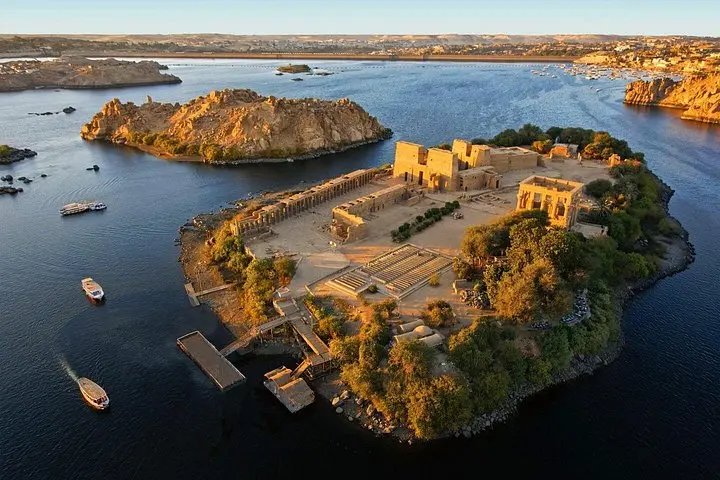
Onboard life balances comfort with access: panoramic cabins, guided shore visits, and afternoons watching agricultural life unfold along the banks. Expect guided walks through temple complexes, a short motorboat to Philae, and an early pre-dawn transfer to Abu Simbel to catch the site in cooler light.
Practical notes: carry sun protection and a refillable water bottle, wear sturdy closed-toe shoes for uneven temple ramps, and plan for early mornings and long transfer drives. Local markets in Aswan offer crafts and spices—bargain politely. Respect photography rules in sacred spaces, and budget time to acclimate to heat; the Nile invites slow travel, so let the river set the day’s pace and move with it.
Yes; the tour includes an early-morning transfer and guided visit to the Abu Simbel temples on the final day.
Full-board meals are included—breakfast, lunch and dinner—on the 5-star cruise, with bottled water provided during excursions.
The cruise notes wheelchair accessibility and describes the program as suitable for all fitness levels, but some temple sites have steps and uneven paths—advance notification of special needs is recommended.
Most travelers to Egypt require a visa—check national requirements before travel; routine vaccinations are generally recommended and consult a travel clinic for current advice.
Cleopatra Travel operates guided outdoor trips and adventures with an emphasis on safety, stewardship, and memorable experiences.
The sun rises over the river as the cruise slips away from Luxor, the Nile lifting the ship like a slow-moving timeline of human history. Deck chairs catch the first light, palm-lined banks and small feluccas drifting by while an Egyptologist points out temple silhouettes that have watched the water for millennia.
The sun rises over the river as the cruise slips away from Luxor, the Nile lifting the ship like a slow-moving timeline of human history. Deck chairs catch the first light, palm-lined banks and small feluccas drifting by while an Egyptologist points out temple silhouettes that have watched the water for millennia.
This five-day route threads the Nile between Luxor and Aswan before a dawn return to Abu Simbel. Geologically, the river cuts through sedimentary layers of sandstone and limestone that Egyptian builders carved into temples and tombs; culturally, the route crosses the heartland of Pharaonic power—Karnak’s hypostyle halls, the Valley of the Kings’ painted chambers, Hatshepsut’s terraced mortuary, and the twin sanctuaries of Kom Ombo. Modern history is present too: the Aswan High Dam reshaped the landscape and prompted the international rescue of Abu Simbel in the 1960s.
Onboard life balances comfort with access: panoramic cabins, guided shore visits, and afternoons watching agricultural life unfold along the banks. Expect guided walks through temple complexes, a short motorboat to Philae, and an early pre-dawn transfer to Abu Simbel to catch the site in cooler light.
Practical notes: carry sun protection and a refillable water bottle, wear sturdy closed-toe shoes for uneven temple ramps, and plan for early mornings and long transfer drives. Local markets in Aswan offer crafts and spices—bargain politely. Respect photography rules in sacred spaces, and budget time to acclimate to heat; the Nile invites slow travel, so let the river set the day’s pace and move with it.