THE ADVENTURE COLLECTIVE® · Independent discovery and booking for outdoor travel

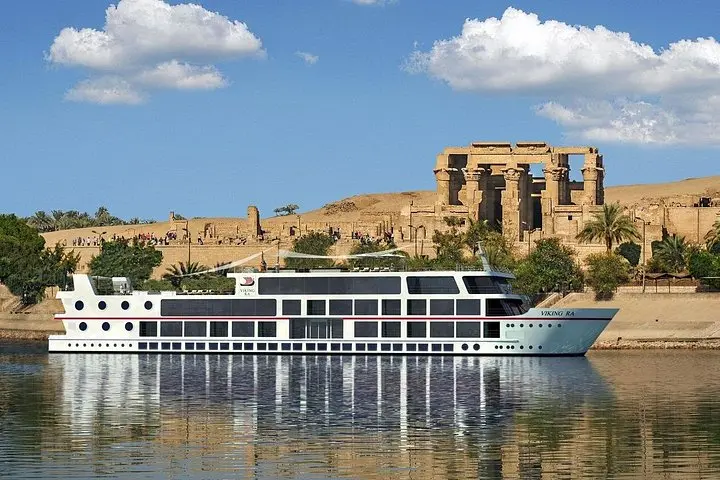
Float downstream from Luxor to Aswan on a five-day, five-star Nile cruise that pairs sunrise ballooning and guided temple visits with comfortable cabins and full-board dining. Expect iconic antiquities, quiet river crossings, and an optional early transfer to Abu Simbel.
Float downstream from Luxor to Aswan on a five-day, five-star Nile cruise that pairs sunrise ballooning and guided temple visits with comfortable cabins and full-board dining. Expect iconic antiquities, quiet river crossings, and an optional early transfer to Abu Simbel.
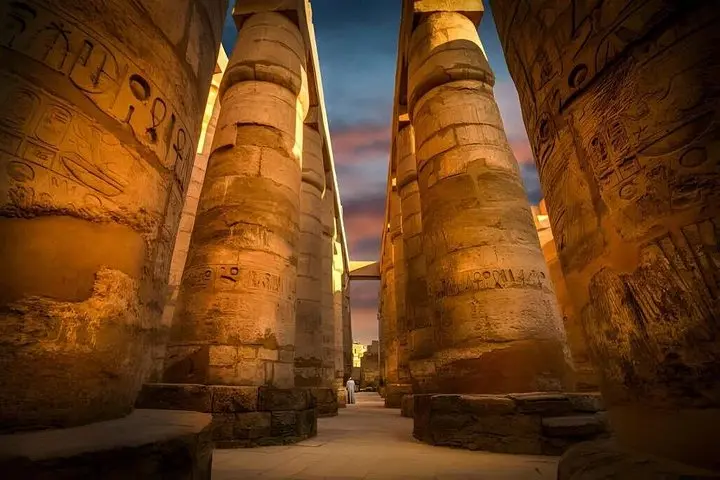
Dawn breaks over the West Bank and the Nile dares you forward — a slow, luminous current carrying palm-lined banks and the stone faces of millennia. On this five-day, full-board cruise you move through Egypt’s river valley the way ancient courtiers once did: by water, with temples arriving on the horizon like actors in a procession.
Verified experiences and guided adventures in the surrounding area.
Operated by Top Tours In Egypt · Luxor, Luxor Governorate
Dawn breaks over the West Bank and the Nile dares you forward — a slow, luminous current carrying palm-lined banks and the stone faces of millennia. On this five-day, full-board cruise you move through Egypt’s river valley the way ancient courtiers once did: by water, with temples arriving on the horizon like actors in a procession.
The route follows roughly 240 km of the Nile between Luxor and Aswan, cutting through the fertile floodplain that supported the New Kingdom. Expect visits to monumental sites: Karnak and Luxor Temples, the Valley of the Kings, Hatshepsut’s terraces, the Ptolemaic sanctuaries at Edfu and Kom Ombo, and Philae’s island shrine — all set on low-lying, geologically stable river terraces carved by thousands of years of seasonal flows. Local culture remains visible in riverside markets, Nubian villages near Aswan and the slow rhythms aboard the boat.
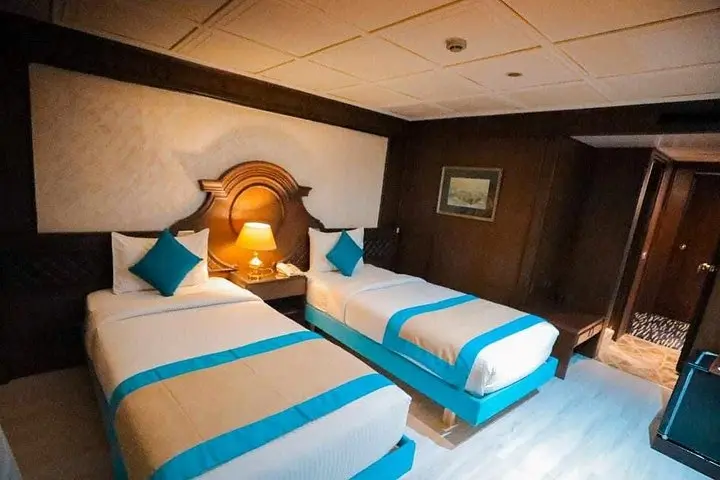
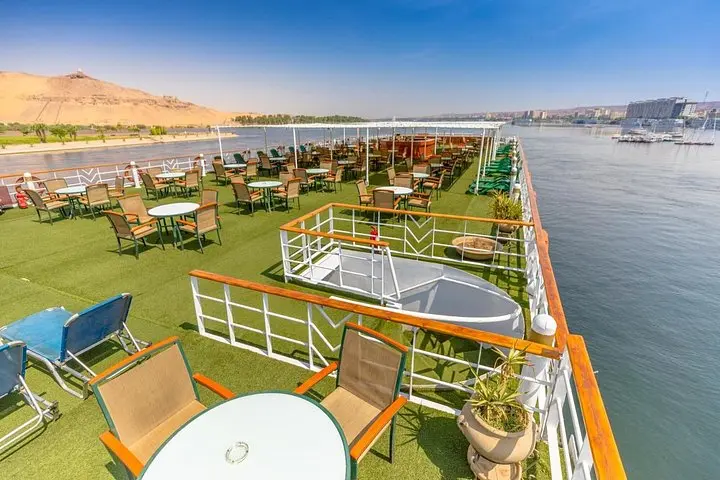
Practical planning matters: early starts for dawn hot-air balloon flights over Luxor are common, and many itineraries include an early coach transfer to Abu Simbel (about 280 km south of Aswan) rather than sailing. Expect comfortable, hotel-style cabins on a five-star cruiser, guided shore excursions, and full-board dining. Bring sun protection and breathable layers for cool mornings and very warm afternoons, carry original passport and a photocopy for museum entries, and bank on short guided walks at archaeological sites — mostly flat but with steps and uneven stone. Hydrate, move at the pace of the Nile, and leave room for quiet observation between monuments.
Many operators include an optional sunrise balloon over Luxor; flights are regulated and typically safe when run by licensed local companies — expect a brief safety briefing.
Abu Simbel is about 280 km south of Aswan; most cruises offer an early-morning coach transfer (round-trip) rather than sailing the temple due to river geography.
Major sites have limited accessibility; ramps and paved paths exist in some areas but many tombs and temple platforms involve steps and uneven ground — check in advance for specific needs.
Most nationalities must hold a valid passport and may require a tourist visa for Egypt; check current embassy rules before travel and carry passport copies on board.
Top Tours In Egypt operates guided outdoor trips and adventures with an emphasis on safety, stewardship, and memorable experiences.
Dawn breaks over the West Bank and the Nile dares you forward — a slow, luminous current carrying palm-lined banks and the stone faces of millennia. On this five-day, full-board cruise you move through Egypt’s river valley the way ancient courtiers once did: by water, with temples arriving on the horizon like actors in a procession.
Dawn breaks over the West Bank and the Nile dares you forward — a slow, luminous current carrying palm-lined banks and the stone faces of millennia. On this five-day, full-board cruise you move through Egypt’s river valley the way ancient courtiers once did: by water, with temples arriving on the horizon like actors in a procession.
The route follows roughly 240 km of the Nile between Luxor and Aswan, cutting through the fertile floodplain that supported the New Kingdom. Expect visits to monumental sites: Karnak and Luxor Temples, the Valley of the Kings, Hatshepsut’s terraces, the Ptolemaic sanctuaries at Edfu and Kom Ombo, and Philae’s island shrine — all set on low-lying, geologically stable river terraces carved by thousands of years of seasonal flows. Local culture remains visible in riverside markets, Nubian villages near Aswan and the slow rhythms aboard the boat.
Practical planning matters: early starts for dawn hot-air balloon flights over Luxor are common, and many itineraries include an early coach transfer to Abu Simbel (about 280 km south of Aswan) rather than sailing. Expect comfortable, hotel-style cabins on a five-star cruiser, guided shore excursions, and full-board dining. Bring sun protection and breathable layers for cool mornings and very warm afternoons, carry original passport and a photocopy for museum entries, and bank on short guided walks at archaeological sites — mostly flat but with steps and uneven stone. Hydrate, move at the pace of the Nile, and leave room for quiet observation between monuments.