THE ADVENTURE COLLECTIVE® · Independent discovery and booking for outdoor travel

Sail from Luxor to Aswan on a four-night Nile cruise that pairs an Egyptologist-guided itinerary with on-deck watching of river life. Visit Karnak, the Valley of the Kings, Edfu, Kom Ombo and Philae while enjoying full board accommodation.
Sail from Luxor to Aswan on a four-night Nile cruise that pairs an Egyptologist-guided itinerary with on-deck watching of river life. Visit Karnak, the Valley of the Kings, Edfu, Kom Ombo and Philae while enjoying full board accommodation.
Morning light slides across the Nile as the cruise pulls away from Luxor — minarets and temple pylons shrinking while the river, thick with history, dares you to keep watch. On deck, the current pushes the boat and the pace of time: palm-fringed banks, fishermen casting thin silhouettes, and sandstone cliffs receding like pages of a long book.
Verified experiences and guided adventures in the surrounding area.
Operated by Look at Egypt Tours · Luxor, Luxor Governorate
Morning light slides across the Nile as the cruise pulls away from Luxor — minarets and temple pylons shrinking while the river, thick with history, dares you to keep watch. On deck, the current pushes the boat and the pace of time: palm-fringed banks, fishermen casting thin silhouettes, and sandstone cliffs receding like pages of a long book.
This 4-night voyage follows the artery that sustained pharaonic civilization. Between Luxor and Aswan lie monuments spanning the New Kingdom through the Ptolemaic era: Karnak’s hypostyle halls, Hatshepsut’s terraced mortuary, the tombs of the Valley of the Kings, then Edfu and Kom Ombo’s Ptolemaic façades before Philae’s island sanctuaries. Geologically, the Nile here carries valley silt and has carved a narrow fertile ribbon through arid desert, concentrating settlement and ritual sites along its banks.
Expect guided walks ashore and short drives to sites; many stops involve steps, uneven stone, and open sun. Audio from an Egyptologist brings relief carvings and dynasties into focus, but the tour also highlights modern Nubian culture, local markets, and the UNESCO relocation of Philae.
Practical edge: travel light, plan for strong sun and heat, and allow time for slow mornings on deck. Bring comfortable, closed-toe shoes for temple steps, a brimmed hat, and a refillable bottle. Currency, passport, and a modest dress code for religious and archaeological sites make landings smoother. The route is approachable for most travelers, but visitors should be prepared for crowds at top attractions and brief transfers by shuttle or tender.
Most visitors require a tourist visa for Egypt; check your nationality’s requirements and obtain a visa on arrival or e-visa before travel where applicable.
This package includes entry fees to listed sites, round-trip transfers, and shore excursions as described in the itinerary.
Some vessels and transfers advertise wheelchair accessibility, but access at archaeological sites can be limited by steps and uneven terrain — request specifics before booking.
Fall through spring (October–April) offers milder temperatures and more comfortable touring; summers are hot and require sun precautions.
Look at Egypt Tours operates guided outdoor trips and adventures with an emphasis on safety, stewardship, and memorable experiences.

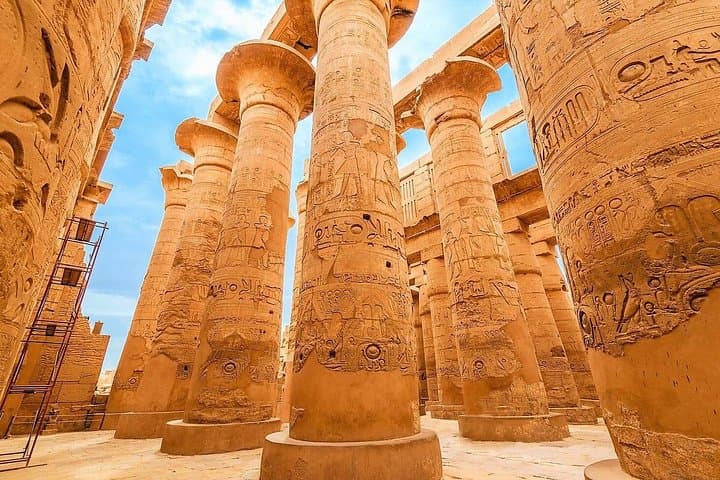


Morning light slides across the Nile as the cruise pulls away from Luxor — minarets and temple pylons shrinking while the river, thick with history, dares you to keep watch. On deck, the current pushes the boat and the pace of time: palm-fringed banks, fishermen casting thin silhouettes, and sandstone cliffs receding like pages of a long book.
Morning light slides across the Nile as the cruise pulls away from Luxor — minarets and temple pylons shrinking while the river, thick with history, dares you to keep watch. On deck, the current pushes the boat and the pace of time: palm-fringed banks, fishermen casting thin silhouettes, and sandstone cliffs receding like pages of a long book.
This 4-night voyage follows the artery that sustained pharaonic civilization. Between Luxor and Aswan lie monuments spanning the New Kingdom through the Ptolemaic era: Karnak’s hypostyle halls, Hatshepsut’s terraced mortuary, the tombs of the Valley of the Kings, then Edfu and Kom Ombo’s Ptolemaic façades before Philae’s island sanctuaries. Geologically, the Nile here carries valley silt and has carved a narrow fertile ribbon through arid desert, concentrating settlement and ritual sites along its banks.
Expect guided walks ashore and short drives to sites; many stops involve steps, uneven stone, and open sun. Audio from an Egyptologist brings relief carvings and dynasties into focus, but the tour also highlights modern Nubian culture, local markets, and the UNESCO relocation of Philae.
Practical edge: travel light, plan for strong sun and heat, and allow time for slow mornings on deck. Bring comfortable, closed-toe shoes for temple steps, a brimmed hat, and a refillable bottle. Currency, passport, and a modest dress code for religious and archaeological sites make landings smoother. The route is approachable for most travelers, but visitors should be prepared for crowds at top attractions and brief transfers by shuttle or tender.