THE ADVENTURE COLLECTIVE® · Independent discovery and booking for outdoor travel

Make the short journey from Luxor to Kom Ombo to stand between two gods and a living river. This private tour pairs scenic Nile drives with focused time at a uniquely dual‑dedicated Ptolemaic temple.
Make the short journey from Luxor to Kom Ombo to stand between two gods and a living river. This private tour pairs scenic Nile drives with focused time at a uniquely dual‑dedicated Ptolemaic temple.
You step from the air‑conditioned vehicle onto the hot flagstones and the Nile breathes at your feet — a steady ribbon of green that carried Egypt's lifeblood for millennia.
Verified experiences and guided adventures in the surrounding area.
Operated by Eyes of Egypt · Kom Ombo, Aswan Governorate
You step from the air‑conditioned vehicle onto the hot flagstones and the Nile breathes at your feet — a steady ribbon of green that carried Egypt's lifeblood for millennia.
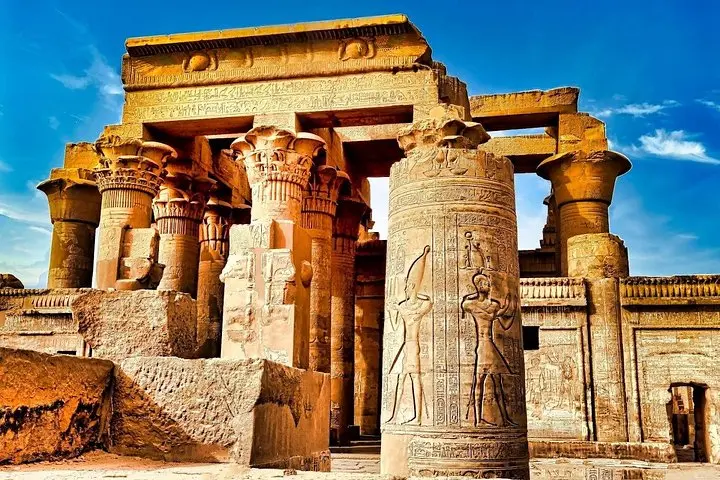
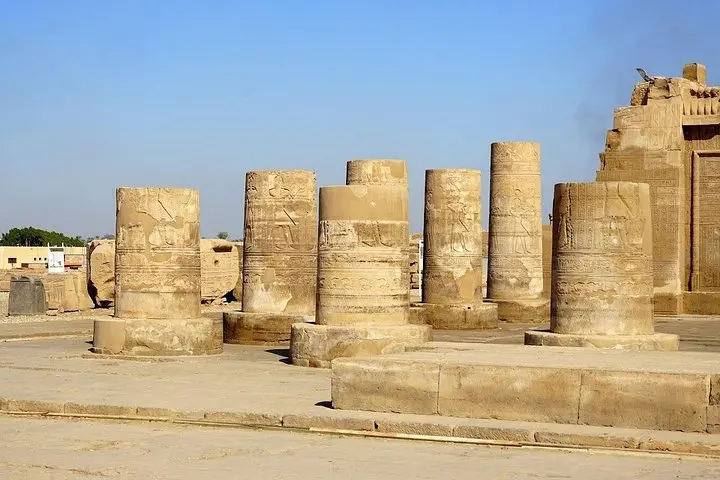
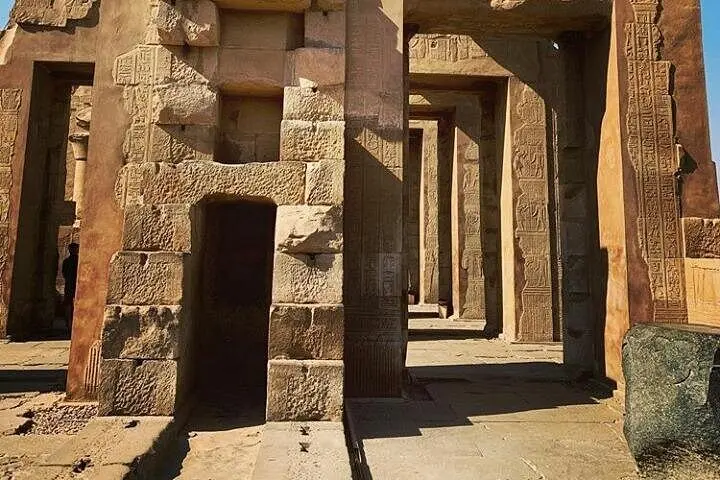
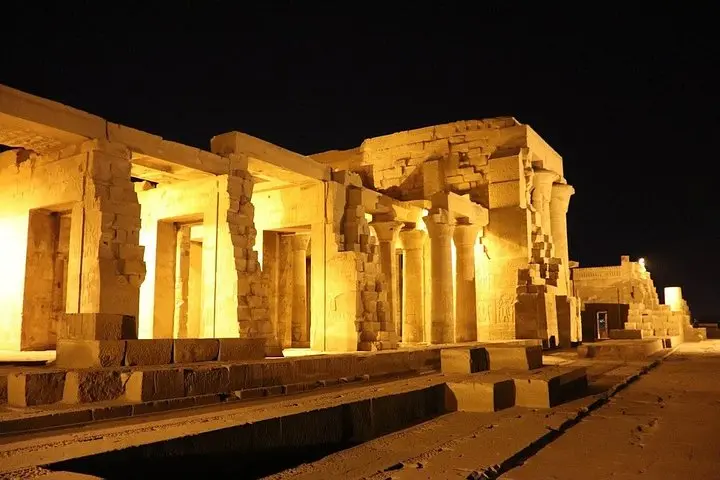
Kom Ombo's temple sits half in sun and half in shadow, its paired colonnades facing two gods: the crocodile‑faced Sobek and the falcon‑headed Horus. Built largely in the Ptolemaic period atop older foundations, the complex shows Ptolemaic stonework layered over Pharaonic belief; carved reliefs still point to rituals, fertility rites and the ancients' practical need to control a living river.
Geology here is plain to read: Nile silt and sandstone foundations laid down by ancient floods, flaked by modern winds and softened by decades of tourism. Local culture is quietly present — fishermen mending nets on the riverbank, a small museum of crocodile mummies beside the temple, and a village market where you can buy dates and handwoven mats.
Practical guidance: tours run 8–9 hours round trip from Luxor with long drives along the Nile; expect roughly three hours total at the temple and transit time each way. Bring sun protection, water, and a camera; wear sturdy shoes for uneven stone and low steps. If you pick a Golden or Diamond package, an Egyptologist will unpack the iconography and medical papyri references for you. Accessibility is reasonable but ask about wheelchair options for vehicle transfer. Morning departures avoid the strongest sun; late afternoon light is best for photos. Respect the carvings and follow site rules — these stones are fragile and the stories they hold are finite.
Expect roughly 1.5 to 2 hours each way by car, depending on traffic and stops along the Nile.
Only the Diamond package explicitly includes entrance tickets; Silver and Golden may require on‑site payment—confirm at booking.
Access to the immediate temple approach is possible with assistance and vehicle ramps, but interior areas have uneven steps—check options before booking.
Yes — photography is allowed, but avoid flash on delicate reliefs and respect any posted restrictions.
Eyes of Egypt operates guided outdoor trips and adventures with an emphasis on safety, stewardship, and memorable experiences.
You step from the air‑conditioned vehicle onto the hot flagstones and the Nile breathes at your feet — a steady ribbon of green that carried Egypt's lifeblood for millennia.
You step from the air‑conditioned vehicle onto the hot flagstones and the Nile breathes at your feet — a steady ribbon of green that carried Egypt's lifeblood for millennia.
Kom Ombo's temple sits half in sun and half in shadow, its paired colonnades facing two gods: the crocodile‑faced Sobek and the falcon‑headed Horus. Built largely in the Ptolemaic period atop older foundations, the complex shows Ptolemaic stonework layered over Pharaonic belief; carved reliefs still point to rituals, fertility rites and the ancients' practical need to control a living river.
Geology here is plain to read: Nile silt and sandstone foundations laid down by ancient floods, flaked by modern winds and softened by decades of tourism. Local culture is quietly present — fishermen mending nets on the riverbank, a small museum of crocodile mummies beside the temple, and a village market where you can buy dates and handwoven mats.
Practical guidance: tours run 8–9 hours round trip from Luxor with long drives along the Nile; expect roughly three hours total at the temple and transit time each way. Bring sun protection, water, and a camera; wear sturdy shoes for uneven stone and low steps. If you pick a Golden or Diamond package, an Egyptologist will unpack the iconography and medical papyri references for you. Accessibility is reasonable but ask about wheelchair options for vehicle transfer. Morning departures avoid the strongest sun; late afternoon light is best for photos. Respect the carvings and follow site rules — these stones are fragile and the stories they hold are finite.