THE ADVENTURE COLLECTIVE® · Independent discovery and booking for outdoor travel

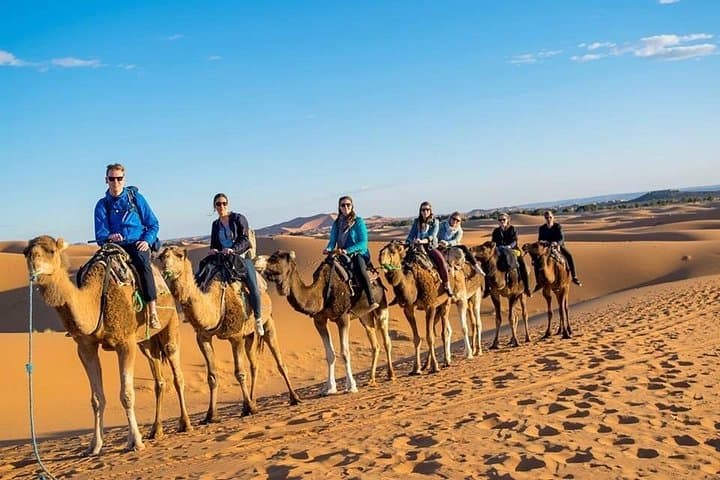
Cross cedar forests and the Ziz Valley on a fast-paced 2-day trip from Fez to the Erg Chebbi dunes. Ride a camel to a Berber camp, sleep under a star-filled sky, and catch sunrise over shifting sand.
Cross cedar forests and the Ziz Valley on a fast-paced 2-day trip from Fez to the Erg Chebbi dunes. Ride a camel to a Berber camp, sleep under a star-filled sky, and catch sunrise over shifting sand.
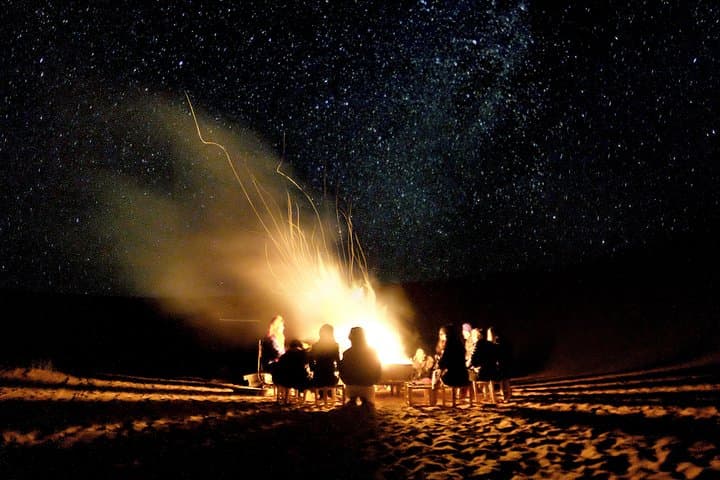
A raw wind brushes across the flank of a towering dune as you arrive at a low-lit Berber bivouac. Night here is a deep, cold vault pierced by bright stars; the campfire throws long, honeyed shadows and the camels stand patient, breath steaming in the chill.
Verified experiences and guided adventures in the surrounding area.
Operated by Planet of Morocco · Merzouga, Drâa-Tafilalet
A raw wind brushes across the flank of a towering dune as you arrive at a low-lit Berber bivouac. Night here is a deep, cold vault pierced by bright stars; the campfire throws long, honeyed shadows and the camels stand patient, breath steaming in the chill.
The route from Fez threads through cedar forests and mountain passes, pauses at Ifrane to watch Barbary macaques, and slides down into the broad, palm-lined Ziz Valley before the first sweep of sand. Geologically, the Erg Chebbi dunes are wind-built ridges of golden sand—some rises climb roughly 100–150 meters—shifting daily under desert winds that act like sculptors. Culturally, the trip is a short immersion into Berber hospitality: low tents, communal meals, and music around the fire speak to a living nomadic tradition shaped by long trade routes and Sahara rhythms.
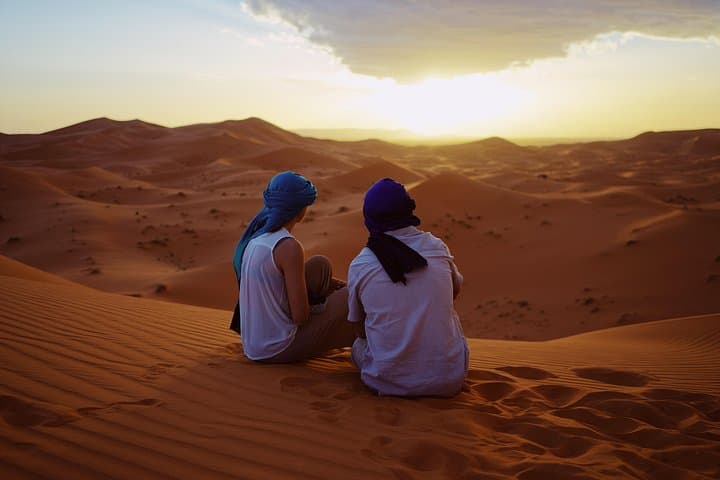
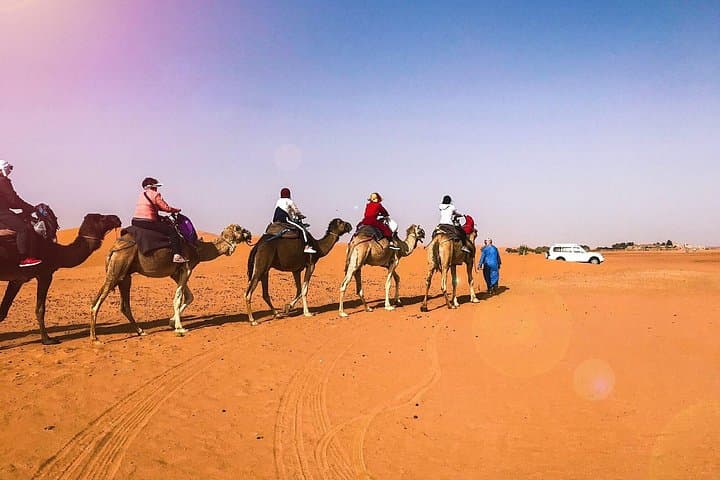
Practically, plan for a long drive (roughly 8–10 hours total each way depending on stops) and a half-hour camel ride into the camp; leave large luggage with your driver and bring a small daypack for essentials. Temperatures swing dramatically—sunny, hot afternoons and cold nights—so layers, sun protection, and plenty of water are essential. Photography is best at sunrise or sunset when dunes throw deep, textured shadows. Expect simple but comfortable tent accommodation, a cooked dinner and breakfast, and the rare quiet of the desert that both slows and sharpens your senses. This short, concentrated overnight gives a vivid taste of Saharan landscape without demanding advanced technical skill.
The tour departs from Fez with round-trip transport included and returns to Fez on day two.
The guided camel transfer into the camp is typically around 20–40 minutes each way depending on your chosen bivouac location.
Yes—your driver can store luggage during the overnight in the desert; carry a small backpack with essentials to the camp.
Accommodations are traditional Berber tents with basic bedding, a campfire and simple dinner; it’s camp comfort rather than luxury hotel standards.
Planet of Morocco operates guided outdoor trips and adventures with an emphasis on safety, stewardship, and memorable experiences.
A raw wind brushes across the flank of a towering dune as you arrive at a low-lit Berber bivouac. Night here is a deep, cold vault pierced by bright stars; the campfire throws long, honeyed shadows and the camels stand patient, breath steaming in the chill.
A raw wind brushes across the flank of a towering dune as you arrive at a low-lit Berber bivouac. Night here is a deep, cold vault pierced by bright stars; the campfire throws long, honeyed shadows and the camels stand patient, breath steaming in the chill.
The route from Fez threads through cedar forests and mountain passes, pauses at Ifrane to watch Barbary macaques, and slides down into the broad, palm-lined Ziz Valley before the first sweep of sand. Geologically, the Erg Chebbi dunes are wind-built ridges of golden sand—some rises climb roughly 100–150 meters—shifting daily under desert winds that act like sculptors. Culturally, the trip is a short immersion into Berber hospitality: low tents, communal meals, and music around the fire speak to a living nomadic tradition shaped by long trade routes and Sahara rhythms.
Practically, plan for a long drive (roughly 8–10 hours total each way depending on stops) and a half-hour camel ride into the camp; leave large luggage with your driver and bring a small daypack for essentials. Temperatures swing dramatically—sunny, hot afternoons and cold nights—so layers, sun protection, and plenty of water are essential. Photography is best at sunrise or sunset when dunes throw deep, textured shadows. Expect simple but comfortable tent accommodation, a cooked dinner and breakfast, and the rare quiet of the desert that both slows and sharpens your senses. This short, concentrated overnight gives a vivid taste of Saharan landscape without demanding advanced technical skill.