THE ADVENTURE COLLECTIVE® · Independent discovery and booking for outdoor travel

Cross the High Atlas, explore Aït Ben Haddou and Todra Gorge, then sleep in a luxury Merzouga camp after a sunset camel trek. This 3-day circuit blends dramatic drives, cultural stops, and dune-time under star-filled skies.
Cross the High Atlas, explore Aït Ben Haddou and Todra Gorge, then sleep in a luxury Merzouga camp after a sunset camel trek. This 3-day circuit blends dramatic drives, cultural stops, and dune-time under star-filled skies.
The sun slips low behind jagged ochre ridges as your convoy descends from the High Atlas, and the road loosens into a horizon of sand. On this three-day route from Marrakech to Merzouga you trade red city alleyways for wind-shaped dunes; camels sway you across Erg Chebbi while a luxury camp waits with hot water and a private tent.
Verified experiences and guided adventures in the surrounding area.
Operated by Around Marrakech Tours - Morocco tours · Merzouga, Drâa-Tafilalet
The sun slips low behind jagged ochre ridges as your convoy descends from the High Atlas, and the road loosens into a horizon of sand. On this three-day route from Marrakech to Merzouga you trade red city alleyways for wind-shaped dunes; camels sway you across Erg Chebbi while a luxury camp waits with hot water and a private tent.
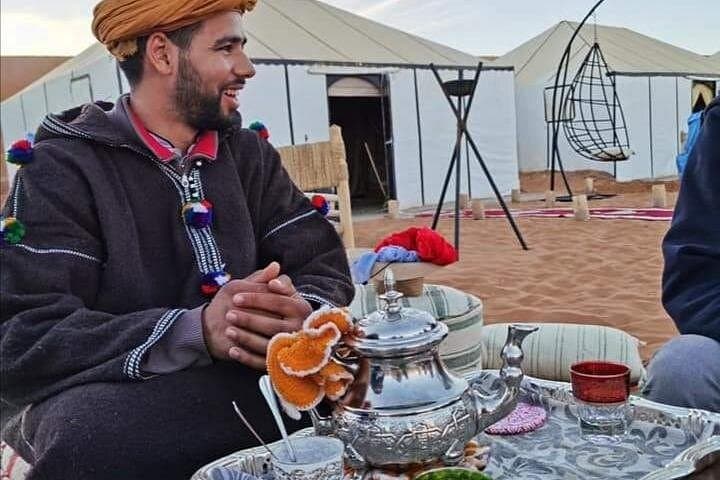
Historically the track follows old caravan corridors between the Atlas and Saharan plateaus; Aït Ben Haddou and Ouarzazate are reminders of mud-brick defensive towns that controlled trans-Saharan trade. Geologically the route moves from folded Precambrian and Mesozoic strata in the High Atlas down into Quaternary dune fields where wind packs sand into 150m ridgelines. Culturally you’ll meet Berber hospitality — towns along the Dades and Todra gorges still rely on traditional irrigation and guesthouse networks.
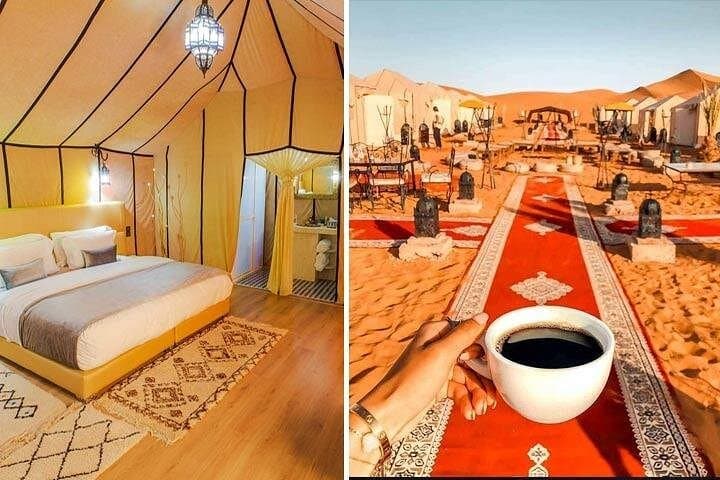
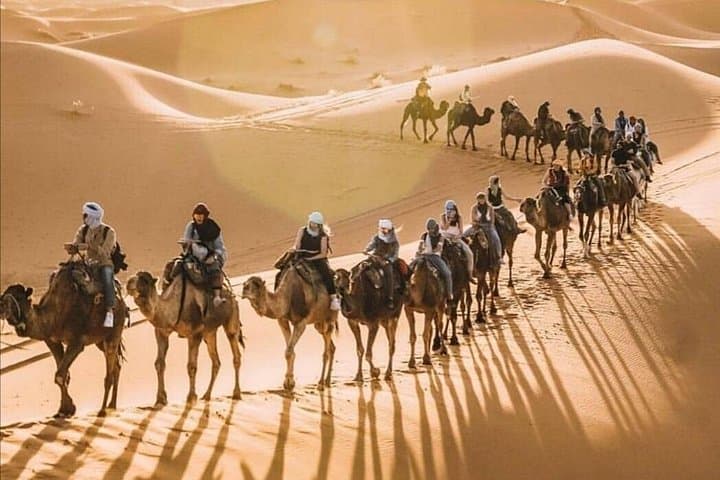
Expect two long driving days split by concentrated walking and a 1–2 hour camel trek at sunrise or sunset. Terrain varies: paved mountain passes (Tizi-n-Tichka, 2,260 m), narrow canyon walks in Todra, and loose sand in Merzouga. The luxury camp provides private bathrooms and dinner under an expansive sky that seems to press its stars closer.
Practical guidance: schedule early starts to avoid midday heat, carry layered clothing for desert nights, and bring sunscreen and at least 2–3 liters of water per day. If you plan sandboarding, closed-toe shoes and a brief practice session on smaller dunes make the sport safer. This trip is as much about the roads and villages as it is about the dunes — travel time rewards those who come prepared.
Expect several hours of driving daily: roughly 6–8 hours on day one and day three with shorter drives and local stops on day two to reach Merzouga.
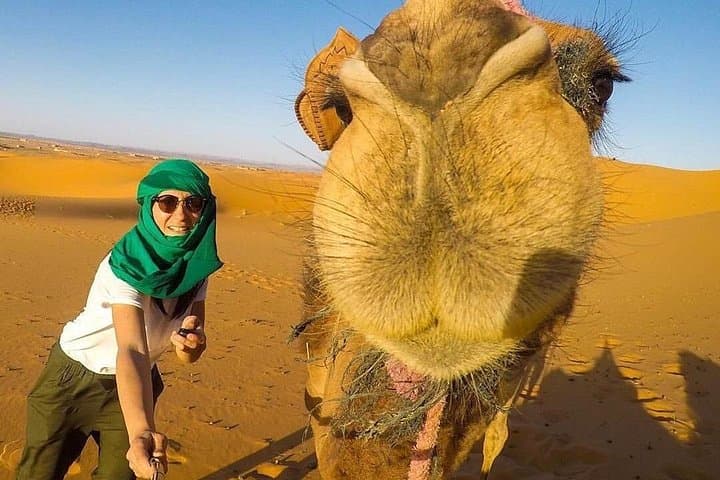
Camel treks are low-impact but require balance; rides last about 1–2 hours and guides ensure safety — inform the operator of any mobility issues.
This itinerary includes a luxury tent camp with private bathroom facilities, dinner and breakfast, and comfortable bedding designed for travelers who prefer more amenities than traditional camps.
Tours operate year-round; pack light breathable clothing for daytime, warm layers for nights (especially Oct–Mar), sunscreen, and a hat.
Around Marrakech Tours - Morocco tours operates guided outdoor trips and adventures with an emphasis on safety, stewardship, and memorable experiences.
The sun slips low behind jagged ochre ridges as your convoy descends from the High Atlas, and the road loosens into a horizon of sand. On this three-day route from Marrakech to Merzouga you trade red city alleyways for wind-shaped dunes; camels sway you across Erg Chebbi while a luxury camp waits with hot water and a private tent.
The sun slips low behind jagged ochre ridges as your convoy descends from the High Atlas, and the road loosens into a horizon of sand. On this three-day route from Marrakech to Merzouga you trade red city alleyways for wind-shaped dunes; camels sway you across Erg Chebbi while a luxury camp waits with hot water and a private tent.
Historically the track follows old caravan corridors between the Atlas and Saharan plateaus; Aït Ben Haddou and Ouarzazate are reminders of mud-brick defensive towns that controlled trans-Saharan trade. Geologically the route moves from folded Precambrian and Mesozoic strata in the High Atlas down into Quaternary dune fields where wind packs sand into 150m ridgelines. Culturally you’ll meet Berber hospitality — towns along the Dades and Todra gorges still rely on traditional irrigation and guesthouse networks.
Expect two long driving days split by concentrated walking and a 1–2 hour camel trek at sunrise or sunset. Terrain varies: paved mountain passes (Tizi-n-Tichka, 2,260 m), narrow canyon walks in Todra, and loose sand in Merzouga. The luxury camp provides private bathrooms and dinner under an expansive sky that seems to press its stars closer.
Practical guidance: schedule early starts to avoid midday heat, carry layered clothing for desert nights, and bring sunscreen and at least 2–3 liters of water per day. If you plan sandboarding, closed-toe shoes and a brief practice session on smaller dunes make the sport safer. This trip is as much about the roads and villages as it is about the dunes — travel time rewards those who come prepared.