THE ADVENTURE COLLECTIVE® · Independent discovery and booking for outdoor travel

Float from Aswan to Luxor on a four-day luxury cruise that pairs relaxed river travel with private Egyptologist-led visits to Philae, Kom Ombo, Edfu and the temples and tombs of Luxor. Expect comfortable cabins, air-conditioned transfers and expert context for each ancient site.
Float from Aswan to Luxor on a four-day luxury cruise that pairs relaxed river travel with private Egyptologist-led visits to Philae, Kom Ombo, Edfu and the temples and tombs of Luxor. Expect comfortable cabins, air-conditioned transfers and expert context for each ancient site.
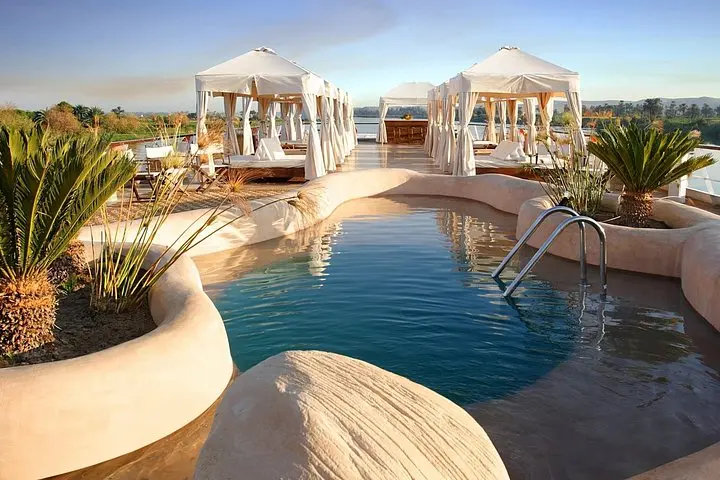
The Nile pushes the cruise gently north, and from the shaded deck you watch river life move at a patient pace — feluccas skimming past, dates ripening on distant palms, and the occasional village road narrowing into a sunbaked track.
Verified experiences and guided adventures in the surrounding area.
Operated by CRUISE ERA · Aswan, Aswan Governorate
The Nile pushes the cruise gently north, and from the shaded deck you watch river life move at a patient pace — feluccas skimming past, dates ripening on distant palms, and the occasional village road narrowing into a sunbaked track.
This four-day luxury cruise begins in Aswan, where modern engineering (the Aswan High Dam) meets millennia of sacred architecture. Over the next days you’ll visit rescued monuments at Philae, the dual cult complex at Kom Ombo, Edfu’s preserved Temple of Horus, then Luxor’s West and East Banks: the Valley of the Kings, Hatshepsut’s terraces, Karnak and Luxor Temples. Geologically the valley is a river-cut corridor—silty floodplain beside Nubian granite outcrops—and that contrast shaped ancient settlement patterns and temple placement.
Culturally this route traces Pharaohs’ passage between life and afterlife; your Egyptologist will place carvings and ceremonies in context and point out Ptolemaic and New Kingdom layers.
Practically, expect comfortable cabins, meals on board, and short guided walks across uneven stone, stairs and sandy approaches. Temperatures can spike midday; schedule temple visits early or late when possible. Wear sturdy walking shoes for tomb steps, bring sun protection and a refillable water bottle. Photography rules vary: no flash inside many tombs. Transfers are private and air-conditioned, and most entrance fees are included, but carry small change for tips and local purchases.
This itinerary balances slow river time with concentrated, expert-led archaeology — ideal for travelers who want immersive history without constant packing and unpacking.
Most major entrance fees listed in the itinerary (Philae, Kom Ombo, Edfu, Valley of the Kings, Karnak, Luxor) are included; check your booking confirmation for specifics.
Transfers and the boat are wheelchair-accessible, but many temple sites and tombs involve uneven steps and narrow passages—ask about options for limited walking when booking.
Tipping is customary; guides and crew appreciate small, direct tips in local currency—plan accordingly for personal gratuities at the end of the trip.
Flash is often prohibited to protect wall paintings; photography allowances vary by site, so follow your Egyptologist's guidance.
CRUISE ERA operates guided outdoor trips and adventures with an emphasis on safety, stewardship, and memorable experiences.


The Nile pushes the cruise gently north, and from the shaded deck you watch river life move at a patient pace — feluccas skimming past, dates ripening on distant palms, and the occasional village road narrowing into a sunbaked track.
The Nile pushes the cruise gently north, and from the shaded deck you watch river life move at a patient pace — feluccas skimming past, dates ripening on distant palms, and the occasional village road narrowing into a sunbaked track.
This four-day luxury cruise begins in Aswan, where modern engineering (the Aswan High Dam) meets millennia of sacred architecture. Over the next days you’ll visit rescued monuments at Philae, the dual cult complex at Kom Ombo, Edfu’s preserved Temple of Horus, then Luxor’s West and East Banks: the Valley of the Kings, Hatshepsut’s terraces, Karnak and Luxor Temples. Geologically the valley is a river-cut corridor—silty floodplain beside Nubian granite outcrops—and that contrast shaped ancient settlement patterns and temple placement.
Culturally this route traces Pharaohs’ passage between life and afterlife; your Egyptologist will place carvings and ceremonies in context and point out Ptolemaic and New Kingdom layers.
Practically, expect comfortable cabins, meals on board, and short guided walks across uneven stone, stairs and sandy approaches. Temperatures can spike midday; schedule temple visits early or late when possible. Wear sturdy walking shoes for tomb steps, bring sun protection and a refillable water bottle. Photography rules vary: no flash inside many tombs. Transfers are private and air-conditioned, and most entrance fees are included, but carry small change for tips and local purchases.
This itinerary balances slow river time with concentrated, expert-led archaeology — ideal for travelers who want immersive history without constant packing and unpacking.