THE ADVENTURE COLLECTIVE® · Independent discovery and booking for outdoor travel

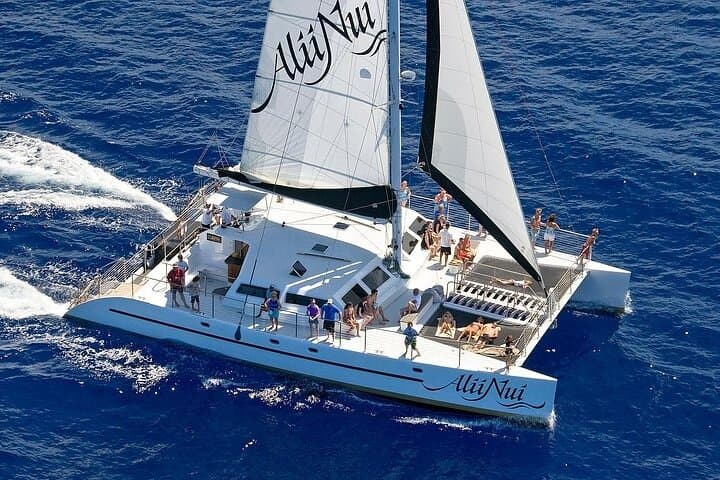
Set out from Ma'alaea Harbor on a 65' catamaran for a focused, two-hour encounter with migrating humpbacks. Expert naturalists, onsite hydrophones and a premium open bar make this a comfortable, wildlife-first whale watch during Maui's December–April season.
Set out from Ma'alaea Harbor on a 65' catamaran for a focused, two-hour encounter with migrating humpbacks. Expert naturalists, onsite hydrophones and a premium open bar make this a comfortable, wildlife-first whale watch during Maui's December–April season.
The catamaran eases away from Ma'alaea Pier and the Pacific opens like a live map — silver ridges of swell, the distant churn of a breaching humpback, and a breeze that carries salt and the faint hiss of the hydrophone.
Verified experiences and guided adventures in the surrounding area.
Operated by Alii Nui Sailing Charters · Ma'alaea, Hawaii
The catamaran eases away from Ma'alaea Pier and the Pacific opens like a live map — silver ridges of swell, the distant churn of a breaching humpback, and a breeze that carries salt and the faint hiss of the hydrophone.
This two-hour, expert-led outing on a 65' catamaran is a focused whale-watch: no snorkeling, no detours, just time on the water during Maui's prime humpback season (mid-December to April). Humpbacks migrate from Alaska to Hawaii to calve and court; the shallow, warm channels off West Maui offer the perfect stage for breaches, tail slaps and close approaches. Geologically, the platform around West Maui drops off into deeper channels that whales use as travel lanes, while currents stir nutrient pockets that attract baitfish and, in turn, predators.
Locally, commercial whale-watching has become both a cultural and economic rhythm for communities from Ma'alaea to Lahaina. Operators follow NOAA guidelines to minimize disturbance — your captain and onboard marine naturalist will explain behaviors and migration timing, and you'll hear live whale song through a hydrophone.
Practical guidance: arrive 30 minutes early at Slip #56 for boarding, expect a short pier walk and a small step across a gap (crew assist available). Dress in layers; open decks provide panoramic views but can be windy. Bring reef-safe sunscreen, a camera with a zoom or binoculars, and motion-sickness remedies if prone to seasickness. The experience includes light local bites, a premium open bar, and a professional photographer onboard, making it both comfortable and wildlife-focused.
Peak season runs roughly December 15 through April; while sightings are common in that window, wildlife is never guaranteed — operators use local knowledge to maximize chances.
Yes — a premium open bar including Maui Brewing Co. options is included in the cruise; standard responsible-consumption rules apply.
Yes — the catamaran has cabin restrooms accessed via steps; boarding requires walking down a pier and stepping across a gap but crew assist with getting on and off the vessel.
Yes — the boat is equipped with a hydrophone so the marine naturalist can pipe live whale song to the deck, enhancing behavior interpretation.
Alii Nui Sailing Charters operates guided outdoor trips and adventures with an emphasis on safety, stewardship, and memorable experiences.
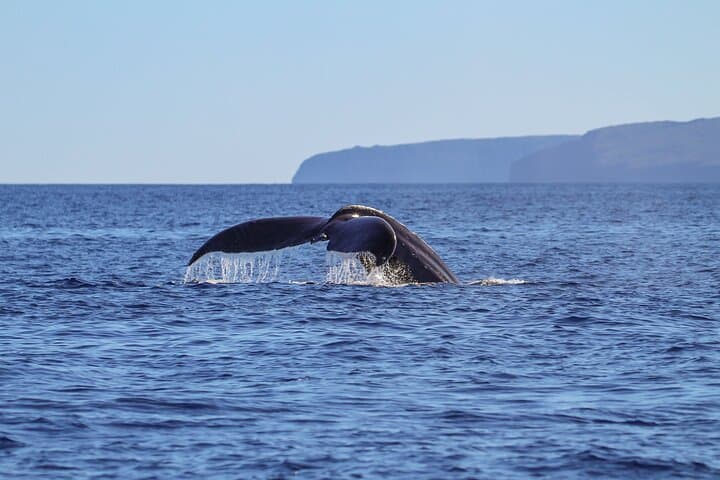
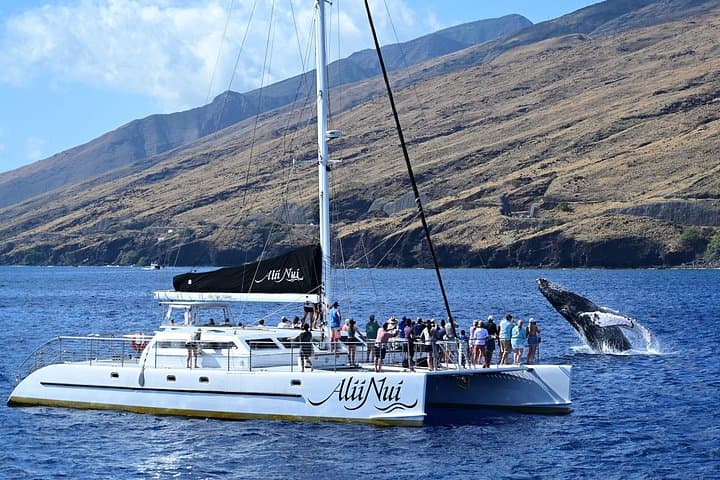
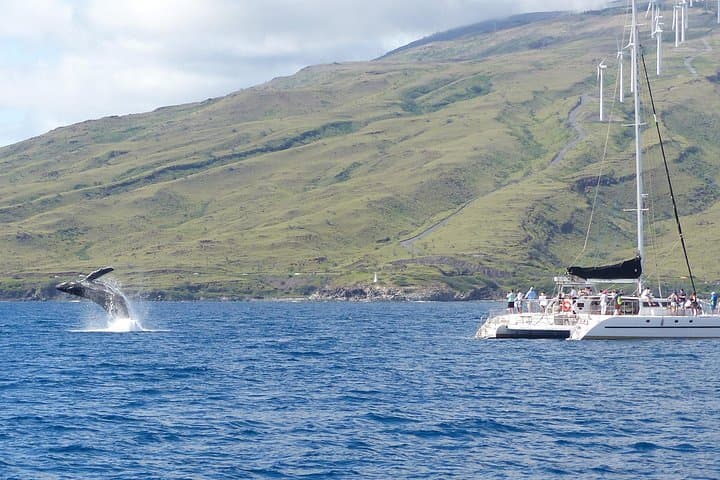
The catamaran eases away from Ma'alaea Pier and the Pacific opens like a live map — silver ridges of swell, the distant churn of a breaching humpback, and a breeze that carries salt and the faint hiss of the hydrophone.
The catamaran eases away from Ma'alaea Pier and the Pacific opens like a live map — silver ridges of swell, the distant churn of a breaching humpback, and a breeze that carries salt and the faint hiss of the hydrophone.
This two-hour, expert-led outing on a 65' catamaran is a focused whale-watch: no snorkeling, no detours, just time on the water during Maui's prime humpback season (mid-December to April). Humpbacks migrate from Alaska to Hawaii to calve and court; the shallow, warm channels off West Maui offer the perfect stage for breaches, tail slaps and close approaches. Geologically, the platform around West Maui drops off into deeper channels that whales use as travel lanes, while currents stir nutrient pockets that attract baitfish and, in turn, predators.
Locally, commercial whale-watching has become both a cultural and economic rhythm for communities from Ma'alaea to Lahaina. Operators follow NOAA guidelines to minimize disturbance — your captain and onboard marine naturalist will explain behaviors and migration timing, and you'll hear live whale song through a hydrophone.
Practical guidance: arrive 30 minutes early at Slip #56 for boarding, expect a short pier walk and a small step across a gap (crew assist available). Dress in layers; open decks provide panoramic views but can be windy. Bring reef-safe sunscreen, a camera with a zoom or binoculars, and motion-sickness remedies if prone to seasickness. The experience includes light local bites, a premium open bar, and a professional photographer onboard, making it both comfortable and wildlife-focused.