THE ADVENTURE COLLECTIVE® · Independent discovery and booking for outdoor travel

A luxury-guided teahouse trek to Everest Base Camp and Kala Patthar that balances acclimatization, culture and comfort. Expect 14–15 days of high-altitude trails, Sherpa villages, and glacier views with professional guides and included permits.
A luxury-guided teahouse trek to Everest Base Camp and Kala Patthar that balances acclimatization, culture and comfort. Expect 14–15 days of high-altitude trails, Sherpa villages, and glacier views with professional guides and included permits.
Wind cuts the dawn air as the trail leaves Lukla and the first prayer flags appear — bright punctuation against grey rock and sky. Over suspension bridges and rhododendron forests the route climbs, trading village scents of wood smoke and boiled tea for the thin, metallic tang of high altitude. By the time trekkers reach Gorakshep the Khumbu Glacier looms, and Kala Patthar’s ridge offers a sunrise that turns Everest’s face to gold.
Verified experiences and guided adventures in the surrounding area.
Operated by Swotah Travel and Adventure Pvt. Ltd. · Lukla, Province No. 1
Wind cuts the dawn air as the trail leaves Lukla and the first prayer flags appear — bright punctuation against grey rock and sky. Over suspension bridges and rhododendron forests the route climbs, trading village scents of wood smoke and boiled tea for the thin, metallic tang of high altitude. By the time trekkers reach Gorakshep the Khumbu Glacier looms, and Kala Patthar’s ridge offers a sunrise that turns Everest’s face to gold.
This classic route runs through Sagarmatha National Park, a protected landscape formed by the uplift of the Himalaya and sculpted by glaciers and moraine. Sherpa villages like Namche, Khumjung and Tengboche reflect Tibetan Buddhist culture — monasteries, mani walls and schools founded with Sir Edmund Hillary’s support are woven into daily life. Geologically the trail follows river-cut valleys and terminal moraines; expect mixed terrain of stone steps, packed dirt, scree and glacial moraine.
Practically: the itinerary covers roughly 14–15 days, gains from ~2,800 m (Lukla) to EBC (5,364 m) and Kala Patthar (~5,545 m) with scheduled acclimatization days in Namche and Dingboche. Walks range from easy half-days to sustained high-altitude climbs; porters and teahouse lodging reduce pack weight but not exposure to cold or altitude.
Plan for layered insulation, UV protection and a steady hydration regime; allow extra time for flights to/from Lukla (Ramechhap is used during peak season). Respect local customs at monasteries, carry permit documentation for Sagarmatha National Park and follow Leave No Trace principles — the mountain demands respect but rewards persistence with some of the world’s most immediate alpine views.
Pre-monsoon (March–May) and post-monsoon (late September–November) have the most stable weather, clearer views and milder temperatures; winter is colder with fewer services.
Yes — Sagarmatha National Park entry and TIMS/Khumbu permits are required and are typically handled by the operator in a packaged trip.
The challenge is primarily altitude-related; the itinerary includes acclimatization days but watch for symptoms of AMS and follow your guide’s advice on pacing and descent.
Flights are weather-dependent and can be delayed or rerouted through Manthali/Ramechhap during peak season; build buffer days into travel plans.
Swotah Travel and Adventure Pvt. Ltd. operates guided outdoor trips and adventures with an emphasis on safety, stewardship, and memorable experiences.
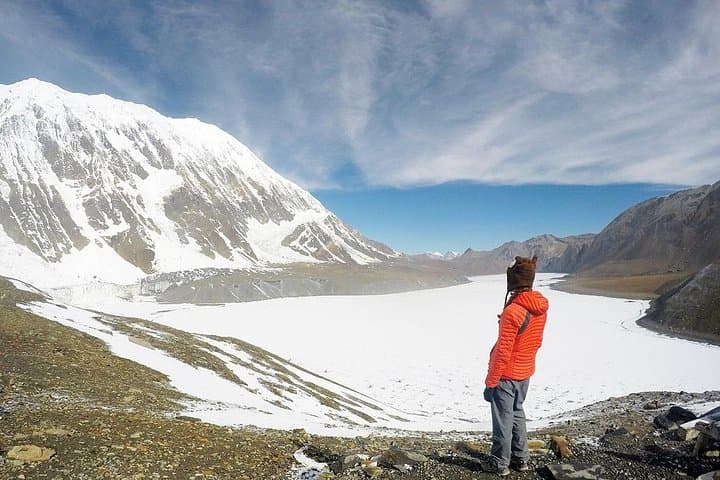
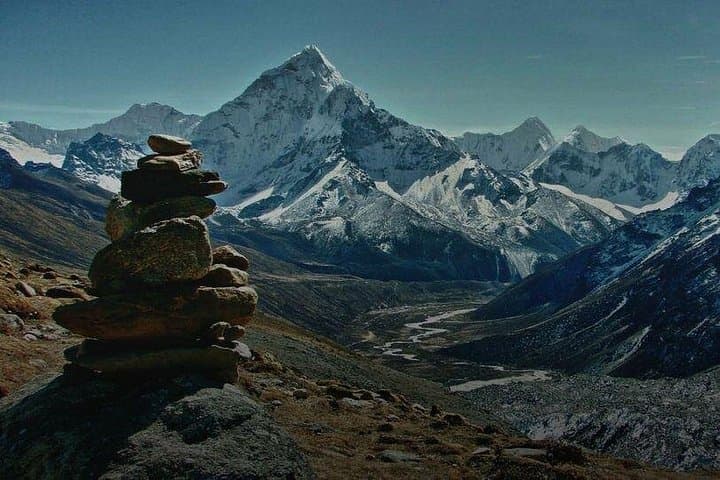
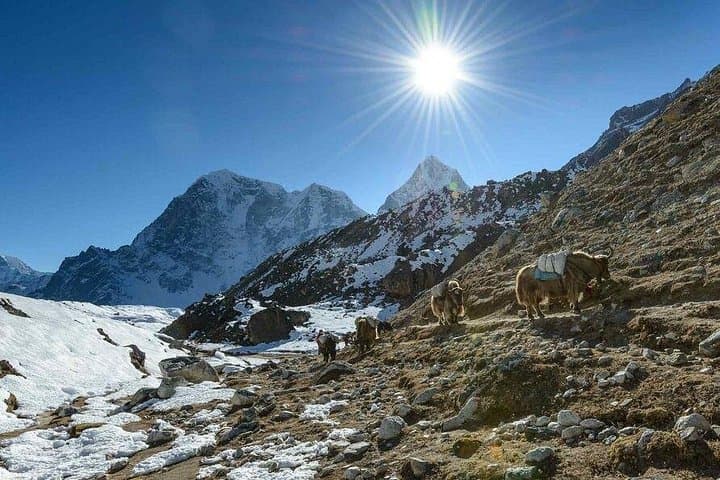
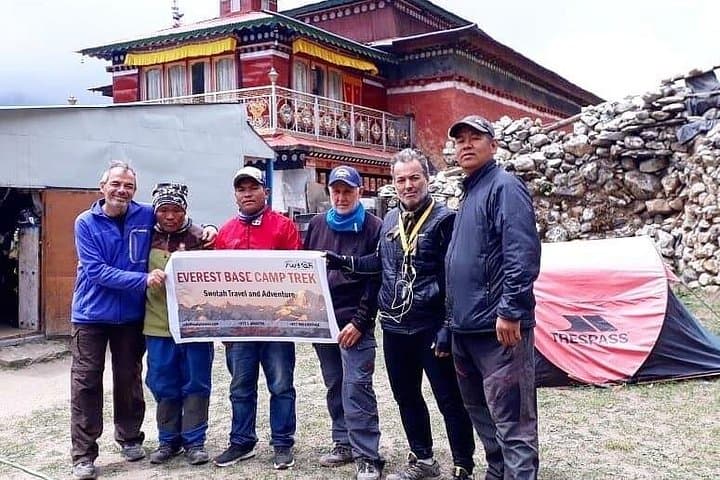
Wind cuts the dawn air as the trail leaves Lukla and the first prayer flags appear — bright punctuation against grey rock and sky. Over suspension bridges and rhododendron forests the route climbs, trading village scents of wood smoke and boiled tea for the thin, metallic tang of high altitude. By the time trekkers reach Gorakshep the Khumbu Glacier looms, and Kala Patthar’s ridge offers a sunrise that turns Everest’s face to gold.
Wind cuts the dawn air as the trail leaves Lukla and the first prayer flags appear — bright punctuation against grey rock and sky. Over suspension bridges and rhododendron forests the route climbs, trading village scents of wood smoke and boiled tea for the thin, metallic tang of high altitude. By the time trekkers reach Gorakshep the Khumbu Glacier looms, and Kala Patthar’s ridge offers a sunrise that turns Everest’s face to gold.
This classic route runs through Sagarmatha National Park, a protected landscape formed by the uplift of the Himalaya and sculpted by glaciers and moraine. Sherpa villages like Namche, Khumjung and Tengboche reflect Tibetan Buddhist culture — monasteries, mani walls and schools founded with Sir Edmund Hillary’s support are woven into daily life. Geologically the trail follows river-cut valleys and terminal moraines; expect mixed terrain of stone steps, packed dirt, scree and glacial moraine.
Practically: the itinerary covers roughly 14–15 days, gains from ~2,800 m (Lukla) to EBC (5,364 m) and Kala Patthar (~5,545 m) with scheduled acclimatization days in Namche and Dingboche. Walks range from easy half-days to sustained high-altitude climbs; porters and teahouse lodging reduce pack weight but not exposure to cold or altitude.
Plan for layered insulation, UV protection and a steady hydration regime; allow extra time for flights to/from Lukla (Ramechhap is used during peak season). Respect local customs at monasteries, carry permit documentation for Sagarmatha National Park and follow Leave No Trace principles — the mountain demands respect but rewards persistence with some of the world’s most immediate alpine views.