THE ADVENTURE COLLECTIVE® · Independent discovery and booking for outdoor travel

Spend a cool morning exploring My Son’s red-brick Cham temples, learn rice-paper making at a local house, and return to Hoi An via a breezy Thu Bon River boat trip. This guided tour blends history, hands-on culture, and easy travel logistics into a single, practical half-day.
Spend a cool morning exploring My Son’s red-brick Cham temples, learn rice-paper making at a local house, and return to Hoi An via a breezy Thu Bon River boat trip. This guided tour blends history, hands-on culture, and easy travel logistics into a single, practical half-day.
Dawn lifts off the rice paddies as the minivan threads the backroads from Hoi An toward a narrow valley where red-brick towers puncture the green. You step out into cool air and a landscape that feels held in time: temple ruins, low grassy hills, and the smell of damp earth. The site invites slow reading—stone and brick arranged by hands that worked here a thousand years ago.
Verified experiences and guided adventures in the surrounding area.
Operated by Chill Tourist · Duy Xuyen, Quang Nam
Dawn lifts off the rice paddies as the minivan threads the backroads from Hoi An toward a narrow valley where red-brick towers puncture the green. You step out into cool air and a landscape that feels held in time: temple ruins, low grassy hills, and the smell of damp earth. The site invites slow reading—stone and brick arranged by hands that worked here a thousand years ago.
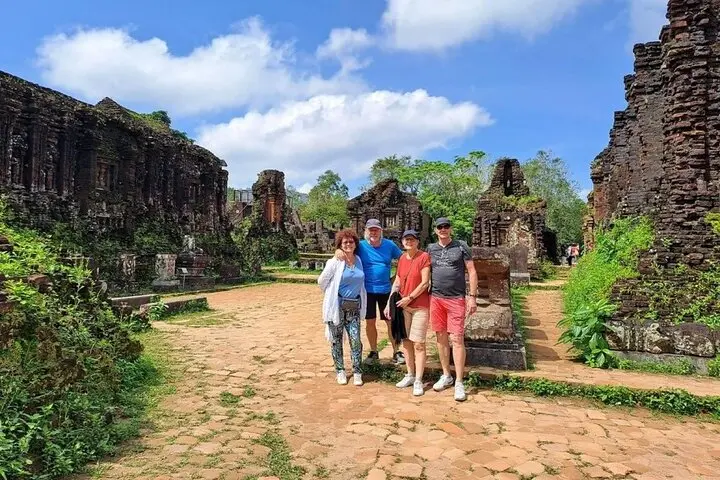
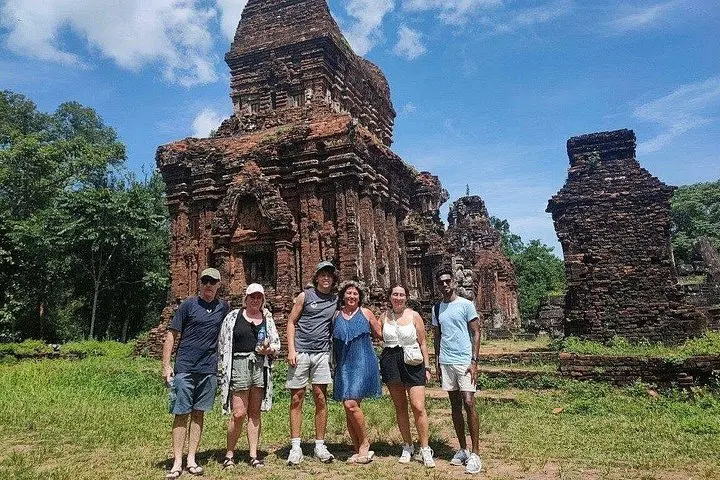
My Son was the spiritual heart of the Cham Kingdom from the 4th to 13th centuries, a network of Hindu-inspired brick sanctuaries dedicated to Shiva. The architecture is distinct: fired-clay bricks fitted without mortar, decorated lintels, and low, rectangular bases that reveal local building traditions and regional trade links with India.
The valley itself is gentle—fields and low volcanic hills guiding the Thu Bon River downstream—making it an easy, contemplative cultural outing rather than a strenuous trek. Local life threads through the visit: a rice-paper demonstration in a family home, a traditional lunch, and a short boat trip that shows riverine Vietnam at midday.
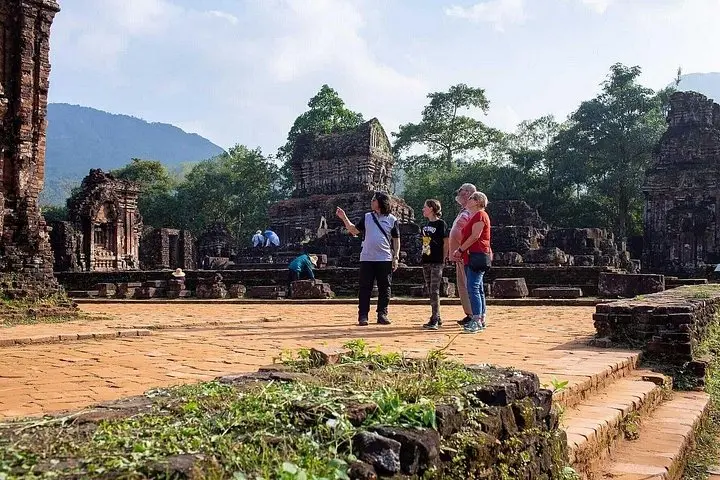
Practically: arrive early to avoid heat and tour buses, wear closed shoes for uneven temple grounds, and bring sun protection and insect repellent. Guided interpretation clarifies Champa iconography and the site’s 20th-century restoration history; photography is allowed but respect ceremony spaces. The schedule pairs a two-hour guided walk with a hands-on craft demo and a calm river return to Hoi An—six hours total, paced and accessible. For travelers who want history paired with gentle local immersion, this morning balances context, comfort, and landscape.
Pick-up from central Hoi An typically takes about 1–1.5 hours each way depending on traffic and exact hotel location.
Yes—paths are relatively short and flat, but bring a stroller or mobility assistance if someone has difficulty walking on uneven surfaces.
Yes; the tour includes My Son entrance fees and a traditional Vietnamese lunch at a local house, plus a bottle of water.
Photography is generally allowed in the ruins, but show respect during any ceremonies and follow your guide’s directions about restricted areas.
Chill Tourist operates guided outdoor trips and adventures with an emphasis on safety, stewardship, and memorable experiences.
Dawn lifts off the rice paddies as the minivan threads the backroads from Hoi An toward a narrow valley where red-brick towers puncture the green. You step out into cool air and a landscape that feels held in time: temple ruins, low grassy hills, and the smell of damp earth. The site invites slow reading—stone and brick arranged by hands that worked here a thousand years ago.
Dawn lifts off the rice paddies as the minivan threads the backroads from Hoi An toward a narrow valley where red-brick towers puncture the green. You step out into cool air and a landscape that feels held in time: temple ruins, low grassy hills, and the smell of damp earth. The site invites slow reading—stone and brick arranged by hands that worked here a thousand years ago.
My Son was the spiritual heart of the Cham Kingdom from the 4th to 13th centuries, a network of Hindu-inspired brick sanctuaries dedicated to Shiva. The architecture is distinct: fired-clay bricks fitted without mortar, decorated lintels, and low, rectangular bases that reveal local building traditions and regional trade links with India.
The valley itself is gentle—fields and low volcanic hills guiding the Thu Bon River downstream—making it an easy, contemplative cultural outing rather than a strenuous trek. Local life threads through the visit: a rice-paper demonstration in a family home, a traditional lunch, and a short boat trip that shows riverine Vietnam at midday.
Practically: arrive early to avoid heat and tour buses, wear closed shoes for uneven temple grounds, and bring sun protection and insect repellent. Guided interpretation clarifies Champa iconography and the site’s 20th-century restoration history; photography is allowed but respect ceremony spaces. The schedule pairs a two-hour guided walk with a hands-on craft demo and a calm river return to Hoi An—six hours total, paced and accessible. For travelers who want history paired with gentle local immersion, this morning balances context, comfort, and landscape.