THE ADVENTURE COLLECTIVE® · Independent discovery and booking for outdoor travel

Sail four nights between Luxor and Aswan aboard a luxury Nile cruise that pairs relaxed river time with guided visits to Karnak, the Valley of the Kings, Edfu, Kom Ombo and Philae. Practical tips and what to expect on shore and aboard.
Sail four nights between Luxor and Aswan aboard a luxury Nile cruise that pairs relaxed river time with guided visits to Karnak, the Valley of the Kings, Edfu, Kom Ombo and Philae. Practical tips and what to expect on shore and aboard.
Sunrise throws hard gold across the Nile and the cruise deck fills with the smell of coffee and fresh bread — the river pushes the boat south as temples and palms slide past like chapters of a history book.
Verified experiences and guided adventures in the surrounding area.
Operated by Egypt VIP Tours · Luxor, Luxor Governorate
Sunrise throws hard gold across the Nile and the cruise deck fills with the smell of coffee and fresh bread — the river pushes the boat south as temples and palms slide past like chapters of a history book.
This four-night voyage from Luxor to Aswan threads the heart of pharaonic Egypt: Karnak's forest of columns, Luxor Temple's pylons, the rock-cut tombs of the Valley of the Kings, Hatshepsut’s terraced mortuary, then the Ptolemaic masterpieces at Edfu and Kom Ombo before the modern contour of the Aswan High Dam and the island-set Philae temple.
Geology here is simple and dramatic: a narrow, fertile ribbon of Nile silt and date palms carved between sandstone cliffs and desert plain, where millennia of human engineering reshaped waterways and memory alike.
Cultural notes arrive at each landing — Egyptologists explain ritual scenes in relief, Nubian boatmen ferry passengers to island shrines, and souks offer bright spices and bargaining rituals that are part commerce, part conversation.
Practically, expect four nights aboard a comfortable cabin with daily guided excursions. Distances are short but dense: temple complexes involve 1–2 km of walking over uneven stone and steps; the cruise covers roughly 200 km of river travel between Luxor and Aswan.
Plan for strong sun, sudden wind on deck, and early-morning starts to avoid heat. Wear grippy shoes for temple steps, carry a refillable water bottle, and bring cash for small purchases and local tips. With a mix of slow river time and focused archaeological stops, this itinerary balances relaxed cruising with rich, on-shore discovery.
Excursions involve walking 1–2 km around temple complexes, with stairs and uneven stone; overall effort is low but expect short bursts of climbing.
Admission is typically not included in basic cruise fare; check the itinerary and your booking confirmation for specifics and optional extras like King Tutankhamun’s tomb.
Nubian village visits near Aswan are common optional tours; Abu Simbel is a full-day excursion often arranged separately and may require additional transport and timing.
Carry Egyptian pounds for small purchases and on-shore tips; tipping (bakshish) is customary for guides, drivers and crew — modest amounts are appreciated.
Egypt VIP Tours operates guided outdoor trips and adventures with an emphasis on safety, stewardship, and memorable experiences.
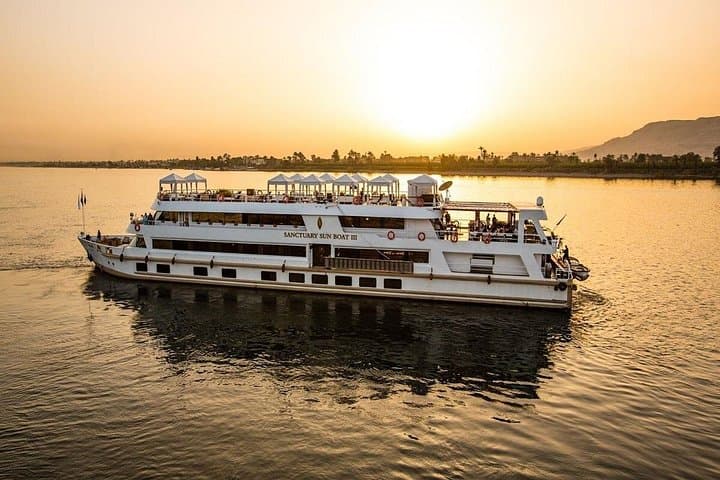


Sunrise throws hard gold across the Nile and the cruise deck fills with the smell of coffee and fresh bread — the river pushes the boat south as temples and palms slide past like chapters of a history book.
Sunrise throws hard gold across the Nile and the cruise deck fills with the smell of coffee and fresh bread — the river pushes the boat south as temples and palms slide past like chapters of a history book.
This four-night voyage from Luxor to Aswan threads the heart of pharaonic Egypt: Karnak's forest of columns, Luxor Temple's pylons, the rock-cut tombs of the Valley of the Kings, Hatshepsut’s terraced mortuary, then the Ptolemaic masterpieces at Edfu and Kom Ombo before the modern contour of the Aswan High Dam and the island-set Philae temple.
Geology here is simple and dramatic: a narrow, fertile ribbon of Nile silt and date palms carved between sandstone cliffs and desert plain, where millennia of human engineering reshaped waterways and memory alike.
Cultural notes arrive at each landing — Egyptologists explain ritual scenes in relief, Nubian boatmen ferry passengers to island shrines, and souks offer bright spices and bargaining rituals that are part commerce, part conversation.
Practically, expect four nights aboard a comfortable cabin with daily guided excursions. Distances are short but dense: temple complexes involve 1–2 km of walking over uneven stone and steps; the cruise covers roughly 200 km of river travel between Luxor and Aswan.
Plan for strong sun, sudden wind on deck, and early-morning starts to avoid heat. Wear grippy shoes for temple steps, carry a refillable water bottle, and bring cash for small purchases and local tips. With a mix of slow river time and focused archaeological stops, this itinerary balances relaxed cruising with rich, on-shore discovery.