THE ADVENTURE COLLECTIVE® · Independent discovery and booking for outdoor travel

Skip the bus and cross the Firth in comfort on a private Mercedes V‑Class to Glasgow’s best sights. This eight‑hour, guided day visit combines cathedral spires, industrial relics and the West End’s café culture with door‑to‑door service.
Skip the bus and cross the Firth in comfort on a private Mercedes V‑Class to Glasgow’s best sights. This eight‑hour, guided day visit combines cathedral spires, industrial relics and the West End’s café culture with door‑to‑door service.
You step into the leather-clad comfort of a Mercedes V‑Class and the city thins behind you as the Firth of Forth recedes. In under an hour the river-lined streets of Glasgow appear — the Finnieston Crane black against sky, the cathedral’s stone silhouette rising above the old town. Your guide, local and quick with stories, sets the pace: historic corners between relaxed drives, time to walk where it matters.
Verified experiences and guided adventures in the surrounding area.
Operated by Hopscotch Travel · Glasgow, Scotland
You step into the leather-clad comfort of a Mercedes V‑Class and the city thins behind you as the Firth of Forth recedes. In under an hour the river-lined streets of Glasgow appear — the Finnieston Crane black against sky, the cathedral’s stone silhouette rising above the old town. Your guide, local and quick with stories, sets the pace: historic corners between relaxed drives, time to walk where it matters.
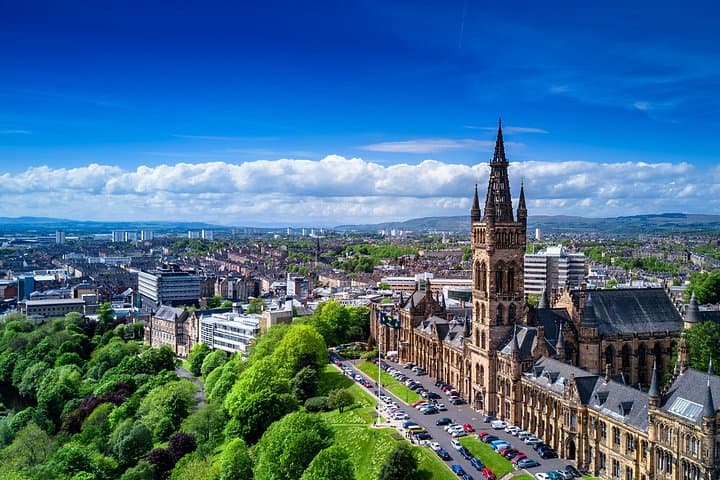
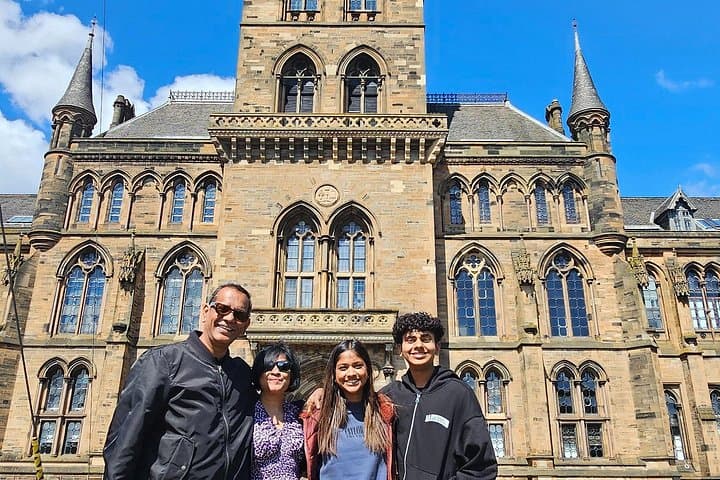
Glasgow’s story is readable in its fabric. The Cathedral sits on a site of Christian worship stretching back to St. Mungo in the 7th century; nearby the Necropolis keeps Victorian gravestones and panoramas of red sandstone tenements. The Clyde carved the city’s industrial identity — shipyards, heavy lifting cranes and warehouses that later became galleries and music venues. The West End’s University, founded in 1451, and Kelvingrove Art Gallery (1901) show how education and civic pride reshaped former industrial neighborhoods into cultural anchors.
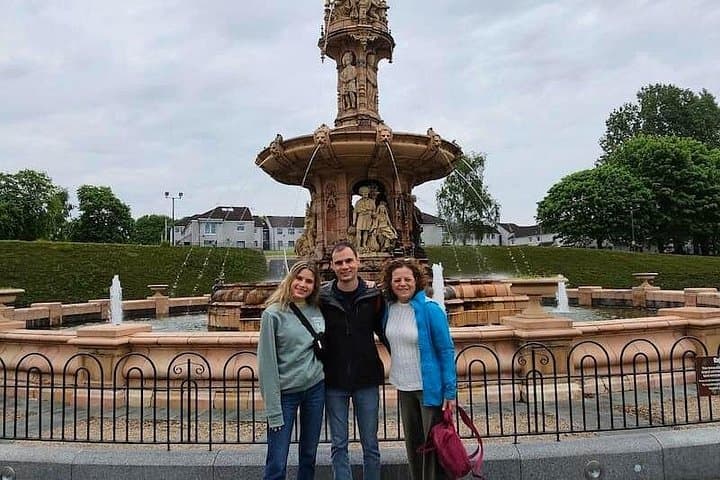
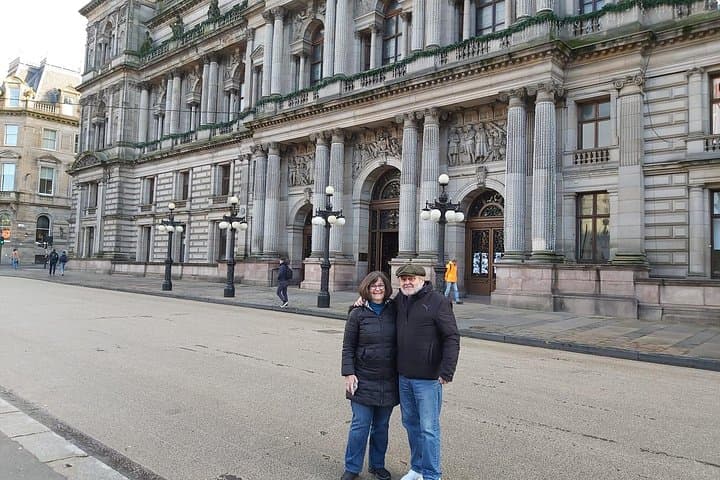
Expect a mixed itinerary: short, informative walks (Cathedral, High Street, George Square), photo stops at the Finnieston Crane and the Hydro, and a longer visit to Kelvingrove. The tour includes door‑to‑door pickup, onboard Wi‑Fi and an experienced guide — sometimes kilted. Walks are flat to rolling, but Glasgow weather changes fast: layer up and keep a compact umbrella handy. Bring a card for small shop purchases and allow time for traffic between Edinburgh and Glasgow. If you want deeper museum time, request it when booking — the private format makes tailoring easy.
Typical drive time is about 50–70 minutes depending on traffic — plan for roughly an hour each way.
Walking is limited to short, mostly flat sections (10–30 minutes) at each stop; the van handles the longer transfers.
Yes — this private tour is tailored to your interests; request more or less museum time when booking.
The People’s Palace is currently closed for refurbishment until 2027, so interior visits are not available during this tour.
Hopscotch Travel operates guided outdoor trips and adventures with an emphasis on safety, stewardship, and memorable experiences.
You step into the leather-clad comfort of a Mercedes V‑Class and the city thins behind you as the Firth of Forth recedes. In under an hour the river-lined streets of Glasgow appear — the Finnieston Crane black against sky, the cathedral’s stone silhouette rising above the old town. Your guide, local and quick with stories, sets the pace: historic corners between relaxed drives, time to walk where it matters.
You step into the leather-clad comfort of a Mercedes V‑Class and the city thins behind you as the Firth of Forth recedes. In under an hour the river-lined streets of Glasgow appear — the Finnieston Crane black against sky, the cathedral’s stone silhouette rising above the old town. Your guide, local and quick with stories, sets the pace: historic corners between relaxed drives, time to walk where it matters.
Glasgow’s story is readable in its fabric. The Cathedral sits on a site of Christian worship stretching back to St. Mungo in the 7th century; nearby the Necropolis keeps Victorian gravestones and panoramas of red sandstone tenements. The Clyde carved the city’s industrial identity — shipyards, heavy lifting cranes and warehouses that later became galleries and music venues. The West End’s University, founded in 1451, and Kelvingrove Art Gallery (1901) show how education and civic pride reshaped former industrial neighborhoods into cultural anchors.
Expect a mixed itinerary: short, informative walks (Cathedral, High Street, George Square), photo stops at the Finnieston Crane and the Hydro, and a longer visit to Kelvingrove. The tour includes door‑to‑door pickup, onboard Wi‑Fi and an experienced guide — sometimes kilted. Walks are flat to rolling, but Glasgow weather changes fast: layer up and keep a compact umbrella handy. Bring a card for small shop purchases and allow time for traffic between Edinburgh and Glasgow. If you want deeper museum time, request it when booking — the private format makes tailoring easy.