THE ADVENTURE COLLECTIVE® · Independent discovery and booking for outdoor travel

A private full-day tour that pairs the raw drama of the Giza Plateau with the Grand Egyptian Museum’s newly assembled treasures, including the complete Tutankhamun collection. Ideal for travelers who want context, comfort and a photographer’s best vantage points.
A private full-day tour that pairs the raw drama of the Giza Plateau with the Grand Egyptian Museum’s newly assembled treasures, including the complete Tutankhamun collection. Ideal for travelers who want context, comfort and a photographer’s best vantage points.
You step onto the Giza Plateau with the sun warming the limestone; wind pushes sand across ancient stone as the Great Pyramid rises like a deliberate machine of time. The Sphinx, face wind-polished and inscrutable, watches the parade of visitors while camels shift their weight and the plateau opens to long sightlines that frame all three pyramids in a single view.
Verified experiences and guided adventures in the surrounding area.
Operated by Egypt vibes tours · Giza, Giza Governorate
You step onto the Giza Plateau with the sun warming the limestone; wind pushes sand across ancient stone as the Great Pyramid rises like a deliberate machine of time. The Sphinx, face wind-polished and inscrutable, watches the parade of visitors while camels shift their weight and the plateau opens to long sightlines that frame all three pyramids in a single view.
The day pairs two worlds: the open-air engineering of Old Kingdom Egypt and the curated modernity of the Grand Egyptian Museum (GEM). The pyramids—Khufu, Khafre and Menkaure—date to around 2500 BCE and reveal a building culture obsessed with alignment, labor organization and funerary ritual. The GEM, opened recently, re-homes more than 100,000 artifacts and the complete Tutankhamun collection, offering close study of goldwork, statuary and a new conservation wing.
Expect uneven paved walkways and stretches of loose sand on the plateau, short climbs to viewpoints and large indoor galleries at the museum. Guides typically explain construction hypotheses, funerary rites and the Sphinx’s contested history while pointing out details like casing-stone remnants and the solar boat exhibit beside Khufu.
Practical notes: plan a full 6–8 hour day, start early to avoid midday heat, carry at least 2 liters of water and sun protection, and bring comfortable walking shoes. Photography is allowed in most outdoor areas; museum photo rules vary. Respect signs and barriers—these sites are both fragile and heavily managed, so stay on marked paths and follow your Egyptologist guide for the best context and access.
Some booking options include entrance tickets and skip-the-line access; check your reservation details—otherwise pay at the sites or via your operator.
Camel rides are typically offered as an add-on and paid locally; prices vary and bargaining is common—confirm before mounting.
Many public areas and museum galleries are wheelchair accessible, but outdoor plateau surfaces can be uneven; contact the operator to confirm arrangements and vehicle access.
Plan about 2–3 hours in the GEM to see highlights including the Tutankhamun collection and main statuary halls without rushing.
Egypt vibes tours operates guided outdoor trips and adventures with an emphasis on safety, stewardship, and memorable experiences.
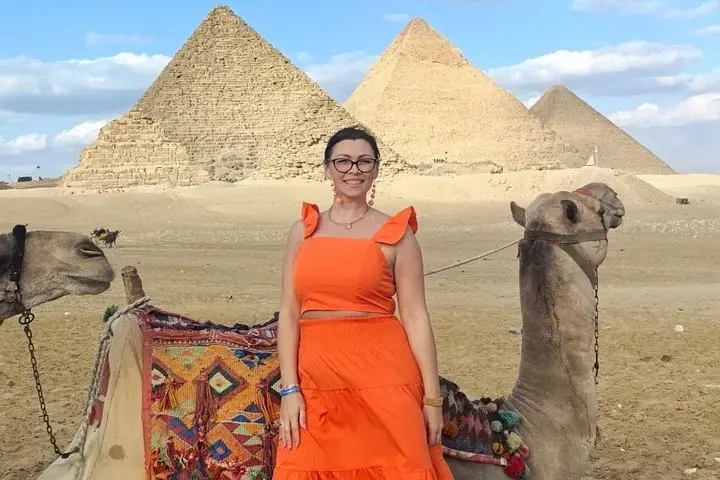

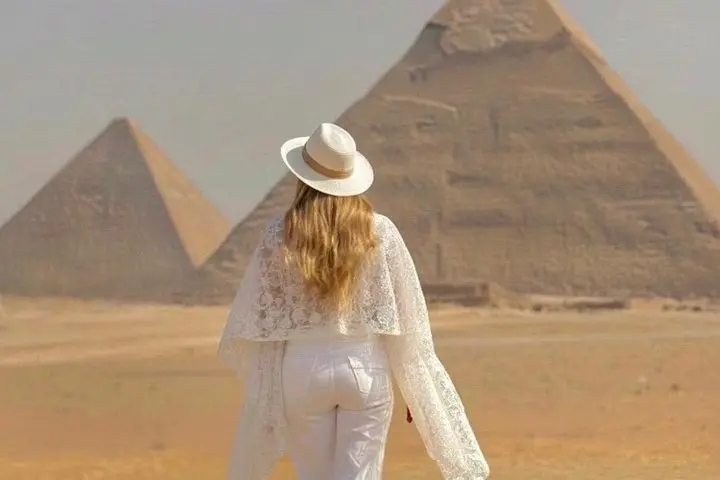
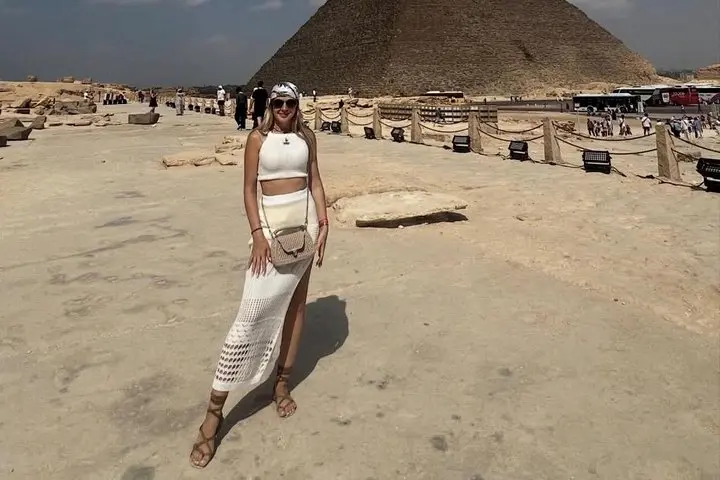
You step onto the Giza Plateau with the sun warming the limestone; wind pushes sand across ancient stone as the Great Pyramid rises like a deliberate machine of time. The Sphinx, face wind-polished and inscrutable, watches the parade of visitors while camels shift their weight and the plateau opens to long sightlines that frame all three pyramids in a single view.
You step onto the Giza Plateau with the sun warming the limestone; wind pushes sand across ancient stone as the Great Pyramid rises like a deliberate machine of time. The Sphinx, face wind-polished and inscrutable, watches the parade of visitors while camels shift their weight and the plateau opens to long sightlines that frame all three pyramids in a single view.
The day pairs two worlds: the open-air engineering of Old Kingdom Egypt and the curated modernity of the Grand Egyptian Museum (GEM). The pyramids—Khufu, Khafre and Menkaure—date to around 2500 BCE and reveal a building culture obsessed with alignment, labor organization and funerary ritual. The GEM, opened recently, re-homes more than 100,000 artifacts and the complete Tutankhamun collection, offering close study of goldwork, statuary and a new conservation wing.
Expect uneven paved walkways and stretches of loose sand on the plateau, short climbs to viewpoints and large indoor galleries at the museum. Guides typically explain construction hypotheses, funerary rites and the Sphinx’s contested history while pointing out details like casing-stone remnants and the solar boat exhibit beside Khufu.
Practical notes: plan a full 6–8 hour day, start early to avoid midday heat, carry at least 2 liters of water and sun protection, and bring comfortable walking shoes. Photography is allowed in most outdoor areas; museum photo rules vary. Respect signs and barriers—these sites are both fragile and heavily managed, so stay on marked paths and follow your Egyptologist guide for the best context and access.