THE ADVENTURE COLLECTIVE® · Independent discovery and booking for outdoor travel

Glide narrow papyrus channels in search of the iconic shoebill on a private Mabamba swamp boat tour from Entebbe. Expect expert local guides, silent approaches in small boats, and close photo opportunities in a globally significant wetland.
Glide narrow papyrus channels in search of the iconic shoebill on a private Mabamba swamp boat tour from Entebbe. Expect expert local guides, silent approaches in small boats, and close photo opportunities in a globally significant wetland.
A low motor hum parts the dawn as your canoe slips into papyrus channels; mist peels off mirror-calm water and reeds lean in like curious neighbors. In the half-light the shoebill—an oversized, prehistoric silhouette—can appear motionless on a reed island, eyes fixed, bill ready. This private Mabamba tour moves deliberately: a short motorized transfer from Nakiwogo, then narrower boats for stealthy approaches where cameras and binoculars do their best work.
Verified experiences and guided adventures in the surrounding area.
Operated by Wadi Rum Fire Camp · Entebbe, Central Region
A low motor hum parts the dawn as your canoe slips into papyrus channels; mist peels off mirror-calm water and reeds lean in like curious neighbors. In the half-light the shoebill—an oversized, prehistoric silhouette—can appear motionless on a reed island, eyes fixed, bill ready. This private Mabamba tour moves deliberately: a short motorized transfer from Nakiwogo, then narrower boats for stealthy approaches where cameras and binoculars do their best work.
Mabamba sits on Lake Victoria’s western shore and is an internationally recognized wetland that has long supported fisherfolk and reed-harvesting communities. Geologically the swamp is a shallow lake margin fed by seasonal runoff; its dense papyrus beds create the channels and islands that shoebills and papyrus specialists favor. Guides on these trips are usually local and licensed, blending birding knowledge with cultural insight—expect stories about how seasonal water levels shape fishing and reed-cutting cycles.
Practically, this is an easy, low-impact outing: plans typically run 3–5 hours including transfers. Timing matters—early morning and late afternoon raise your odds of shoebill encounters and softer light for photos. Wear stable, closed shoes for dockings, bring waterproof protection for gear, and keep voices low; the birds respond to quiet. Guides use smaller paddled boats for the last approach; follow their instructions on movement and flash photography.
Respect the habitat—stay in the boats, avoid sudden movements, and allow the guides to position you. With basic preparation you’ll walk away from the swamp with sharp photos, a clearer sense of local conservation pressures, and a memorable morning inside one of East Africa’s most unusual wetlands.
Sightings are common but never guaranteed—early mornings and calm weather improve your chances, and guides know local territories to increase odds.
Yes; the trip is rated easy, but children must be supervised, wear life jackets, and be comfortable sitting in small boats.
Visitors should check Uganda entry visa requirements and recommended vaccinations (e.g., yellow fever); consult your travel clinic well before departure.
Pickup and drop-off are often available if selected; confirm at booking—otherwise meet at the specified Nakiwogo landing site.
Wadi Rum Fire Camp operates guided outdoor trips and adventures with an emphasis on safety, stewardship, and memorable experiences.


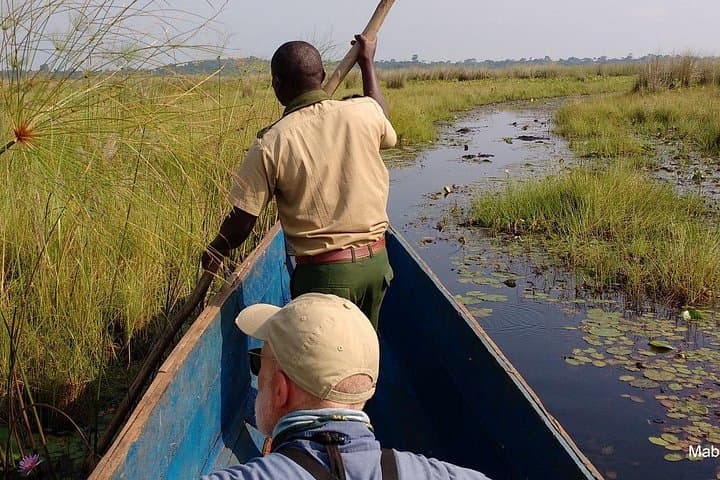
A low motor hum parts the dawn as your canoe slips into papyrus channels; mist peels off mirror-calm water and reeds lean in like curious neighbors. In the half-light the shoebill—an oversized, prehistoric silhouette—can appear motionless on a reed island, eyes fixed, bill ready. This private Mabamba tour moves deliberately: a short motorized transfer from Nakiwogo, then narrower boats for stealthy approaches where cameras and binoculars do their best work.
A low motor hum parts the dawn as your canoe slips into papyrus channels; mist peels off mirror-calm water and reeds lean in like curious neighbors. In the half-light the shoebill—an oversized, prehistoric silhouette—can appear motionless on a reed island, eyes fixed, bill ready. This private Mabamba tour moves deliberately: a short motorized transfer from Nakiwogo, then narrower boats for stealthy approaches where cameras and binoculars do their best work.
Mabamba sits on Lake Victoria’s western shore and is an internationally recognized wetland that has long supported fisherfolk and reed-harvesting communities. Geologically the swamp is a shallow lake margin fed by seasonal runoff; its dense papyrus beds create the channels and islands that shoebills and papyrus specialists favor. Guides on these trips are usually local and licensed, blending birding knowledge with cultural insight—expect stories about how seasonal water levels shape fishing and reed-cutting cycles.
Practically, this is an easy, low-impact outing: plans typically run 3–5 hours including transfers. Timing matters—early morning and late afternoon raise your odds of shoebill encounters and softer light for photos. Wear stable, closed shoes for dockings, bring waterproof protection for gear, and keep voices low; the birds respond to quiet. Guides use smaller paddled boats for the last approach; follow their instructions on movement and flash photography.
Respect the habitat—stay in the boats, avoid sudden movements, and allow the guides to position you. With basic preparation you’ll walk away from the swamp with sharp photos, a clearer sense of local conservation pressures, and a memorable morning inside one of East Africa’s most unusual wetlands.