THE ADVENTURE COLLECTIVE® · Independent discovery and booking for outdoor travel

Tackle Kilimanjaro’s Machame Route for a six to seven day climb that trades easy comforts for superior views and steady acclimatization. From rainforest to scree, this non-technical route builds toward sunrise on Uhuru Peak—here’s what to expect and how to prepare.
Tackle Kilimanjaro’s Machame Route for a six to seven day climb that trades easy comforts for superior views and steady acclimatization. From rainforest to scree, this non-technical route builds toward sunrise on Uhuru Peak—here’s what to expect and how to prepare.
You wake before midnight, a thin Arctic hush wrapping the ridge as thousands of headlamp beams stitch a tentative trail up the mountain. The low scrub and moorland you walked through days earlier has given way to a bleached, wind-swept corridor of scree; each step up toward Stella Point is a negotiation with gravity and thin air. When the sun finally pries open the horizon, it reveals glacier rims and a world laid out in hard light — the reward for nights spent acclimatizing on the Machame Route.
Verified experiences and guided adventures in the surrounding area.
Operated by Bob Serengeti Expedition Tours Safaris · Moshi, Kilimanjaro Region
You wake before midnight, a thin Arctic hush wrapping the ridge as thousands of headlamp beams stitch a tentative trail up the mountain. The low scrub and moorland you walked through days earlier has given way to a bleached, wind-swept corridor of scree; each step up toward Stella Point is a negotiation with gravity and thin air. When the sun finally pries open the horizon, it reveals glacier rims and a world laid out in hard light — the reward for nights spent acclimatizing on the Machame Route.
The Machame is known locally as the Whiskey Route: harder than the old Marangu path but richer in variety and views. Over six or seven days you move through clear ecological stages — montane rainforest at ~1,490 m, then heather and moorland, then alpine desert and jagged volcanic rock. The geological story beneath your boots is of an extinct stratovolcano: layers of ash, lava and glacial sculpting that formed Kilimanjaro’s three cones, with Kibo bearing Uhuru Peak at 5,895 m.
Culturally, the climb threads through Chagga territory on Kilimanjaro’s southern slopes. Villages around Moshi and Arusha supply guides, cooks and porters — a mountain economy that supports local families and preserves climbing knowledge passed down in community networks.
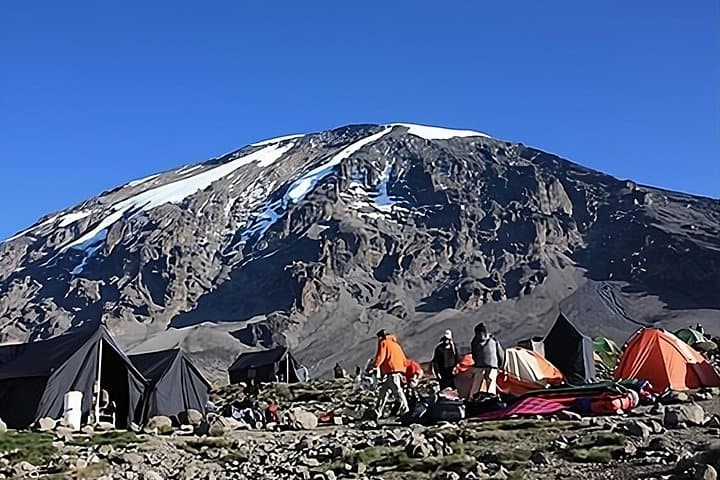
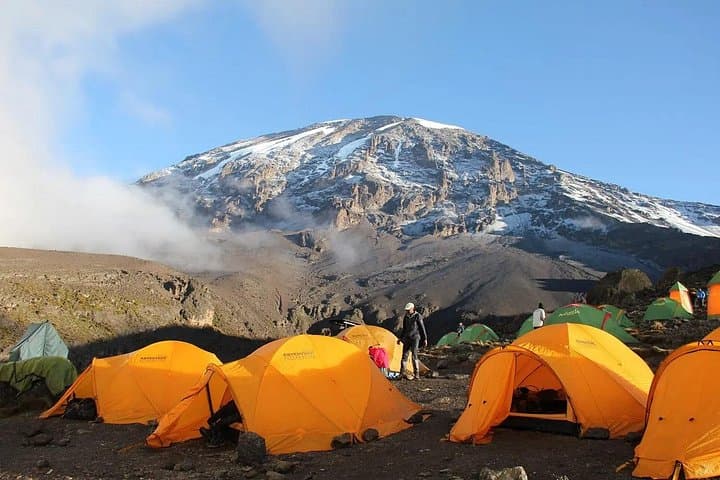
Practical navigation of the route matters as much as endurance. Typical camp-to-camp elevations on the six-day itinerary are Machame Gate (1,490 m) to Machame Camp (2,980 m), then Shira Camp (3,840 m), up to Lava Tower (4,630 m) and back down to Barranco Camp (3,950 m) for acclimatization, through Karanga to Barafu Camp (4,550 m), then the night push to Stella Point (5,685 m) and Uhuru Peak (5,895 m), finishing with descent to Mweka Gate (1,980 m). Expect long days of walking on muddy trails, rocky ridges and extensive scree; the summit night is a mentally demanding ascent of 6–8 hours in near-freezing conditions.
Prepare for altitude more than technical climbing: the route is non-technical but punishing. Hydration, steady pacing, and sleep are your allies — the ‘climb high, sleep low’ profile around Lava Tower is the route’s built-in acclimatization trick. Bring layered insulation, a reliable sleeping bag rated to -10°C, and a thermal flask to keep water from freezing during the night push.
Logistics are straightforward: guided, private trips commonly start and end in Moshi or Arusha, include park fees, crew, meals and tented accommodation, and often provide airport transfers. Pay attention to physical screening — people with heart or spinal issues, or pregnant travelers, should not attempt the climb. Tipping the crew at the end is customary and an important contribution to the livelihoods of the guides and porters who make the summit possible.
In short: the Machame Route is an immersive climb of contrasts — rain forest that challenges your boots, lunar scree that tests your legs, and a sunrise at Stella Point that rewards persistence. With sensible training, respect for altitude, and the right kit, it’s one of the most achievable ways to stand on Africa’s roof.
Most itineraries are six to seven days, allowing a gradual ascent that improves acclimatization and increases summit success rates.
No — the Machame Route is non-technical, but the summit push involves long scree climbs and exposure to cold; good fitness is essential.
Acute Mountain Sickness (headache, nausea, fatigue) is the primary concern; follow your guide, hydrate, ascend slowly and report symptoms early.
Standard packages usually include park fees, professional guides, porters, meals, tents, and airport transfers; confirm specifics with your operator.
Dry months (June–October and January–February) offer more stable weather and clearer summit views; avoid the long rains in March–May.
Tipping is customary; recommended ranges vary but plan to tip guides and porters collectively based on service and group size at trek’s end.
Bob Serengeti Expedition Tours Safaris operates guided outdoor trips and adventures with an emphasis on safety, stewardship, and memorable experiences.
You wake before midnight, a thin Arctic hush wrapping the ridge as thousands of headlamp beams stitch a tentative trail up the mountain. The low scrub and moorland you walked through days earlier has given way to a bleached, wind-swept corridor of scree; each step up toward Stella Point is a negotiation with gravity and thin air. When the sun finally pries open the horizon, it reveals glacier rims and a world laid out in hard light — the reward for nights spent acclimatizing on the Machame Route.
You wake before midnight, a thin Arctic hush wrapping the ridge as thousands of headlamp beams stitch a tentative trail up the mountain. The low scrub and moorland you walked through days earlier has given way to a bleached, wind-swept corridor of scree; each step up toward Stella Point is a negotiation with gravity and thin air. When the sun finally pries open the horizon, it reveals glacier rims and a world laid out in hard light — the reward for nights spent acclimatizing on the Machame Route.
The Machame is known locally as the Whiskey Route: harder than the old Marangu path but richer in variety and views. Over six or seven days you move through clear ecological stages — montane rainforest at ~1,490 m, then heather and moorland, then alpine desert and jagged volcanic rock. The geological story beneath your boots is of an extinct stratovolcano: layers of ash, lava and glacial sculpting that formed Kilimanjaro’s three cones, with Kibo bearing Uhuru Peak at 5,895 m.
Culturally, the climb threads through Chagga territory on Kilimanjaro’s southern slopes. Villages around Moshi and Arusha supply guides, cooks and porters — a mountain economy that supports local families and preserves climbing knowledge passed down in community networks.
Practical navigation of the route matters as much as endurance. Typical camp-to-camp elevations on the six-day itinerary are Machame Gate (1,490 m) to Machame Camp (2,980 m), then Shira Camp (3,840 m), up to Lava Tower (4,630 m) and back down to Barranco Camp (3,950 m) for acclimatization, through Karanga to Barafu Camp (4,550 m), then the night push to Stella Point (5,685 m) and Uhuru Peak (5,895 m), finishing with descent to Mweka Gate (1,980 m). Expect long days of walking on muddy trails, rocky ridges and extensive scree; the summit night is a mentally demanding ascent of 6–8 hours in near-freezing conditions.
Prepare for altitude more than technical climbing: the route is non-technical but punishing. Hydration, steady pacing, and sleep are your allies — the ‘climb high, sleep low’ profile around Lava Tower is the route’s built-in acclimatization trick. Bring layered insulation, a reliable sleeping bag rated to -10°C, and a thermal flask to keep water from freezing during the night push.
Logistics are straightforward: guided, private trips commonly start and end in Moshi or Arusha, include park fees, crew, meals and tented accommodation, and often provide airport transfers. Pay attention to physical screening — people with heart or spinal issues, or pregnant travelers, should not attempt the climb. Tipping the crew at the end is customary and an important contribution to the livelihoods of the guides and porters who make the summit possible.
In short: the Machame Route is an immersive climb of contrasts — rain forest that challenges your boots, lunar scree that tests your legs, and a sunrise at Stella Point that rewards persistence. With sensible training, respect for altitude, and the right kit, it’s one of the most achievable ways to stand on Africa’s roof.