THE ADVENTURE COLLECTIVE® · Independent discovery and booking for outdoor travel

Follow the Machame Route from rainforest to the rim of Kibo and stand on Uhuru Peak. This 6-day climb combines dramatic geology, varied ecosystems and a logistical support team to get you to Tanzania’s highest point.
Follow the Machame Route from rainforest to the rim of Kibo and stand on Uhuru Peak. This 6-day climb combines dramatic geology, varied ecosystems and a logistical support team to get you to Tanzania’s highest point.
You step off the minivan and the mountain announces itself: a white crown cutting the blue, its lower flanks already swallowing villages and coffee farms. The drive from Moshi to Machame Gate is quick—45 minutes of banana and maize fields—then the trail narrows and the rainforest leans in. Birds call from the canopy, and porters move like a stream of color through the trees, carrying the camp that will follow you for the next six days.
Verified experiences and guided adventures in the surrounding area.
Operated by Hilbas Tours · Moshi, Kilimanjaro
You step off the minivan and the mountain announces itself: a white crown cutting the blue, its lower flanks already swallowing villages and coffee farms. The drive from Moshi to Machame Gate is quick—45 minutes of banana and maize fields—then the trail narrows and the rainforest leans in. Birds call from the canopy, and porters move like a stream of color through the trees, carrying the camp that will follow you for the next six days.
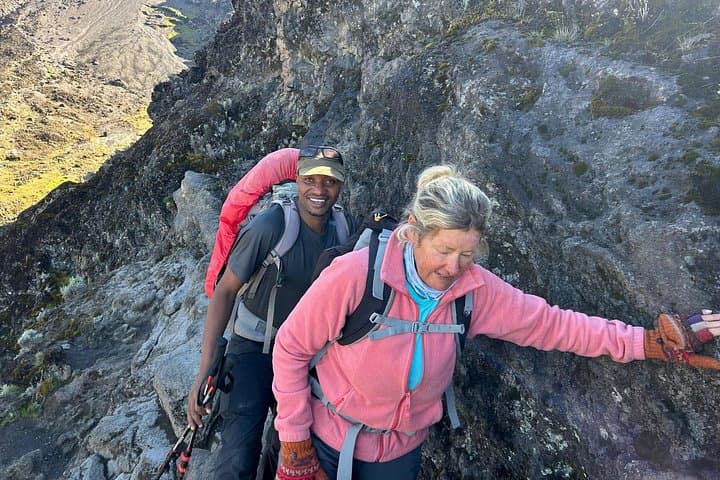
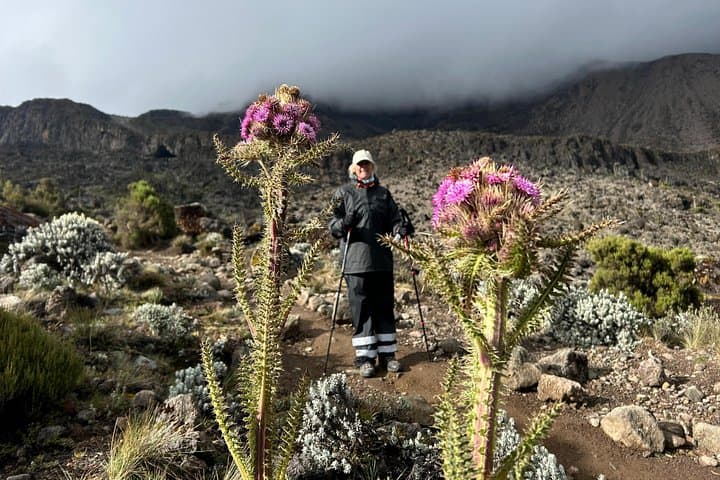
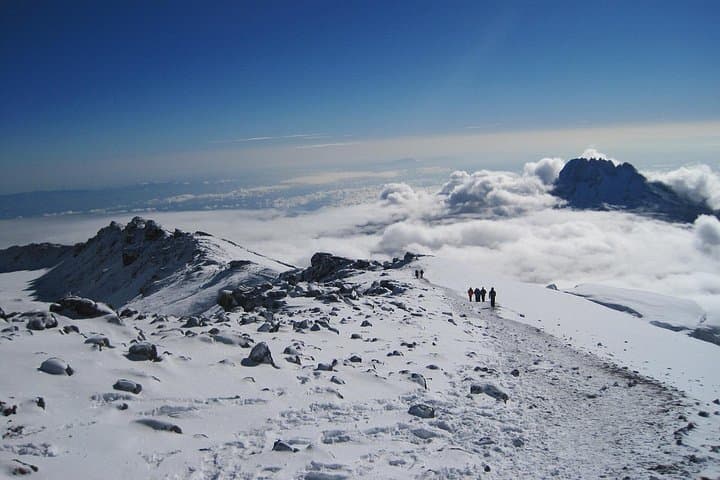
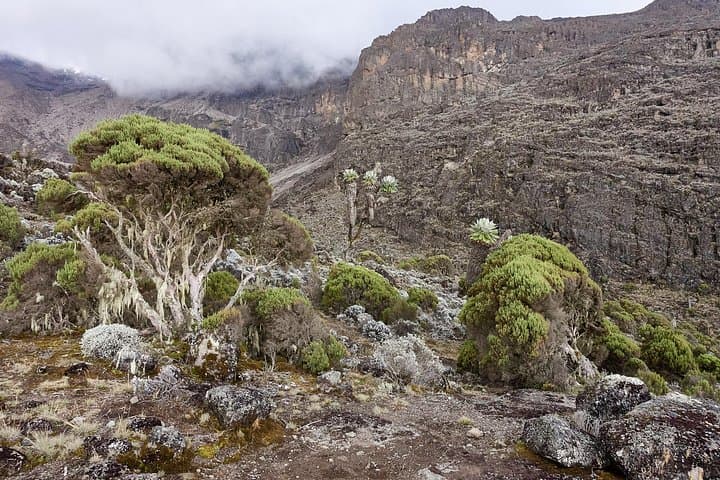
The Machame Route, often called the Whiskey Route, is prized for its scenery and varied ecosystems. You start in dense, dripping rainforest at about 1,800 m and work your way up through moorland to alpine desert and finally the scree of Kibo. Key waypoints read like a vertical map of Kilimanjaro’s geology: Machame Camp (2,900 m), the Shira Plateau (around 3,750 m), the acclimatization and dramatic lunch stop at Lava Tower (4,600 m), the exposed Barranco Wall, Barafu Camp for the final push, and the crater rim at Stella Point before the last hour to Uhuru Peak (5,895 m).
This route carries layers of human history too: the mountain sits on ancestral Maasai land, and the first recorded ascent of Kilimanjaro was in 1889 by Hans Meyer. The land’s volcanic origin is obvious—Kibo’s black scree and the Mawenzi spires are raw reminders of ancient eruptions. Today the mountain is protected within Kilimanjaro National Park; park fees fund conservation and rescues but pressure from tourism and climate-driven glacier loss are ongoing concerns.
Practical planning shapes success here. The itinerary compresses long ascents and short acclimatization windows—six days is achievable for fit hikers but harder on acclimatization than a seven-day itinerary. Expect hiking days of 5–8 hours, including a summit push that starts around 23:00 and can take 6–7 hours to Stella Point and Uhuru. Terrain shifts from wet, rooty trails to exposed scree and steep switchbacks; boots with stiff soles and a practiced pace matter more than speed.
On the human side, your climbing team includes licensed English-speaking guides, cooks and porters; food is hot and calorie-dense on the mountain. The operator provides oxygen, oximeters, and Wilderness First Aid-certified guides. Practical tips: keep a steady rhythm on summit night, drink frequently, and layer aggressively for summit temperatures that drop well below freezing. Finally, give yourself time in Moshi before and after the climb—hot showers, a gear check, and a slow day to let the lungs settle make the whole trip feel like an expedition instead of a sprint.
No technical rock or ice-climbing skills are needed; the route is a strenuous hike but does not require ropes or crampons under normal conditions.
The dry seasons—late June to October and late December to February—offer the most stable weather and trail conditions for a summit attempt.
Acute mountain sickness is possible; the operator uses acclimatization stops, oximeters and Wilderness First Aid-trained guides, but individual susceptibility varies—plan conservatively.
Guides, porters, three meals a day on the mountain, tents, shared accommodation in hotels before/after, park and camping fees, oxygen and oximeters are provided per the itinerary.
Yes—many climbers prefer a 7-day option (adding an extra acclimatization day at Shira or before Barafu) to raise summit probability.
Visitors to Tanzania generally need a visa and routine vaccinations; yellow fever proof may be required depending on origin—check current entry rules before travel.
Hilbas Tours operates guided outdoor trips and adventures with an emphasis on safety, stewardship, and memorable experiences.
You step off the minivan and the mountain announces itself: a white crown cutting the blue, its lower flanks already swallowing villages and coffee farms. The drive from Moshi to Machame Gate is quick—45 minutes of banana and maize fields—then the trail narrows and the rainforest leans in. Birds call from the canopy, and porters move like a stream of color through the trees, carrying the camp that will follow you for the next six days.
You step off the minivan and the mountain announces itself: a white crown cutting the blue, its lower flanks already swallowing villages and coffee farms. The drive from Moshi to Machame Gate is quick—45 minutes of banana and maize fields—then the trail narrows and the rainforest leans in. Birds call from the canopy, and porters move like a stream of color through the trees, carrying the camp that will follow you for the next six days.
The Machame Route, often called the Whiskey Route, is prized for its scenery and varied ecosystems. You start in dense, dripping rainforest at about 1,800 m and work your way up through moorland to alpine desert and finally the scree of Kibo. Key waypoints read like a vertical map of Kilimanjaro’s geology: Machame Camp (2,900 m), the Shira Plateau (around 3,750 m), the acclimatization and dramatic lunch stop at Lava Tower (4,600 m), the exposed Barranco Wall, Barafu Camp for the final push, and the crater rim at Stella Point before the last hour to Uhuru Peak (5,895 m).
This route carries layers of human history too: the mountain sits on ancestral Maasai land, and the first recorded ascent of Kilimanjaro was in 1889 by Hans Meyer. The land’s volcanic origin is obvious—Kibo’s black scree and the Mawenzi spires are raw reminders of ancient eruptions. Today the mountain is protected within Kilimanjaro National Park; park fees fund conservation and rescues but pressure from tourism and climate-driven glacier loss are ongoing concerns.
Practical planning shapes success here. The itinerary compresses long ascents and short acclimatization windows—six days is achievable for fit hikers but harder on acclimatization than a seven-day itinerary. Expect hiking days of 5–8 hours, including a summit push that starts around 23:00 and can take 6–7 hours to Stella Point and Uhuru. Terrain shifts from wet, rooty trails to exposed scree and steep switchbacks; boots with stiff soles and a practiced pace matter more than speed.
On the human side, your climbing team includes licensed English-speaking guides, cooks and porters; food is hot and calorie-dense on the mountain. The operator provides oxygen, oximeters, and Wilderness First Aid-certified guides. Practical tips: keep a steady rhythm on summit night, drink frequently, and layer aggressively for summit temperatures that drop well below freezing. Finally, give yourself time in Moshi before and after the climb—hot showers, a gear check, and a slow day to let the lungs settle make the whole trip feel like an expedition instead of a sprint.