THE ADVENTURE COLLECTIVE® · Independent discovery and booking for outdoor travel

Follow the Machame (Whiskey) Route for a scenic, acclimatization-friendly climb to Uhuru Peak. This 7–9 day circuit moves from rainforest to alpine desert, with long summit nights and rewarding crater rim views.
Follow the Machame (Whiskey) Route for a scenic, acclimatization-friendly climb to Uhuru Peak. This 7–9 day circuit moves from rainforest to alpine desert, with long summit nights and rewarding crater rim views.
The sun is a slow promise on the Machame Route. Before midnight, headlamps pick out a string of shadows climbing away from Barafu Camp; by dawn the crater rim blushes and Stella Point gives the first teeth of light across a rim of ice. On Kilimanjaro the air is thin and honest: each step forward asks for rhythm, patience and a steady pair of lungs.
Verified experiences and guided adventures in the surrounding area.
Operated by Three Peaks Tanzania Safari ltd · Moshi, Kilimanjaro Region
The sun is a slow promise on the Machame Route. Before midnight, headlamps pick out a string of shadows climbing away from Barafu Camp; by dawn the crater rim blushes and Stella Point gives the first teeth of light across a rim of ice. On Kilimanjaro the air is thin and honest: each step forward asks for rhythm, patience and a steady pair of lungs.
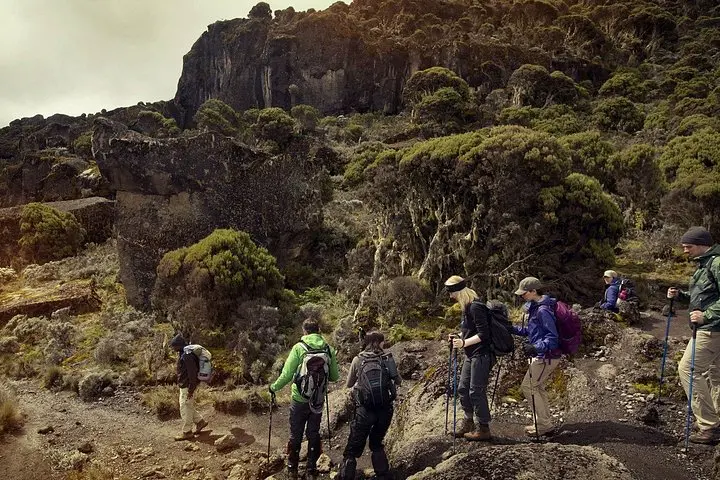
Machame — often called the Whiskey Route — approaches Kilimanjaro from the southwest and trades the short, steep assaults of Umbwe for longer, gentler climbs and better acclimatization. The trek threads rainforest, moorland and alpine desert across 4,500 vertical meters from gate to Uhuru Peak (5,895m). Day two begins in a damp, green world where tree trunks drip with moss; by day three you’re pushing onto the windswept Shira Plateau with clear views back toward Mt. Meru. The route’s geology is obvious: ancient lava flows, loose scree and the glacial teeth near the summit tell a volcanic story that culminates in the ragged ice near Kibo’s crater.
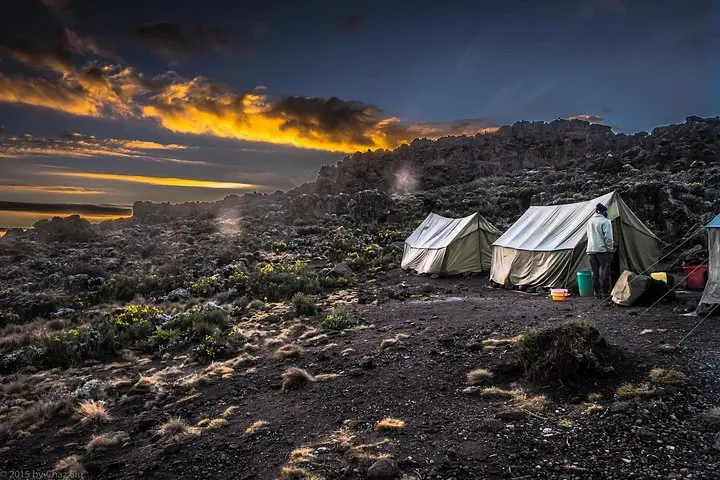
Machame’s cultural context is as visible as its landscape. Porters and guides — many from the Chagga and Meru communities on Kilimanjaro’s flanks — carry not just loads but generations of route knowledge. Camps are full of practical choreography: mess tents, steaming mugs, careful boot maintenance. Park rules and Kilimanjaro National Park fees fund conservation and local livelihoods, an important part of the mountain’s modern story.
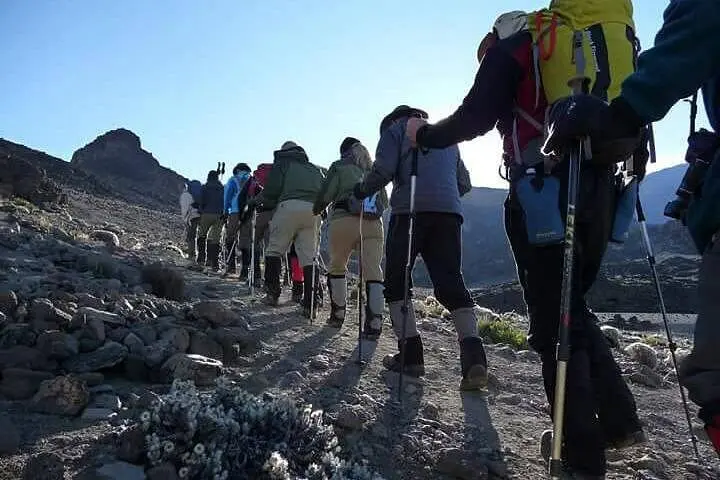
Practical edge: the standard itinerary runs 6–9 days including transfers; the summit push from Barafu is an overnight start with 4–6 hours of steep scree to Stella Point and another hour to Uhuru Peak. Expect long summit day durations (12–15 hours including descent). Terrain varies from slick rainforest trails to exposed, loose scree and icy sections near the rim — trekking poles, layered insulation and crampon-ready boots (if you plan to use them) matter.
Hydration, pacing and sleep are the real tools for success. The route’s design allows “walk high, sleep low” acclimatization opportunities: take them. Be disciplined about water intake (3–4 liters/day at altitude), nibble calories consistently and keep clothing dry and warm—nights at Barafu and the summit can drop well below freezing. Choose a reputable operator that provides experienced guides, porter support and radio or satellite evacuation protocols.
If you go: plan for Moshi as your logistical hub, allow extra acclimatization days if you’re new to altitude, and treat the descent as recovery — it’s when the body remembers the mountain. Reach the summit and the view is literal: an enormous, empty sky that seems to push you forward and, finally, a hard-earned quiet where the mountain admits you in.
Typical itineraries are 6–9 days; 7–8 days is common and offers better acclimatization and higher summit success than shorter schedules.
No technical climbing skills are required—this is a trekking route—but you should have prior high-altitude hiking experience and good fitness.
The clearest windows are January–March and June–October when trails are drier and summit weather is more stable.
Acute mountain sickness is a real risk; follow ‘walk high, sleep low’, hydrate, and communicate symptoms to your guides immediately—descent is the primary treatment.
Camps use mess tents and sleeping tents; operators supply meals, chairs and sometimes hot water—accommodation in Moshi or Arusha is standard before and after the climb.
Yes—Moshi and Arusha have rental shops for sleeping bags, down jackets and boots, but bringing personal-fit boots and base layers is recommended.
Three Peaks Tanzania Safari ltd operates guided outdoor trips and adventures with an emphasis on safety, stewardship, and memorable experiences.
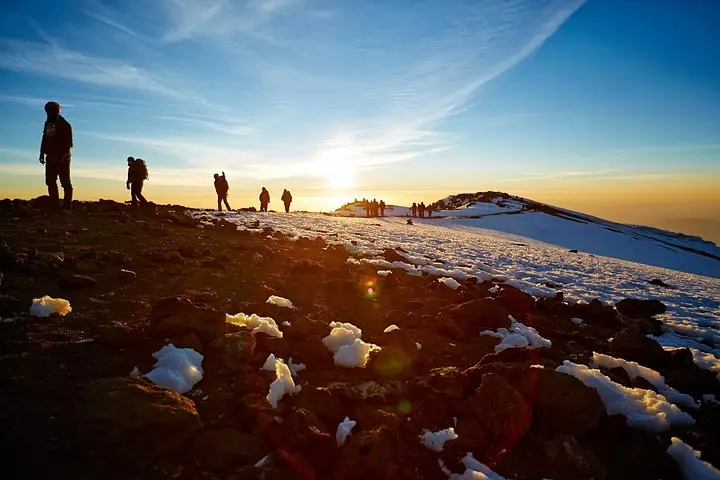
The sun is a slow promise on the Machame Route. Before midnight, headlamps pick out a string of shadows climbing away from Barafu Camp; by dawn the crater rim blushes and Stella Point gives the first teeth of light across a rim of ice. On Kilimanjaro the air is thin and honest: each step forward asks for rhythm, patience and a steady pair of lungs.
The sun is a slow promise on the Machame Route. Before midnight, headlamps pick out a string of shadows climbing away from Barafu Camp; by dawn the crater rim blushes and Stella Point gives the first teeth of light across a rim of ice. On Kilimanjaro the air is thin and honest: each step forward asks for rhythm, patience and a steady pair of lungs.
Machame — often called the Whiskey Route — approaches Kilimanjaro from the southwest and trades the short, steep assaults of Umbwe for longer, gentler climbs and better acclimatization. The trek threads rainforest, moorland and alpine desert across 4,500 vertical meters from gate to Uhuru Peak (5,895m). Day two begins in a damp, green world where tree trunks drip with moss; by day three you’re pushing onto the windswept Shira Plateau with clear views back toward Mt. Meru. The route’s geology is obvious: ancient lava flows, loose scree and the glacial teeth near the summit tell a volcanic story that culminates in the ragged ice near Kibo’s crater.
Machame’s cultural context is as visible as its landscape. Porters and guides — many from the Chagga and Meru communities on Kilimanjaro’s flanks — carry not just loads but generations of route knowledge. Camps are full of practical choreography: mess tents, steaming mugs, careful boot maintenance. Park rules and Kilimanjaro National Park fees fund conservation and local livelihoods, an important part of the mountain’s modern story.
Practical edge: the standard itinerary runs 6–9 days including transfers; the summit push from Barafu is an overnight start with 4–6 hours of steep scree to Stella Point and another hour to Uhuru Peak. Expect long summit day durations (12–15 hours including descent). Terrain varies from slick rainforest trails to exposed, loose scree and icy sections near the rim — trekking poles, layered insulation and crampon-ready boots (if you plan to use them) matter.
Hydration, pacing and sleep are the real tools for success. The route’s design allows “walk high, sleep low” acclimatization opportunities: take them. Be disciplined about water intake (3–4 liters/day at altitude), nibble calories consistently and keep clothing dry and warm—nights at Barafu and the summit can drop well below freezing. Choose a reputable operator that provides experienced guides, porter support and radio or satellite evacuation protocols.
If you go: plan for Moshi as your logistical hub, allow extra acclimatization days if you’re new to altitude, and treat the descent as recovery — it’s when the body remembers the mountain. Reach the summit and the view is literal: an enormous, empty sky that seems to push you forward and, finally, a hard-earned quiet where the mountain admits you in.