THE ADVENTURE COLLECTIVE® · Independent discovery and booking for outdoor travel

Follow the Machame Route from Machame Gate through rainforest, the Shira Plateau, and up to Uhuru Peak in a six-day push that prioritizes acclimatization and scenic variety. This guide explains what to expect on each stage and how to prepare for altitude, terrain, and weather.
Follow the Machame Route from Machame Gate through rainforest, the Shira Plateau, and up to Uhuru Peak in a six-day push that prioritizes acclimatization and scenic variety. This guide explains what to expect on each stage and how to prepare for altitude, terrain, and weather.
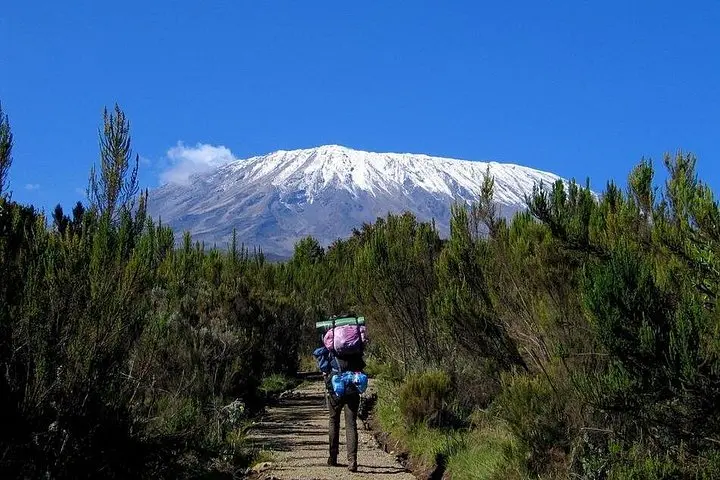
A night transfer from Moshi dissolves into the hush of the rainforest as trekkers step through Machame Gate and begin the Machame Route — a six-day climb that moves from dripping woodland into alpine desert before the stark, wind-gnawed rim of Kibo.
Verified experiences and guided adventures in the surrounding area.
Operated by Trip to Africa (theKili-Guides) · Moshi, Kilimanjaro Region
A night transfer from Moshi dissolves into the hush of the rainforest as trekkers step through Machame Gate and begin the Machame Route — a six-day climb that moves from dripping woodland into alpine desert before the stark, wind-gnawed rim of Kibo.
The trail traces geological transitions: volcanic basalt gives way to the Shira Plateau's weathered lava flows and then to the scree and ice near the crater. Culturally, guides and porters from Chagga communities carry local knowledge and stories up the mountain; Hans Meyer’s 1889 ascent is the first recorded climb, but Kilimanjaro’s slopes have long been part of local life and legend.
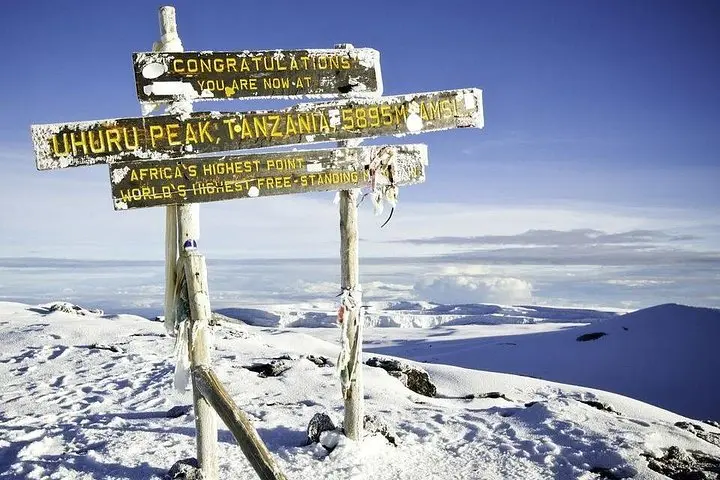
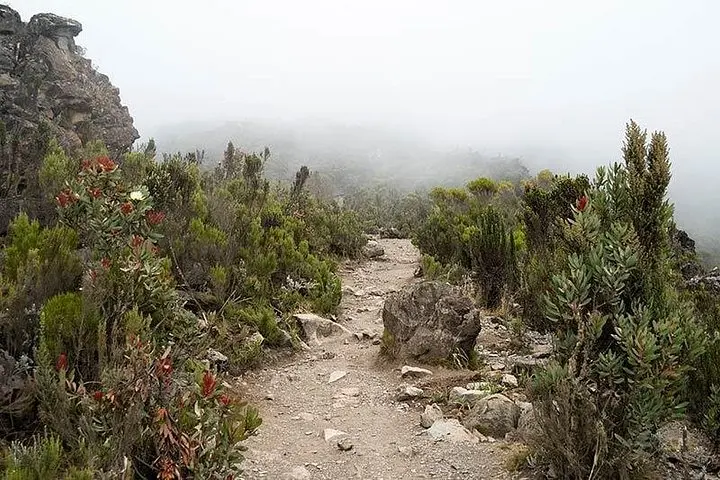
Expect rainforest humidity and epiphytes on day one, wide plateau views on day two, the acclimatization grind at Lava Tower, a testing but non-technical scramble at Barranco Wall, and a night-time push from Barafu for sunrise at Uhuru Peak (5,895 m). The summit is mostly a high-altitude endurance effort rather than a technical climb; glacial remnants lie near the crater, retreating visibly each decade.
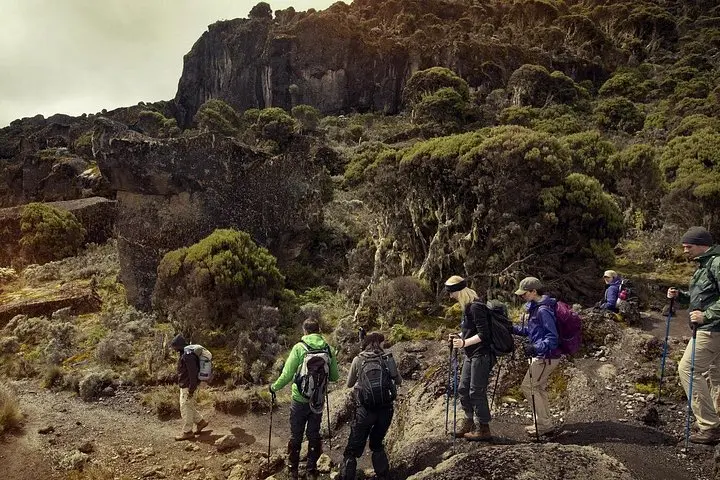
Practical guidance: pace matters more than speed — acclimatize on the Machame/Lava Tower days, drink frequently, and layer for sudden temperature swings. Footing changes from muddy trails to loose volcanic scree; gaiters and poles help. Leaders provide camping, meals, and porter support, but bring a rated sleeping bag and test your boots beforehand. Permit, park fees, and responsible porter tipping are part of the logistics; confirm permits and insurance before departure.
The route is non-technical but physically demanding due to length and altitude; expect long hiking days and a summit push at night to reach Uhuru Peak (5,895 m).
No technical rock-climbing skills are required; crampons are rarely needed on the Machame route but guides may recommend them if ice conditions are present near the crater.
Dry months (June–October and January–February) offer the most stable weather and clearer summit windows; heavy rains typically fall March–May and November–December.
Acclimatization days are built into the Machame itinerary, but AMS remains a risk; communicate symptoms to guides, ascend slowly, and carry medication if prescribed by a physician.
Trip to Africa (theKili-Guides) operates guided outdoor trips and adventures with an emphasis on safety, stewardship, and memorable experiences.
A night transfer from Moshi dissolves into the hush of the rainforest as trekkers step through Machame Gate and begin the Machame Route — a six-day climb that moves from dripping woodland into alpine desert before the stark, wind-gnawed rim of Kibo.
A night transfer from Moshi dissolves into the hush of the rainforest as trekkers step through Machame Gate and begin the Machame Route — a six-day climb that moves from dripping woodland into alpine desert before the stark, wind-gnawed rim of Kibo.
The trail traces geological transitions: volcanic basalt gives way to the Shira Plateau's weathered lava flows and then to the scree and ice near the crater. Culturally, guides and porters from Chagga communities carry local knowledge and stories up the mountain; Hans Meyer’s 1889 ascent is the first recorded climb, but Kilimanjaro’s slopes have long been part of local life and legend.
Expect rainforest humidity and epiphytes on day one, wide plateau views on day two, the acclimatization grind at Lava Tower, a testing but non-technical scramble at Barranco Wall, and a night-time push from Barafu for sunrise at Uhuru Peak (5,895 m). The summit is mostly a high-altitude endurance effort rather than a technical climb; glacial remnants lie near the crater, retreating visibly each decade.
Practical guidance: pace matters more than speed — acclimatize on the Machame/Lava Tower days, drink frequently, and layer for sudden temperature swings. Footing changes from muddy trails to loose volcanic scree; gaiters and poles help. Leaders provide camping, meals, and porter support, but bring a rated sleeping bag and test your boots beforehand. Permit, park fees, and responsible porter tipping are part of the logistics; confirm permits and insurance before departure.