THE ADVENTURE COLLECTIVE® · Independent discovery and booking for outdoor travel

A focused 14-day circuit from Antananarivo through Andasibe, Ranomafana, Kirindy and Isalo that brings you face-to-face with Madagascar’s endemic lemurs and unique landscapes. Ideal for travelers seeking varied habitats, guided walks, and culturally rich road travel across the island.
A focused 14-day circuit from Antananarivo through Andasibe, Ranomafana, Kirindy and Isalo that brings you face-to-face with Madagascar’s endemic lemurs and unique landscapes. Ideal for travelers seeking varied habitats, guided walks, and culturally rich road travel across the island.
You step out of Ivato International Airport into heat and dust that smells faintly of eucalyptus and diesel; within hours the capital's bustle gives way to rainforest calls and the strange rolling song of the indri.
Verified experiences and guided adventures in the surrounding area.
Operated by Across Africa Tours LLC · Antananarivo, Analamanga
You step out of Ivato International Airport into heat and dust that smells faintly of eucalyptus and diesel; within hours the capital's bustle gives way to rainforest calls and the strange rolling song of the indri.
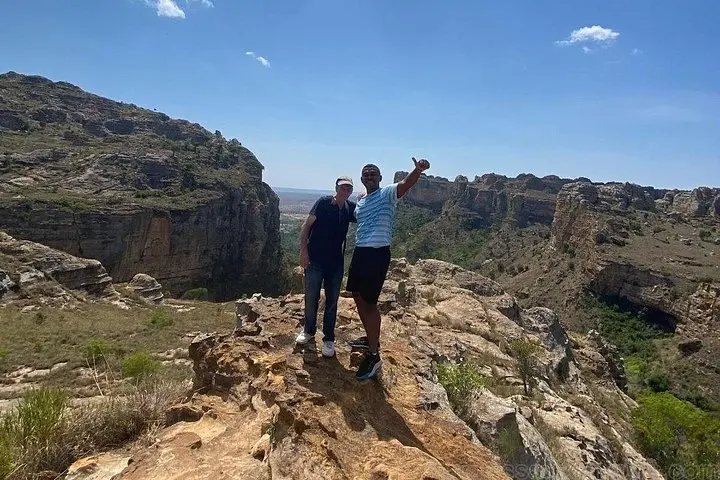
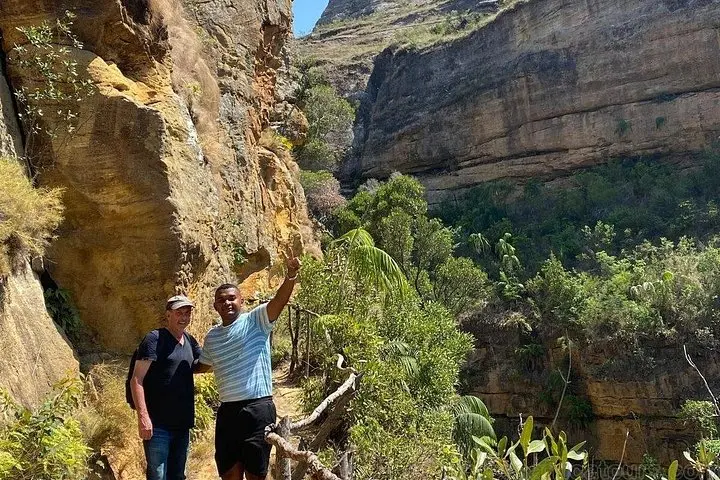
This 14-day itinerary threads Madagascar's east-west spine: lowland rainforest around Andasibe and Ranomafana, the dry deciduous forests of Kirindy, and the sandstone canyons of Isalo. Geologically the island is an ancient fragment of Gondwana—its soils and isolated valleys created evolutionary experiments that produced lemurs, chameleons, and plants found nowhere else. Culturally, Malagasy villages punctuate the route; markets sell zebu meat, and roadside artisans carve baobab wood into practical souvenirs.
Expect guided daytime treks to see diademed sifaka and indri choruses, night walks that reveal mouse lemurs and chameleons, and boat transfers to Palmarium where habituated lemurs approach within meters. Long driving days connect distant parks; a domestic flight links Antananarivo and Morondava. Accommodations are lodge-based, with a mix of basic eco-lodges and comfortable hotels.
Practical guidance: travel light but bring durable footwear—many trails are muddy after rain—and a reliable rain shell for unpredictable tropical showers. Carry local currency for entrance fees and tipping; insect repellent and a headlamp make night walks safer. Plan buffer time around domestic flights and accept that park wildlife sightings are best described as likely, not guaranteed. With preparation, this tour delivers close-up encounters with Madagascar’s endemic life and landscapes that demand both patience and curiosity.
Many nationalities require a tourist visa on arrival—check current embassy guidance and have passport pages free and at least six months validity.
Routine vaccines are recommended; consider hepatitis A, typhoid, and malaria prophylaxis for certain regions—consult a travel clinic well before departure.
The itinerary uses domestic flights (e.g., Antananarivo–Morondava); these are included in tour logistics but can be affected by weather—allow buffers in your schedule.
In reserves like Palmarium and some Andasibe trails, habituated lemurs can approach within a few meters; guides enforce respectful distances in wild habitats.
Across Africa Tours LLC operates guided outdoor trips and adventures with an emphasis on safety, stewardship, and memorable experiences.


You step out of Ivato International Airport into heat and dust that smells faintly of eucalyptus and diesel; within hours the capital's bustle gives way to rainforest calls and the strange rolling song of the indri.
You step out of Ivato International Airport into heat and dust that smells faintly of eucalyptus and diesel; within hours the capital's bustle gives way to rainforest calls and the strange rolling song of the indri.
This 14-day itinerary threads Madagascar's east-west spine: lowland rainforest around Andasibe and Ranomafana, the dry deciduous forests of Kirindy, and the sandstone canyons of Isalo. Geologically the island is an ancient fragment of Gondwana—its soils and isolated valleys created evolutionary experiments that produced lemurs, chameleons, and plants found nowhere else. Culturally, Malagasy villages punctuate the route; markets sell zebu meat, and roadside artisans carve baobab wood into practical souvenirs.
Expect guided daytime treks to see diademed sifaka and indri choruses, night walks that reveal mouse lemurs and chameleons, and boat transfers to Palmarium where habituated lemurs approach within meters. Long driving days connect distant parks; a domestic flight links Antananarivo and Morondava. Accommodations are lodge-based, with a mix of basic eco-lodges and comfortable hotels.
Practical guidance: travel light but bring durable footwear—many trails are muddy after rain—and a reliable rain shell for unpredictable tropical showers. Carry local currency for entrance fees and tipping; insect repellent and a headlamp make night walks safer. Plan buffer time around domestic flights and accept that park wildlife sightings are best described as likely, not guaranteed. With preparation, this tour delivers close-up encounters with Madagascar’s endemic life and landscapes that demand both patience and curiosity.