THE ADVENTURE COLLECTIVE® · Independent discovery and booking for outdoor travel

Experience Puccini’s Madama Butterfly in the Metropolitan Opera House’s cavernous stage at Lincoln Center. This guide covers what to expect — from ticket delivery and late‑seating rules to arrival tips and local insights.
Experience Puccini’s Madama Butterfly in the Metropolitan Opera House’s cavernous stage at Lincoln Center. This guide covers what to expect — from ticket delivery and late‑seating rules to arrival tips and local insights.
The lights dim and the Met’s vast stage inhales: a single lantern becomes a world. Standing in the marble lobby of the Metropolitan Opera House at Lincoln Center, you feel the auditorium’s scale before the overture begins — rows of seats folding into shadow, a chandelier that holds the ceiling like a constellation. The performance fills that space, Puccini’s score pushing and pulling the air, the stagecraft daring you to look away.
Verified experiences and guided adventures in the surrounding area.
Operated by Broadway Inbound · New York, NY
The lights dim and the Met’s vast stage inhales: a single lantern becomes a world. Standing in the marble lobby of the Metropolitan Opera House at Lincoln Center, you feel the auditorium’s scale before the overture begins — rows of seats folding into shadow, a chandelier that holds the ceiling like a constellation. The performance fills that space, Puccini’s score pushing and pulling the air, the stagecraft daring you to look away.
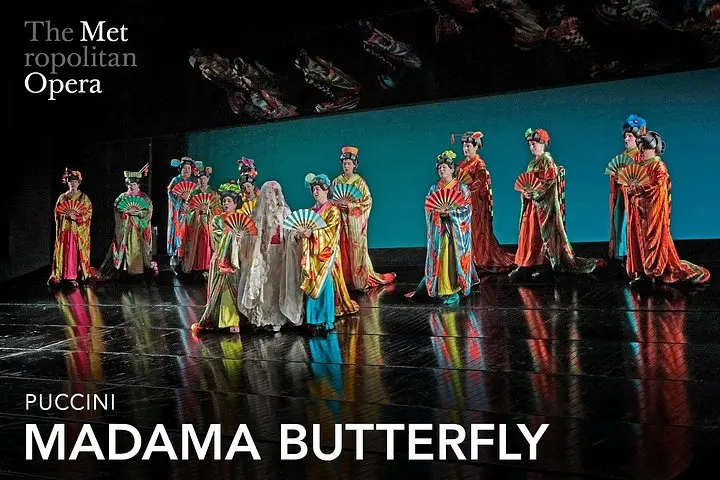
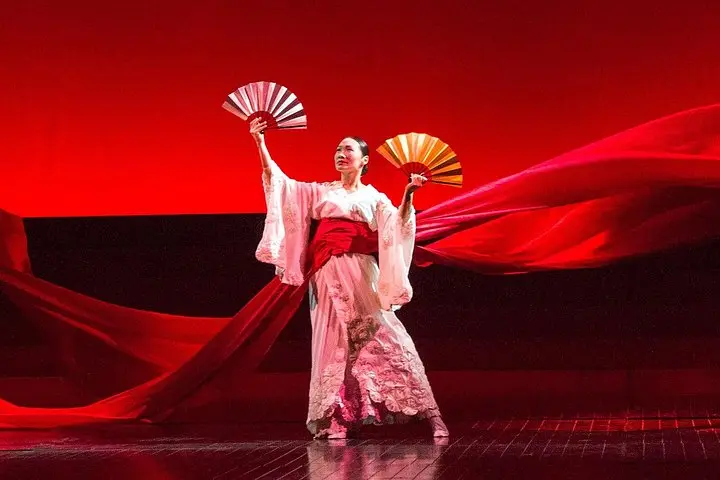
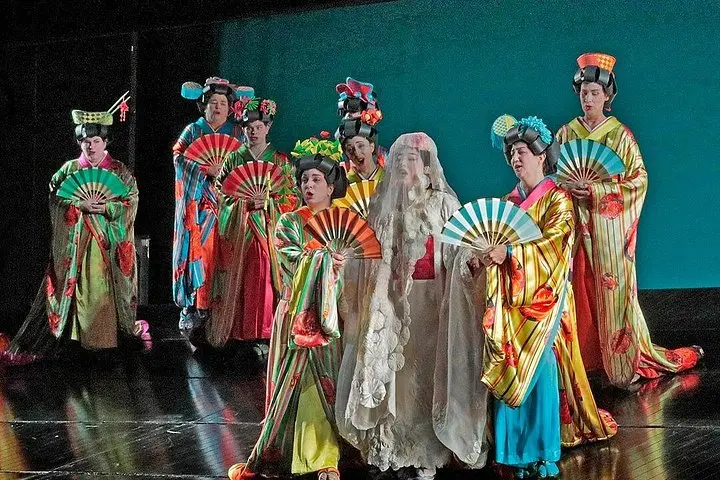
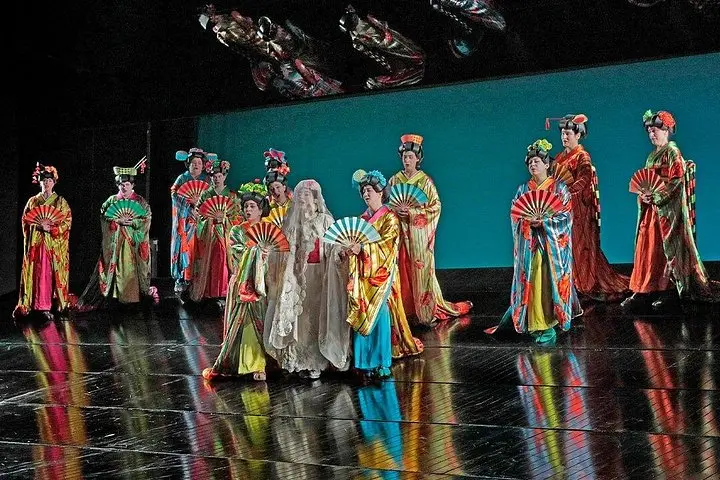
Madama Butterfly premiered in 1904 and remains one of opera’s most potent dramas — a collision of cultures set in early‑20th‑century Nagasaki. The Metropolitan Opera, founded in 1883 and relocated to its Lincoln Center home in 1966, has staged generations of this work; its productions emphasize color, intricate sets and, in some versions, inventive puppetry that heighten the tragedy. Architecturally, the house was designed for large-scale productions: sightlines and acoustics favor clarity and emotional immediacy.
Practical guidance: tickets are delivered via emailed URL; have the barcode ready on your phone. Plan to arrive 30–45 minutes early to pass security, find your seat, and use the cloakroom. Late seating is at management’s discretion — many performances delay seating only during scene changes. Dress ranges from smart casual to formal; layers work for variable lobby and auditorium temperatures. The 66th Street–Lincoln Center subway stop (1 train) and several bus routes serve the plaza. Accessibility seating and services are available — note needs at booking. Turn off phones, avoid flash photography, and allow the score to steer your attention — the orchestra and voices will do the rest.
Tickets are emailed as a URL link from [email protected]; open the link and display the barcode on your phone for entry.
Late seating is at management’s discretion and typically only occurs during scene breaks — expect to wait until an appropriate pause in the performance.
Yes — accessible seating and transfer seating are available; advise special requirements at booking to ensure appropriate arrangements.
Children may attend but everyone entering must have a ticket; consider the length and intensity of the performance when bringing young children.
Broadway Inbound operates guided outdoor trips and adventures with an emphasis on safety, stewardship, and memorable experiences.
The lights dim and the Met’s vast stage inhales: a single lantern becomes a world. Standing in the marble lobby of the Metropolitan Opera House at Lincoln Center, you feel the auditorium’s scale before the overture begins — rows of seats folding into shadow, a chandelier that holds the ceiling like a constellation. The performance fills that space, Puccini’s score pushing and pulling the air, the stagecraft daring you to look away.
The lights dim and the Met’s vast stage inhales: a single lantern becomes a world. Standing in the marble lobby of the Metropolitan Opera House at Lincoln Center, you feel the auditorium’s scale before the overture begins — rows of seats folding into shadow, a chandelier that holds the ceiling like a constellation. The performance fills that space, Puccini’s score pushing and pulling the air, the stagecraft daring you to look away.
Madama Butterfly premiered in 1904 and remains one of opera’s most potent dramas — a collision of cultures set in early‑20th‑century Nagasaki. The Metropolitan Opera, founded in 1883 and relocated to its Lincoln Center home in 1966, has staged generations of this work; its productions emphasize color, intricate sets and, in some versions, inventive puppetry that heighten the tragedy. Architecturally, the house was designed for large-scale productions: sightlines and acoustics favor clarity and emotional immediacy.
Practical guidance: tickets are delivered via emailed URL; have the barcode ready on your phone. Plan to arrive 30–45 minutes early to pass security, find your seat, and use the cloakroom. Late seating is at management’s discretion — many performances delay seating only during scene changes. Dress ranges from smart casual to formal; layers work for variable lobby and auditorium temperatures. The 66th Street–Lincoln Center subway stop (1 train) and several bus routes serve the plaza. Accessibility seating and services are available — note needs at booking. Turn off phones, avoid flash photography, and allow the score to steer your attention — the orchestra and voices will do the rest.