THE ADVENTURE COLLECTIVE® · Independent discovery and booking for outdoor travel

Paddle before dawn through winding mangrove channels on the Madu River. This three-hour sunrise retreat mixes easy paddling, guided ecology, and close-up encounters with a Ramsar wetland.
Paddle before dawn through winding mangrove channels on the Madu River. This three-hour sunrise retreat mixes easy paddling, guided ecology, and close-up encounters with a Ramsar wetland.
Before the sun clears the horizon, a narrow channel breathes steam and the first kayaks slip forward, blades whispering against tannin-dark water. Mangrove roots curve like old hands into the river, and the estuary pushes back with a slow, patient tide that seems to time the whole morning.
Verified experiences and guided adventures in the surrounding area.
Operated by Serendib Adventures · Ahungalla, Southern Province
Before the sun clears the horizon, a narrow channel breathes steam and the first kayaks slip forward, blades whispering against tannin-dark water. Mangrove roots curve like old hands into the river, and the estuary pushes back with a slow, patient tide that seems to time the whole morning.
The Madu River (Madu Ganga) is a Ramsar-declared wetland on Sri Lanka’s southwest coast, where mangrove islets and tidal creeks collect sediments from the interior and sea. The mud and mangrove roots build habitat for 300+ plant species and scores of birds, crustaceans and fish; the river has supported local fishing and small-scale cinnamon and coconut use for generations.
Geologically this is an active estuary—silty channels shift with monsoon-driven sediments—so routes and small islets change seasonally. Culturally, small villages still set crab traps and launch outriggers at dawn; guides often blend ecological notes with local stories about tides and traditional fishing.
Practical guidance: meet pre-dawn for a 5:30 briefing, then expect about 3 hours on the water with 4–6 km of easy paddling through narrow channels and wider estuary openings. Guides provide life jackets, a safety boat and basic instruction; bring insect repellent, sun protection and a waterproof camera. Watch tides—low water narrows channels and exposes roots—and dress for sticky heat and possible rain. Move slowly, give wildlife space, and pack out what you bring in: this fragile wetland responds quickly to disturbance.
A sunrise paddle here is quiet, contemplative and accessible—perfect for anyone wanting an early-morning encounter with Sri Lanka’s coastal ecology.
Tours run about 3 hours with a pre-dawn meeting; typical launch is around 5:45–6:00 to catch sunrise.
No—basic instruction is provided and routes are chosen for all fitness levels, but you should be comfortable sitting and paddling for up to three hours.
Expect kingfishers, wading birds, water monitor lizards and small crustaceans; sightings vary by season and tide.
Tours may be canceled for safety in heavy rain or rough seas; the operator’s policy allows refunds if canceled at least 24 hours prior.
Serendib Adventures operates guided outdoor trips and adventures with an emphasis on safety, stewardship, and memorable experiences.
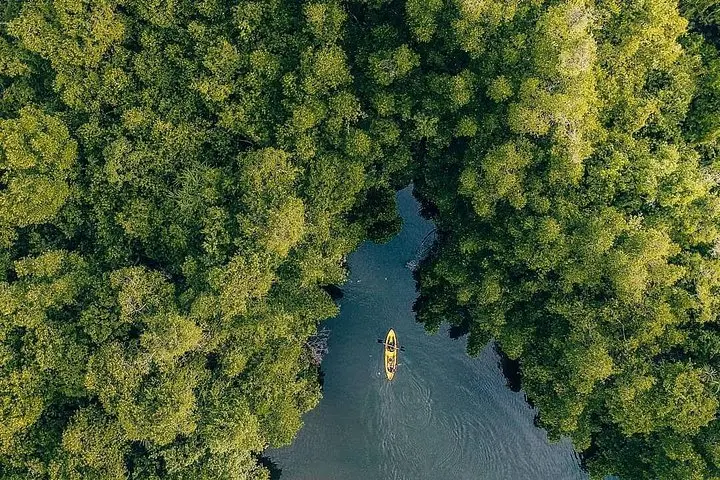
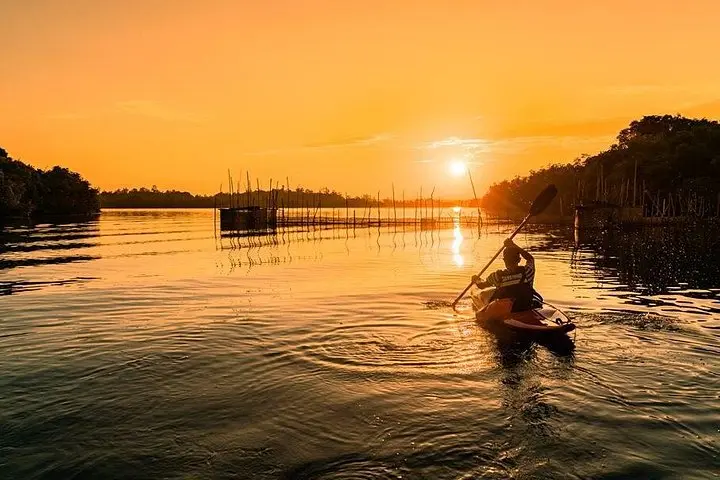
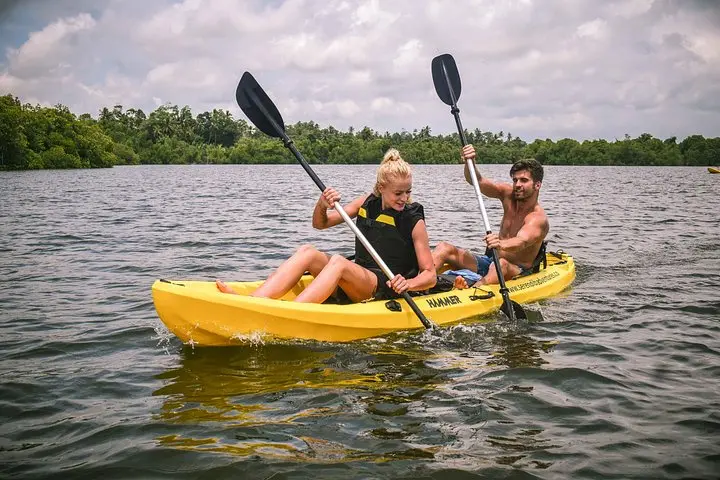
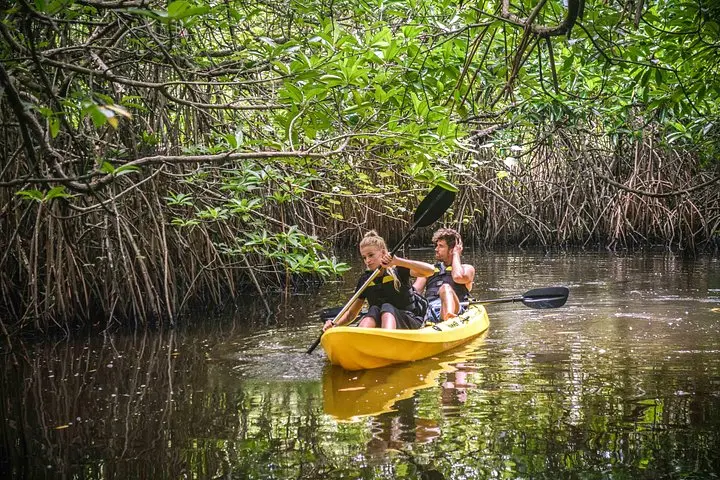
Before the sun clears the horizon, a narrow channel breathes steam and the first kayaks slip forward, blades whispering against tannin-dark water. Mangrove roots curve like old hands into the river, and the estuary pushes back with a slow, patient tide that seems to time the whole morning.
Before the sun clears the horizon, a narrow channel breathes steam and the first kayaks slip forward, blades whispering against tannin-dark water. Mangrove roots curve like old hands into the river, and the estuary pushes back with a slow, patient tide that seems to time the whole morning.
The Madu River (Madu Ganga) is a Ramsar-declared wetland on Sri Lanka’s southwest coast, where mangrove islets and tidal creeks collect sediments from the interior and sea. The mud and mangrove roots build habitat for 300+ plant species and scores of birds, crustaceans and fish; the river has supported local fishing and small-scale cinnamon and coconut use for generations.
Geologically this is an active estuary—silty channels shift with monsoon-driven sediments—so routes and small islets change seasonally. Culturally, small villages still set crab traps and launch outriggers at dawn; guides often blend ecological notes with local stories about tides and traditional fishing.
Practical guidance: meet pre-dawn for a 5:30 briefing, then expect about 3 hours on the water with 4–6 km of easy paddling through narrow channels and wider estuary openings. Guides provide life jackets, a safety boat and basic instruction; bring insect repellent, sun protection and a waterproof camera. Watch tides—low water narrows channels and exposes roots—and dress for sticky heat and possible rain. Move slowly, give wildlife space, and pack out what you bring in: this fragile wetland responds quickly to disturbance.
A sunrise paddle here is quiet, contemplative and accessible—perfect for anyone wanting an early-morning encounter with Sri Lanka’s coastal ecology.