THE ADVENTURE COLLECTIVE® · Independent discovery and booking for outdoor travel

Witness a train slice through stalls and glide by a floating market overflowing with fruit and life on this full-day excursion from Bangkok. Expect close-up market theatre, a banyan-enshrined temple and a long-tail boat ride through historic canals.
Witness a train slice through stalls and glide by a floating market overflowing with fruit and life on this full-day excursion from Bangkok. Expect close-up market theatre, a banyan-enshrined temple and a long-tail boat ride through historic canals.
You arrive before the heat builds, the air already thick with coconut and fried banana. Rail tracks slice through a market stall, vendors folding umbrellas like a practiced gesture the second a horn warns—seconds later a train threads through as if invited. A long-tail boat nudges the canal’s edge and the river seems to dare you to keep up with its commerce: wooden boats piled high with tropical fruit, merchants calling, paddles whispering.
Verified experiences and guided adventures in the surrounding area.
Operated by I Asia Thailand · Damnoen Saduak, Ratchaburi / Samut Songkhram
You arrive before the heat builds, the air already thick with coconut and fried banana. Rail tracks slice through a market stall, vendors folding umbrellas like a practiced gesture the second a horn warns—seconds later a train threads through as if invited. A long-tail boat nudges the canal’s edge and the river seems to dare you to keep up with its commerce: wooden boats piled high with tropical fruit, merchants calling, paddles whispering.
This route follows old trade arteries that fed Bangkok—waterways carved over centuries and the short iron line that reshaped local commerce in the early 1900s. Ratchaburi’s canals and Samut Songkhram’s muddy banks reveal layers of agricultural history: sugar palms, salt pans and markets that grew where traders met the tide.
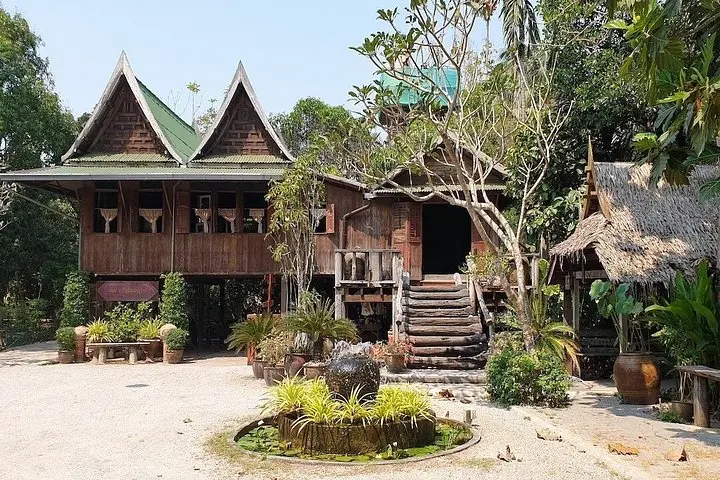
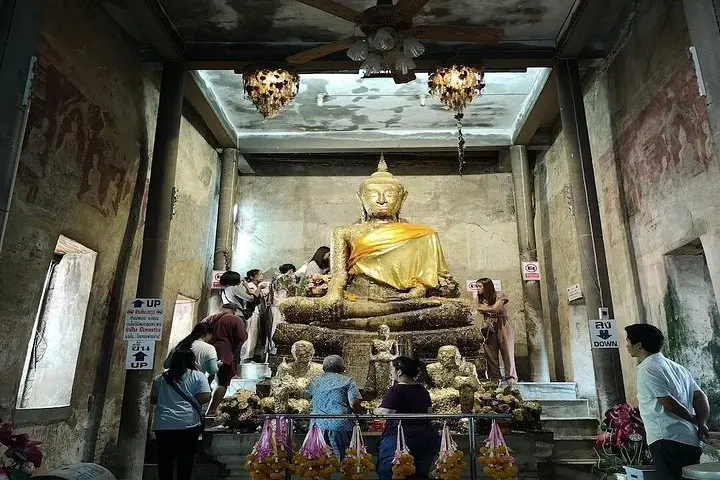
Cultural notes arrive in small details: Wat Kai Bang Kung, half-swallowed by banyan roots, is a living image of religion and nature negotiating space; the sugar palm workshop shows a simpler rural craft economy still in use.
Practical guidance: the full-day tour runs about 10–11 hours with hotel pickup in Bangkok and significant time on foot and in boats. Wear breathable, modest clothing for temple stops; have small bills for market purchases; protect yourself from sun and sudden showers. Mobility can be tested boarding long-tail boats—advise your operator if you have difficulty. Bring a camera with a quick-access pocket—the market’s choreography moves fast.
Expect lively crowds, close-up market theater, and an easy-to-manage rhythm of boat, market and temple that gives a compact, sensory view of central Thailand outside the city.
The long-tail speedboat to Damnoen Saduak is included for about 30 minutes; optional paddle-boat rides are offered locally and usually require extra payment if time allows.
Yes—infants are allowed (children under 2 travel free with two paying adults), though strollers may be difficult to use in crowded markets and boarding boats.
Pickup is provided from most Bangkok hotels; exact pickup time is confirmed the day before—provide correct contact details when booking.
Thai lunch is provided at a local restaurant—notify the guide in advance of allergies or dietary restrictions so they can advise the kitchen or suggest alternatives.
I Asia Thailand operates guided outdoor trips and adventures with an emphasis on safety, stewardship, and memorable experiences.
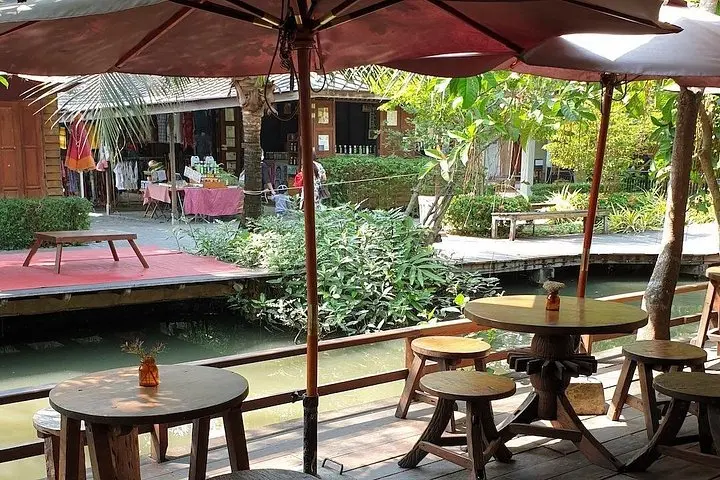
You arrive before the heat builds, the air already thick with coconut and fried banana. Rail tracks slice through a market stall, vendors folding umbrellas like a practiced gesture the second a horn warns—seconds later a train threads through as if invited. A long-tail boat nudges the canal’s edge and the river seems to dare you to keep up with its commerce: wooden boats piled high with tropical fruit, merchants calling, paddles whispering.
You arrive before the heat builds, the air already thick with coconut and fried banana. Rail tracks slice through a market stall, vendors folding umbrellas like a practiced gesture the second a horn warns—seconds later a train threads through as if invited. A long-tail boat nudges the canal’s edge and the river seems to dare you to keep up with its commerce: wooden boats piled high with tropical fruit, merchants calling, paddles whispering.
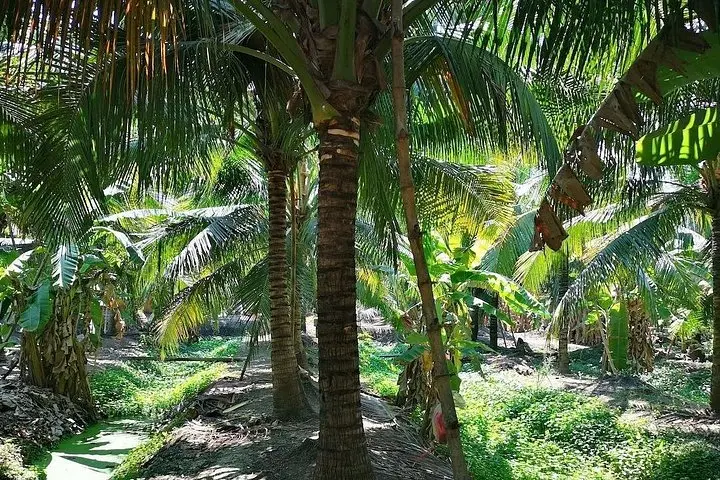
This route follows old trade arteries that fed Bangkok—waterways carved over centuries and the short iron line that reshaped local commerce in the early 1900s. Ratchaburi’s canals and Samut Songkhram’s muddy banks reveal layers of agricultural history: sugar palms, salt pans and markets that grew where traders met the tide.
Cultural notes arrive in small details: Wat Kai Bang Kung, half-swallowed by banyan roots, is a living image of religion and nature negotiating space; the sugar palm workshop shows a simpler rural craft economy still in use.
Practical guidance: the full-day tour runs about 10–11 hours with hotel pickup in Bangkok and significant time on foot and in boats. Wear breathable, modest clothing for temple stops; have small bills for market purchases; protect yourself from sun and sudden showers. Mobility can be tested boarding long-tail boats—advise your operator if you have difficulty. Bring a camera with a quick-access pocket—the market’s choreography moves fast.
Expect lively crowds, close-up market theater, and an easy-to-manage rhythm of boat, market and temple that gives a compact, sensory view of central Thailand outside the city.