THE ADVENTURE COLLECTIVE® · Independent discovery and booking for outdoor travel

Witness vendors fold back their stalls for a passing train and glide through canals lined with colorful sampans on this 5–6 hour market tour from Bangkok. Taste street specialties and learn the local rhythm of Thailand’s most famous markets.
Witness vendors fold back their stalls for a passing train and glide through canals lined with colorful sampans on this 5–6 hour market tour from Bangkok. Taste street specialties and learn the local rhythm of Thailand’s most famous markets.
You step off the minivan into a corridor of color and sound—the train’s whistle threads through sellers’ calls, while wooden boats rock like slow metronomes along shaded canals. At Maeklong, iron rails cut a narrow slice through stalls; vendors snap down awnings and rearrange produce with practiced choreography the instant a train appears. A short drive away, Damnoen Saduak spreads wider: lacquered sampans paddle past banana leaves and coconut sellers, the smell of frying oil and mango sticky rice weaving between paddlers’ shouts.
Verified experiences and guided adventures in the surrounding area.
Operated by Siam Scape Journeys · Samut Songkhram, Samut Songkhram Province
You step off the minivan into a corridor of color and sound—the train’s whistle threads through sellers’ calls, while wooden boats rock like slow metronomes along shaded canals. At Maeklong, iron rails cut a narrow slice through stalls; vendors snap down awnings and rearrange produce with practiced choreography the instant a train appears. A short drive away, Damnoen Saduak spreads wider: lacquered sampans paddle past banana leaves and coconut sellers, the smell of frying oil and mango sticky rice weaving between paddlers’ shouts.
These markets grew from practical roots. Maeklong evolved where a community clustered on rail access; Damnoen Saduak is a product of 19th-century canal engineering under King Rama IV that linked rural farms to Bangkok’s markets. The geology is low-lying delta—peaty soils and canal networks shaped by the Mae Klong system—so expect humid air and water-choreographed commerce. Culturally, market women in patterned shirts and wide-brim hats remain central: bargaining is polite but brisk, and small food stalls are where locals eat.
Practical guidance: the tour is a 5–6 hour day trip from Bangkok—bring cash (small bills), a lightweight rain layer in wet season, and non-slip shoes for wet platforms. Photograph the umbrella pullback at Maeklong but stand clear when trains approach. Sample mango sticky rice and coconut ice cream from stall vendors for authentic flavors; accept bottled water from the operator and sip often in the heat.
Timing matters—arrive early in the morning to avoid the heaviest crowds and the midday sun. Respect sellers’ space during the train display, keep belongings zipped close on packed boats, and allow extra time for slow-moving canal travel if you plan to explore beyond the main docks.
Typical duration is 5–6 hours from Bangkok; the tour usually includes transport, an English-speaking guide, longtail boat fees at Damnoen Saduak, bottled water and a cold towel.
No—visitors watch the market retract for passing trains; do not stand on the tracks. The train runs through and vendors immediately reset their stalls once it passes.
Bargaining is common for souvenirs and bulk purchases but less so for perishable food; start modestly and stay polite to get fair local prices.
Access is limited—narrow aisles, wet docks and step-ups onto boats make it challenging for wheelchairs; contact the operator for specific accessibility support.
Siam Scape Journeys operates guided outdoor trips and adventures with an emphasis on safety, stewardship, and memorable experiences.
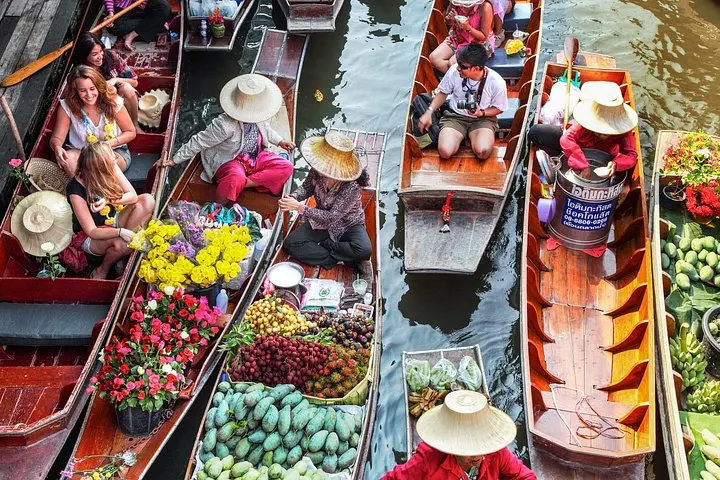
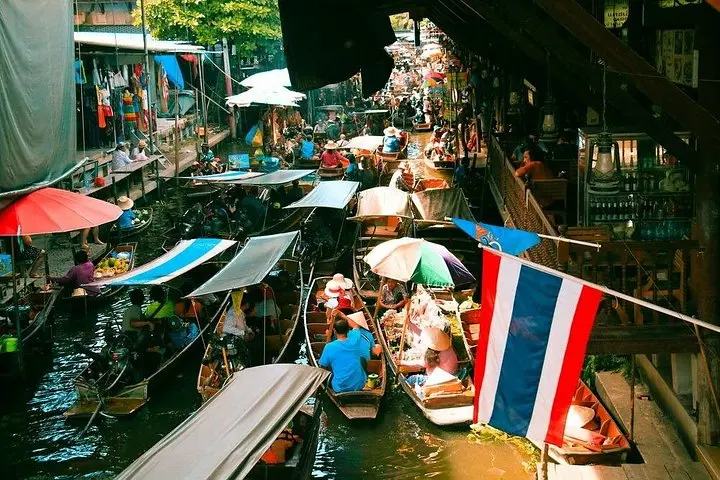
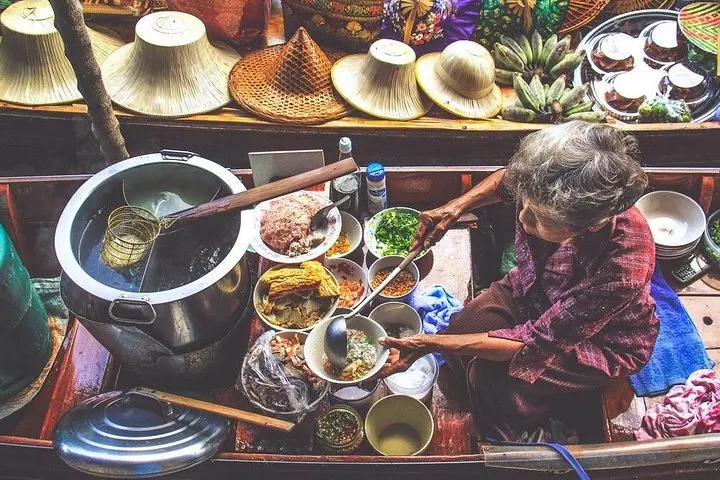
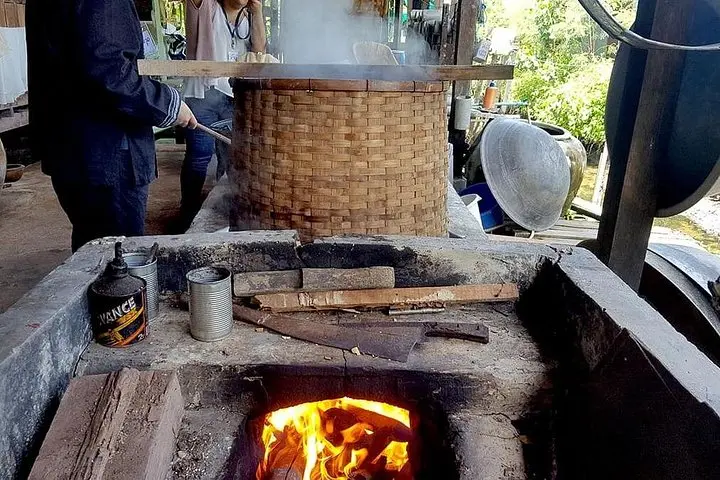
You step off the minivan into a corridor of color and sound—the train’s whistle threads through sellers’ calls, while wooden boats rock like slow metronomes along shaded canals. At Maeklong, iron rails cut a narrow slice through stalls; vendors snap down awnings and rearrange produce with practiced choreography the instant a train appears. A short drive away, Damnoen Saduak spreads wider: lacquered sampans paddle past banana leaves and coconut sellers, the smell of frying oil and mango sticky rice weaving between paddlers’ shouts.
You step off the minivan into a corridor of color and sound—the train’s whistle threads through sellers’ calls, while wooden boats rock like slow metronomes along shaded canals. At Maeklong, iron rails cut a narrow slice through stalls; vendors snap down awnings and rearrange produce with practiced choreography the instant a train appears. A short drive away, Damnoen Saduak spreads wider: lacquered sampans paddle past banana leaves and coconut sellers, the smell of frying oil and mango sticky rice weaving between paddlers’ shouts.
These markets grew from practical roots. Maeklong evolved where a community clustered on rail access; Damnoen Saduak is a product of 19th-century canal engineering under King Rama IV that linked rural farms to Bangkok’s markets. The geology is low-lying delta—peaty soils and canal networks shaped by the Mae Klong system—so expect humid air and water-choreographed commerce. Culturally, market women in patterned shirts and wide-brim hats remain central: bargaining is polite but brisk, and small food stalls are where locals eat.
Practical guidance: the tour is a 5–6 hour day trip from Bangkok—bring cash (small bills), a lightweight rain layer in wet season, and non-slip shoes for wet platforms. Photograph the umbrella pullback at Maeklong but stand clear when trains approach. Sample mango sticky rice and coconut ice cream from stall vendors for authentic flavors; accept bottled water from the operator and sip often in the heat.
Timing matters—arrive early in the morning to avoid the heaviest crowds and the midday sun. Respect sellers’ space during the train display, keep belongings zipped close on packed boats, and allow extra time for slow-moving canal travel if you plan to explore beyond the main docks.