THE ADVENTURE COLLECTIVE® · Independent discovery and booking for outdoor travel

A full‑day route through Oaxaca’s Central Valleys combines millennial trees, Zapotec stonework, petrified waterfalls and traditional mezcal production. This tour packs culture, geology, and hands‑on craft into a nine‑hour exploration east of Oaxaca City.
A full‑day route through Oaxaca’s Central Valleys combines millennial trees, Zapotec stonework, petrified waterfalls and traditional mezcal production. This tour packs culture, geology, and hands‑on craft into a nine‑hour exploration east of Oaxaca City.
You step off an air‑conditioned van into the dusty plaza of Santa María del Tule and the world suddenly bends: a trunk wider than a house groans softly with age, roots like folded arms holding the valley. The day unfolds eastward across Oaxaca’s Central Valleys—handwoven workshops, millimeter‑cut stone at Mitla, petrified cascades at Hierve el Agua, and the smoke‑sweet tang of mezcal in Matatlán.
Verified experiences and guided adventures in the surrounding area.
Operated by ANTEQUERA TRAVEL · Oaxaca City, Oaxaca
You step off an air‑conditioned van into the dusty plaza of Santa María del Tule and the world suddenly bends: a trunk wider than a house groans softly with age, roots like folded arms holding the valley. The day unfolds eastward across Oaxaca’s Central Valleys—handwoven workshops, millimeter‑cut stone at Mitla, petrified cascades at Hierve el Agua, and the smoke‑sweet tang of mezcal in Matatlán.
This corridor is layered history: Zapotec ceremonial centers at Mitla, colonial-era villages preserving weaving and dyeing techniques in Teotitlán del Valle, and geological slow work at Hierve el Agua where mineral‑rich springs have built “waterfalls” over millennia. The landscape sits at roughly 1,500–1,700 m elevation; short walks across uneven stone and rocky trails are common, while drives between stops take 30–90 minutes depending on traffic.
Expect hands‑on demonstrations of natural dyeing, guided explanation of Mitla’s grecas, a 30–60 minute walk and optional soak at Hierve el Agua’s pools, and a stroll through a working palenque with an optional tasting. Bring cash for local crafts and food, wear sturdy shoes for cobblestones and slick terraces, and carry 1–2 liters of water—the sun here can be insistent and the air thin enough to make the pace feel brisk.
Practical timing: this is a full‑day outing (about nine hours) returning to Oaxaca City in the evening. It’s suitable for most travelers seeking culture and geology in one compact, sensory‑rich route.
No; the itinerary includes a gastronomic break but food is at your own expense — small local restaurants accept cash.
Visits include access to the palenque; tastings are usually optional and may require ID and extra payment.
The tour is family‑friendly, but Mitla and Hierve el Agua have uneven surfaces and steps that can challenge mobility—check with the operator for assistance options.
Expect several short walks: roughly 15–60 minutes at sites (flat to uneven terrain) plus standing during demonstrations and transfers between locations.
ANTEQUERA TRAVEL operates guided outdoor trips and adventures with an emphasis on safety, stewardship, and memorable experiences.
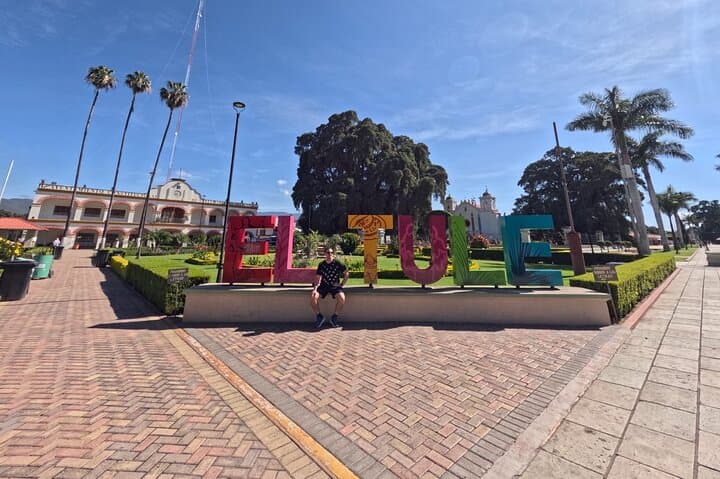
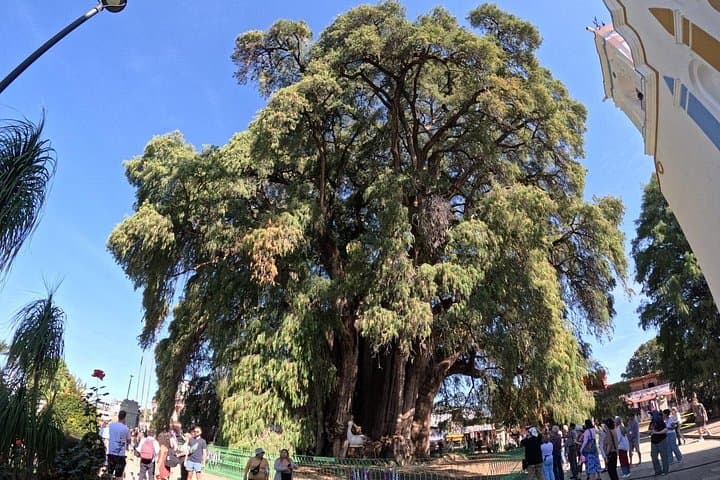
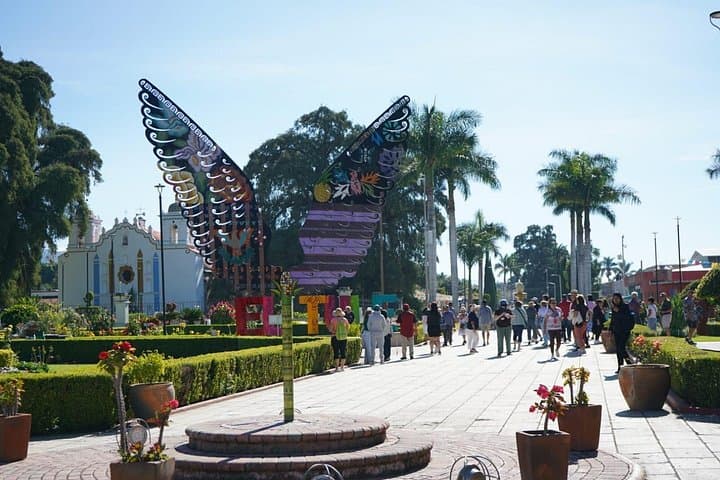
You step off an air‑conditioned van into the dusty plaza of Santa María del Tule and the world suddenly bends: a trunk wider than a house groans softly with age, roots like folded arms holding the valley. The day unfolds eastward across Oaxaca’s Central Valleys—handwoven workshops, millimeter‑cut stone at Mitla, petrified cascades at Hierve el Agua, and the smoke‑sweet tang of mezcal in Matatlán.
You step off an air‑conditioned van into the dusty plaza of Santa María del Tule and the world suddenly bends: a trunk wider than a house groans softly with age, roots like folded arms holding the valley. The day unfolds eastward across Oaxaca’s Central Valleys—handwoven workshops, millimeter‑cut stone at Mitla, petrified cascades at Hierve el Agua, and the smoke‑sweet tang of mezcal in Matatlán.
This corridor is layered history: Zapotec ceremonial centers at Mitla, colonial-era villages preserving weaving and dyeing techniques in Teotitlán del Valle, and geological slow work at Hierve el Agua where mineral‑rich springs have built “waterfalls” over millennia. The landscape sits at roughly 1,500–1,700 m elevation; short walks across uneven stone and rocky trails are common, while drives between stops take 30–90 minutes depending on traffic.
Expect hands‑on demonstrations of natural dyeing, guided explanation of Mitla’s grecas, a 30–60 minute walk and optional soak at Hierve el Agua’s pools, and a stroll through a working palenque with an optional tasting. Bring cash for local crafts and food, wear sturdy shoes for cobblestones and slick terraces, and carry 1–2 liters of water—the sun here can be insistent and the air thin enough to make the pace feel brisk.
Practical timing: this is a full‑day outing (about nine hours) returning to Oaxaca City in the evening. It’s suitable for most travelers seeking culture and geology in one compact, sensory‑rich route.