THE ADVENTURE COLLECTIVE® · Independent discovery and booking for outdoor travel

Swap Hanoi’s frenetic energy for two days of green rice fields, stilt-house hospitality and easy biking through Mai Chau Valley. This short escape pairs a cultural homestay with gentle cycling and a village trek—perfect for travelers who want accessible immersion in northern Vietnam’s rural life.
Swap Hanoi’s frenetic energy for two days of green rice fields, stilt-house hospitality and easy biking through Mai Chau Valley. This short escape pairs a cultural homestay with gentle cycling and a village trek—perfect for travelers who want accessible immersion in northern Vietnam’s rural life.
You roll out of Hanoi before dawn and the city’s noise peels away behind the van—rice paddies arrive in its place, flat green panels split by narrow water channels and the occasional conical hat bending over the fields. By midmorning you climb toward Thung Khe Pass; mist lifts from the valley like a curtain and the view opens to an expanse of folded hills and scattered stilt houses. The air tastes different here—cooler, faintly sweet with cut grass—and the landscape seems to nudge you to slow down.
Verified experiences and guided adventures in the surrounding area.
Operated by Charming Tourist · Mai Chau, Hoa Binh
You roll out of Hanoi before dawn and the city’s noise peels away behind the van—rice paddies arrive in its place, flat green panels split by narrow water channels and the occasional conical hat bending over the fields. By midmorning you climb toward Thung Khe Pass; mist lifts from the valley like a curtain and the view opens to an expanse of folded hills and scattered stilt houses. The air tastes different here—cooler, faintly sweet with cut grass—and the landscape seems to nudge you to slow down.
Mai Chau sits on the edge of the northern highlands in Hoa Binh province, where the Muong and Thai peoples have farmed terraces and woven textiles for generations. Geologically, the valley is a pocket between limestone ridges and lower metamorphic hills; seasonal runoff feeds the rice plains, and the terrain alternates between paved village lanes and compacted dirt tracks. You visit a temporary market on the pass that has been a trading point for ethnic groups long before modern roads. The homestay tradition—sleeping under a high wooden floor with a family—has roots in cooperation and hospitality, a social architecture that still keeps visitors close to local rhythms.
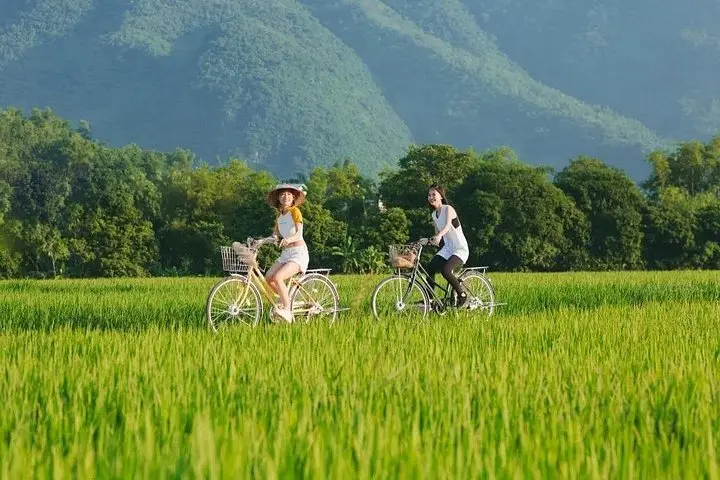
The trip’s active moments are approachable: a gentle 10–12 km afternoon bike ride across flat lanes framed by rice, and a short day-two trek that covers 3–6 km along paths that climb only a few hundred metres. Trails range from asphalt to packed earth; expect narrow singletrack through paddies and switchbacks where terraces ascend. Local guides explain brocade weaving and daily rituals—simple cultural signals that unlock how work and ceremony are braided here.
Practical edge: pack light but smart. Bring a small daypack for water, sunscreen and insect repellent; shoes with a grippy sole for wet dirt and a lightweight jacket for higher elevations or evening chill. Meals in the homestay are regional and fresh—rice, mountain herbs, and sticky rice desserts—and can be adapted for dietary restrictions with advance notice.
Timing matters: mornings and late afternoons offer the best light for photos and the coolest riding; the middle of the day is for market wandering or a nap on the homestay’s shaded porch. This is an easy-to-moderate cultural escape rather than a strenuous trek—ideal if you want hands-on time with village life without committing to long-distance backpacking. Leave room in your schedule to talk to the hosts; the most memorable lessons in Mai Chau usually come over tea, when local stories and mountain weather both have the habit of arriving slowly.
Pickup points are arranged in the Old Quarter and nearby hotels; confirm your hotel name and address when booking for exact pickup time.
Yes—two lunches, breakfast and a family-style dinner at the homestay are included; vegetarian or gluten-free options are available if requested in advance.
Accommodation is a traditional stilt house shared with hosts; rooms are simple but comfortable, and facilities are basic.
The cycling sections are gentle and on flat valley lanes; basic bike handling and comfort riding on mixed surfaces are sufficient.
Children can join but infants must sit on an adult's lap during transport; the operator lists the tour as suitable for all fitness levels.
Small change in dong, a reusable bag for purchases, and a willingness to haggle politely for handmade goods.
Charming Tourist operates guided outdoor trips and adventures with an emphasis on safety, stewardship, and memorable experiences.
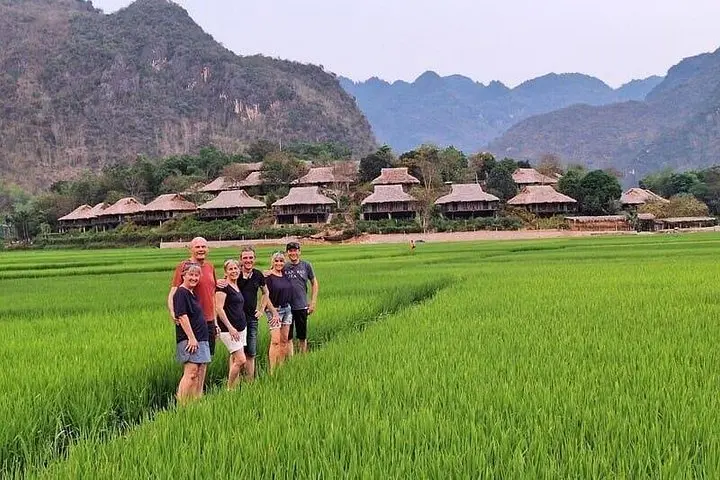
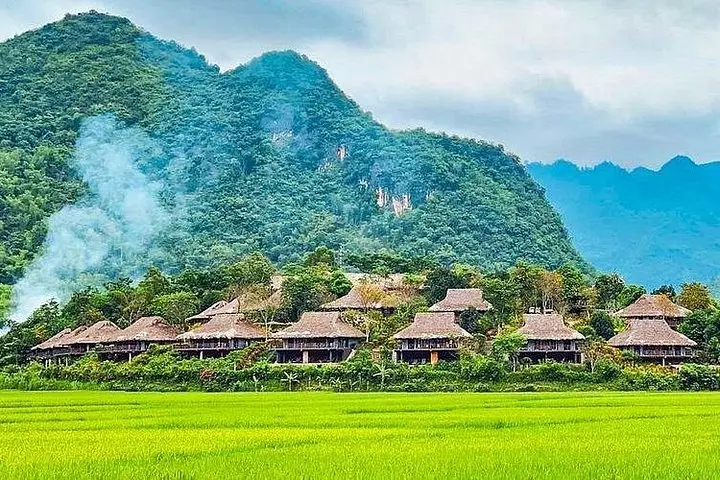
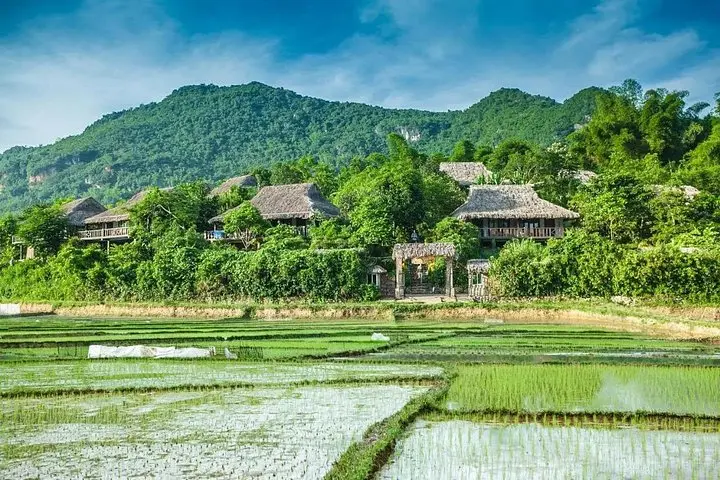
You roll out of Hanoi before dawn and the city’s noise peels away behind the van—rice paddies arrive in its place, flat green panels split by narrow water channels and the occasional conical hat bending over the fields. By midmorning you climb toward Thung Khe Pass; mist lifts from the valley like a curtain and the view opens to an expanse of folded hills and scattered stilt houses. The air tastes different here—cooler, faintly sweet with cut grass—and the landscape seems to nudge you to slow down.
You roll out of Hanoi before dawn and the city’s noise peels away behind the van—rice paddies arrive in its place, flat green panels split by narrow water channels and the occasional conical hat bending over the fields. By midmorning you climb toward Thung Khe Pass; mist lifts from the valley like a curtain and the view opens to an expanse of folded hills and scattered stilt houses. The air tastes different here—cooler, faintly sweet with cut grass—and the landscape seems to nudge you to slow down.
Mai Chau sits on the edge of the northern highlands in Hoa Binh province, where the Muong and Thai peoples have farmed terraces and woven textiles for generations. Geologically, the valley is a pocket between limestone ridges and lower metamorphic hills; seasonal runoff feeds the rice plains, and the terrain alternates between paved village lanes and compacted dirt tracks. You visit a temporary market on the pass that has been a trading point for ethnic groups long before modern roads. The homestay tradition—sleeping under a high wooden floor with a family—has roots in cooperation and hospitality, a social architecture that still keeps visitors close to local rhythms.
The trip’s active moments are approachable: a gentle 10–12 km afternoon bike ride across flat lanes framed by rice, and a short day-two trek that covers 3–6 km along paths that climb only a few hundred metres. Trails range from asphalt to packed earth; expect narrow singletrack through paddies and switchbacks where terraces ascend. Local guides explain brocade weaving and daily rituals—simple cultural signals that unlock how work and ceremony are braided here.
Practical edge: pack light but smart. Bring a small daypack for water, sunscreen and insect repellent; shoes with a grippy sole for wet dirt and a lightweight jacket for higher elevations or evening chill. Meals in the homestay are regional and fresh—rice, mountain herbs, and sticky rice desserts—and can be adapted for dietary restrictions with advance notice.
Timing matters: mornings and late afternoons offer the best light for photos and the coolest riding; the middle of the day is for market wandering or a nap on the homestay’s shaded porch. This is an easy-to-moderate cultural escape rather than a strenuous trek—ideal if you want hands-on time with village life without committing to long-distance backpacking. Leave room in your schedule to talk to the hosts; the most memorable lessons in Mai Chau usually come over tea, when local stories and mountain weather both have the habit of arriving slowly.