THE ADVENTURE COLLECTIVE® · Independent discovery and booking for outdoor travel

Two days in Mai Chau condense the region’s slow rhythms into a compact loop: market stops at Thung Khe Pass, a peaceful valley cycle, a short village trek, and an evening in a Thai homestay. Read on for what to expect and how to prepare.
Two days in Mai Chau condense the region’s slow rhythms into a compact loop: market stops at Thung Khe Pass, a peaceful valley cycle, a short village trek, and an evening in a Thai homestay. Read on for what to expect and how to prepare.
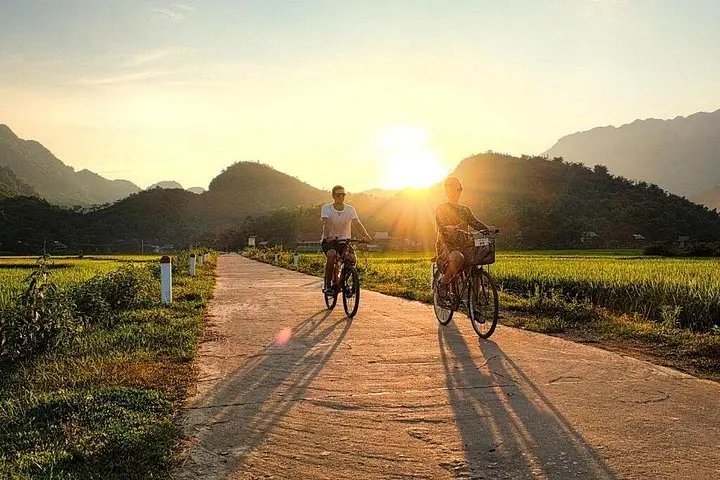
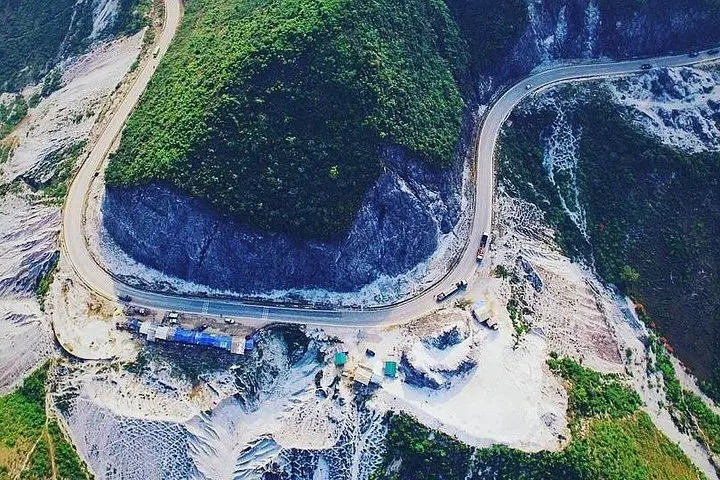
The bus eases off the highway and the world opens into a wide, green loaf of valley—rice paddies sliced by dirt tracks, stilt houses balanced on short stilts, and farmers who glance up as you pedal past. By late morning you stand at Thung Khe Pass, wind forcing the view open: Mai Chau valley folding away into low karst ridges. The first day moves at a comfortable rhythm—market stalls at the pass, a long lunch, then a relaxed bike ride through flat paddy dikes to a Thai stilt-house where the evening’s fire and food arrive like a slow benediction.
Verified experiences and guided adventures in the surrounding area.
Operated by Rose Tourist · Mai Chau, Hoa Binh
The bus eases off the highway and the world opens into a wide, green loaf of valley—rice paddies sliced by dirt tracks, stilt houses balanced on short stilts, and farmers who glance up as you pedal past. By late morning you stand at Thung Khe Pass, wind forcing the view open: Mai Chau valley folding away into low karst ridges. The first day moves at a comfortable rhythm—market stalls at the pass, a long lunch, then a relaxed bike ride through flat paddy dikes to a Thai stilt-house where the evening’s fire and food arrive like a slow benediction.
Mai Chau sits at the edge of Vietnam’s northern limestone country. Geologically it’s younger and gentler than the spike-like karsts near Ha Long; instead you’ll see rounded ridgelines and broad alluvial fans where streams once slowed and left their loads. Culturally, Mai Chau is home primarily to White Thai and Muong communities; their brocaded textiles and low- pitched communal houses are living practices, not museum pieces. Local markets—especially at Thung Khe—are places to buy hand-woven cloth, honey, and fermented rice wine alongside fresh produce.
The tour’s heart is slow travel: a roughly 10–15 km afternoon cycle on quiet tracks and small lanes, a short guided trek through three remote villages (Na Meo, Na Mo, Xam Pa) and an overnight in a homestay that keeps the focus on hospitality and local food. Expect simple comforts—mattresses and mosquito nets—but also the chance to learn weaving techniques and sample regional dishes cooked over wood fires.
Practicalities matter: the cycling is flat to gently rolling and suitable for basic mountain or hybrid bikes; the village trek is short (roughly 2 km of walking with intermittent stone steps and cumulative elevation gain near 150–250 m depending on route) but can be muddy after rain. Accommodations are communal; bring layers for cool nights and a rain shell during the green season. The tour runs as a shared group experience with English- and Vietnamese-speaking guides, round-trip transport, meals, and entrance fees included.
Best times are late autumn and spring for clear skies and comfortable temperatures; humid summers bring lush rice terraces but also afternoon showers. If you’re after authentic cultural contact without long logistics, this two-day loop is a compact, practical immersion: pedal, walk, eat, sleep, and leave with a clearer sense of northern Vietnam’s rural rhythms.
No—routes are largely flat and on quiet rural lanes; basic bike control and comfort riding 10–15 km is sufficient.
Homestays typically share common spaces; rooms may be communal or private depending on availability—expect simple facilities.
Yes—guides can arrange vegetarian or other simple dietary needs if notified at booking.
The tour includes round-trip transportation; after the second day you’ll be dropped off in Hanoi’s Old Quarter in the evening.
Bring small-denomination Vietnamese Dong and a reusable bag for textiles and food items; bargaining is polite but modest.
The trek is short but uneven; children and older travelers with limited mobility should assess their ability to manage steps and short climbs.
Rose Tourist operates guided outdoor trips and adventures with an emphasis on safety, stewardship, and memorable experiences.
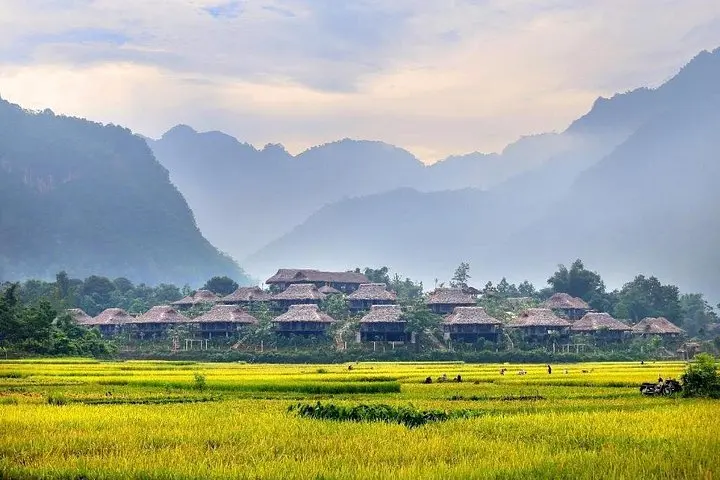
The bus eases off the highway and the world opens into a wide, green loaf of valley—rice paddies sliced by dirt tracks, stilt houses balanced on short stilts, and farmers who glance up as you pedal past. By late morning you stand at Thung Khe Pass, wind forcing the view open: Mai Chau valley folding away into low karst ridges. The first day moves at a comfortable rhythm—market stalls at the pass, a long lunch, then a relaxed bike ride through flat paddy dikes to a Thai stilt-house where the evening’s fire and food arrive like a slow benediction.
The bus eases off the highway and the world opens into a wide, green loaf of valley—rice paddies sliced by dirt tracks, stilt houses balanced on short stilts, and farmers who glance up as you pedal past. By late morning you stand at Thung Khe Pass, wind forcing the view open: Mai Chau valley folding away into low karst ridges. The first day moves at a comfortable rhythm—market stalls at the pass, a long lunch, then a relaxed bike ride through flat paddy dikes to a Thai stilt-house where the evening’s fire and food arrive like a slow benediction.
Mai Chau sits at the edge of Vietnam’s northern limestone country. Geologically it’s younger and gentler than the spike-like karsts near Ha Long; instead you’ll see rounded ridgelines and broad alluvial fans where streams once slowed and left their loads. Culturally, Mai Chau is home primarily to White Thai and Muong communities; their brocaded textiles and low- pitched communal houses are living practices, not museum pieces. Local markets—especially at Thung Khe—are places to buy hand-woven cloth, honey, and fermented rice wine alongside fresh produce.
The tour’s heart is slow travel: a roughly 10–15 km afternoon cycle on quiet tracks and small lanes, a short guided trek through three remote villages (Na Meo, Na Mo, Xam Pa) and an overnight in a homestay that keeps the focus on hospitality and local food. Expect simple comforts—mattresses and mosquito nets—but also the chance to learn weaving techniques and sample regional dishes cooked over wood fires.
Practicalities matter: the cycling is flat to gently rolling and suitable for basic mountain or hybrid bikes; the village trek is short (roughly 2 km of walking with intermittent stone steps and cumulative elevation gain near 150–250 m depending on route) but can be muddy after rain. Accommodations are communal; bring layers for cool nights and a rain shell during the green season. The tour runs as a shared group experience with English- and Vietnamese-speaking guides, round-trip transport, meals, and entrance fees included.
Best times are late autumn and spring for clear skies and comfortable temperatures; humid summers bring lush rice terraces but also afternoon showers. If you’re after authentic cultural contact without long logistics, this two-day loop is a compact, practical immersion: pedal, walk, eat, sleep, and leave with a clearer sense of northern Vietnam’s rural rhythms.