THE ADVENTURE COLLECTIVE® · Independent discovery and booking for outdoor travel

Escape Hanoi for two days of slow travel through Mai Châu Valley: a homestay night with Thai hospitality, easy cycling among rice paddies, a brief trek to remote hamlets, and panoramic views from Thung Khe Pass. Practical, immersive, and ideal for first-time visitors to northern Vietnam.
Escape Hanoi for two days of slow travel through Mai Châu Valley: a homestay night with Thai hospitality, easy cycling among rice paddies, a brief trek to remote hamlets, and panoramic views from Thung Khe Pass. Practical, immersive, and ideal for first-time visitors to northern Vietnam.
The bus eases out of Hanoi before dawn and the city’s clamour peels away into a long green hush. By mid-morning the road snakes up and over Thung Khe Pass, where mist lifts like a curtain and the valley below opens into fields that look engineered for slow travel. On arrival, a stilt house waits: wide-planked floors, a low wooden table, and the uncomplicated hospitality of a Thai ethnic family. The first deep breath of Mai Châu tastes like wet earth and warm rice smoke.
Verified experiences and guided adventures in the surrounding area.
Operated by Insight Vietnam · Mai Chau, Hoa Binh
The bus eases out of Hanoi before dawn and the city’s clamour peels away into a long green hush. By mid-morning the road snakes up and over Thung Khe Pass, where mist lifts like a curtain and the valley below opens into fields that look engineered for slow travel. On arrival, a stilt house waits: wide-planked floors, a low wooden table, and the uncomplicated hospitality of a Thai ethnic family. The first deep breath of Mai Châu tastes like wet earth and warm rice smoke.
Mai Châu’s valley sits at the meeting point of limestone ridges and low, folded hills. Those karst outcrops—hard gray stone sliced over millennia—frame the rice paddies that fill the basin. The area has long been home to Thai and Muong communities; wooden stilt houses and the handwoven brocades you’ll see are practical arts that also mark identity and history. The temporary market at Thung Khe Pass has been a crossroads for highland traders for decades: bring small bills to buy textiles and fermented banana wine directly from artisans.
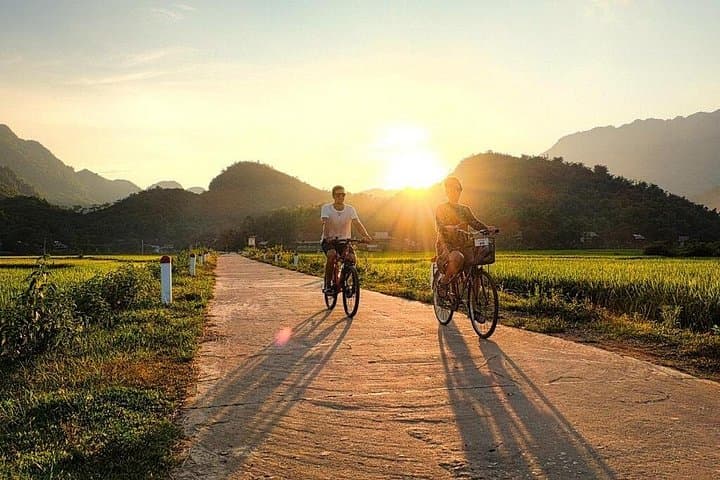
The tour’s rhythm is deliberately slow: a midday lunch of regional specialties, followed by a 2–3 hour cycling loop through a patchwork of paddies and village lanes. Expect flat to gently rolling terrain—perfect for easy pedaling and frequent stops to watch women at traditional looms. On day two a short ride and a 3–5 km trek thread you into more remote hamlets—Na Meo, Na Mo and Xam Pa—where terraces cut the slopes and buffalo graze in the fields.
Practical details matter here. The pass that gives you the postcard view climbs to roughly 1,000 m, so mornings can be cool; nights at the homestay are simple but comfortable with bedding provided. The itinerary includes round-trip transport from Hanoi (pickup around 7:00–7:30 in the Old Quarter), English-speaking guides, meals, and a homestay overnight. The cycling sections are beginner-friendly—bikes are routed along low-traffic village roads—but bring sturdy shoes for the short trek and a small daypack for water and camera gear.
If you want the photo everyone posts, stand at Thung Khe at first light or linger on the homestay porch at sunset when light washes the paddies in gold. Be considerate: ask before photographing people, remove shoes when entering homes, and carry out plastic. This two-day loop delivers cultural exchange and uncomplicated landscape—an accessible taste of northern Vietnam that rewards curiosity and slow travel.
Yes — guided cycling on low-traffic village roads is included; routes are mostly flat to gently rolling and suitable for beginners.
Pack modest clothing, a small towel, personal toiletries, and any preferred medications; bedding is provided by the homestay.
The tour offers regional dishes and can accommodate common diets if notified in advance — specify allergies or vegetarian needs when booking.
The trek portions are short—typically 3–5 km over rural trails—interspersed with cycling and guided village visits.
Return is scheduled around 19:00 to 20:00 in the Old Quarter, depending on traffic and group pace.
Yes — tours include guides fluent in Vietnamese and English as stated in the inclusions.
Insight Vietnam operates guided outdoor trips and adventures with an emphasis on safety, stewardship, and memorable experiences.
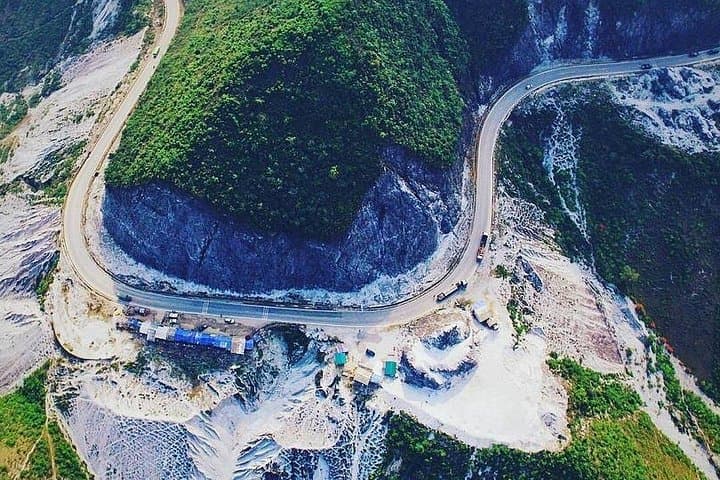
The bus eases out of Hanoi before dawn and the city’s clamour peels away into a long green hush. By mid-morning the road snakes up and over Thung Khe Pass, where mist lifts like a curtain and the valley below opens into fields that look engineered for slow travel. On arrival, a stilt house waits: wide-planked floors, a low wooden table, and the uncomplicated hospitality of a Thai ethnic family. The first deep breath of Mai Châu tastes like wet earth and warm rice smoke.
The bus eases out of Hanoi before dawn and the city’s clamour peels away into a long green hush. By mid-morning the road snakes up and over Thung Khe Pass, where mist lifts like a curtain and the valley below opens into fields that look engineered for slow travel. On arrival, a stilt house waits: wide-planked floors, a low wooden table, and the uncomplicated hospitality of a Thai ethnic family. The first deep breath of Mai Châu tastes like wet earth and warm rice smoke.
Mai Châu’s valley sits at the meeting point of limestone ridges and low, folded hills. Those karst outcrops—hard gray stone sliced over millennia—frame the rice paddies that fill the basin. The area has long been home to Thai and Muong communities; wooden stilt houses and the handwoven brocades you’ll see are practical arts that also mark identity and history. The temporary market at Thung Khe Pass has been a crossroads for highland traders for decades: bring small bills to buy textiles and fermented banana wine directly from artisans.
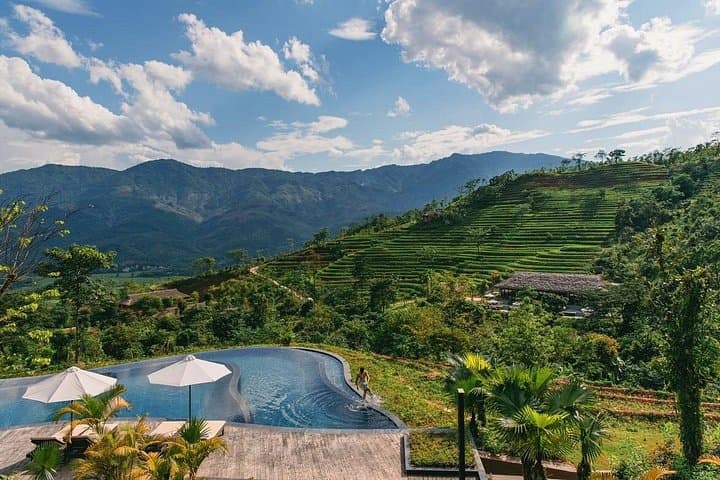
The tour’s rhythm is deliberately slow: a midday lunch of regional specialties, followed by a 2–3 hour cycling loop through a patchwork of paddies and village lanes. Expect flat to gently rolling terrain—perfect for easy pedaling and frequent stops to watch women at traditional looms. On day two a short ride and a 3–5 km trek thread you into more remote hamlets—Na Meo, Na Mo and Xam Pa—where terraces cut the slopes and buffalo graze in the fields.
Practical details matter here. The pass that gives you the postcard view climbs to roughly 1,000 m, so mornings can be cool; nights at the homestay are simple but comfortable with bedding provided. The itinerary includes round-trip transport from Hanoi (pickup around 7:00–7:30 in the Old Quarter), English-speaking guides, meals, and a homestay overnight. The cycling sections are beginner-friendly—bikes are routed along low-traffic village roads—but bring sturdy shoes for the short trek and a small daypack for water and camera gear.
If you want the photo everyone posts, stand at Thung Khe at first light or linger on the homestay porch at sunset when light washes the paddies in gold. Be considerate: ask before photographing people, remove shoes when entering homes, and carry out plastic. This two-day loop delivers cultural exchange and uncomplicated landscape—an accessible taste of northern Vietnam that rewards curiosity and slow travel.