THE ADVENTURE COLLECTIVE® · Independent discovery and booking for outdoor travel

Escape Hanoi for two days of cycling and homestay hospitality in Mai Chau Valley. Ride quiet lanes between rice paddies, visit Thai weaving houses, and sleep in a traditional stilt home for an intimate taste of northern Vietnam.
Escape Hanoi for two days of cycling and homestay hospitality in Mai Chau Valley. Ride quiet lanes between rice paddies, visit Thai weaving houses, and sleep in a traditional stilt home for an intimate taste of northern Vietnam.
The first morning out of Hanoi is a study in surrender: the city’s honks thin and are replaced by the snort of a diesel shuttle and the slow, encouraging green of rice fields unfolding like a map. By mid-morning the van climbs Thung Khe Pass and Mai Chau valley opens—broad bowl of paddy and low karst ridges—where the air seems to pull a fresh, cooling breath through your lungs.
Verified experiences and guided adventures in the surrounding area.
Operated by Alotour · Mai Chau, Hoa Binh Province
The first morning out of Hanoi is a study in surrender: the city’s honks thin and are replaced by the snort of a diesel shuttle and the slow, encouraging green of rice fields unfolding like a map. By mid-morning the van climbs Thung Khe Pass and Mai Chau valley opens—broad bowl of paddy and low karst ridges—where the air seems to pull a fresh, cooling breath through your lungs.
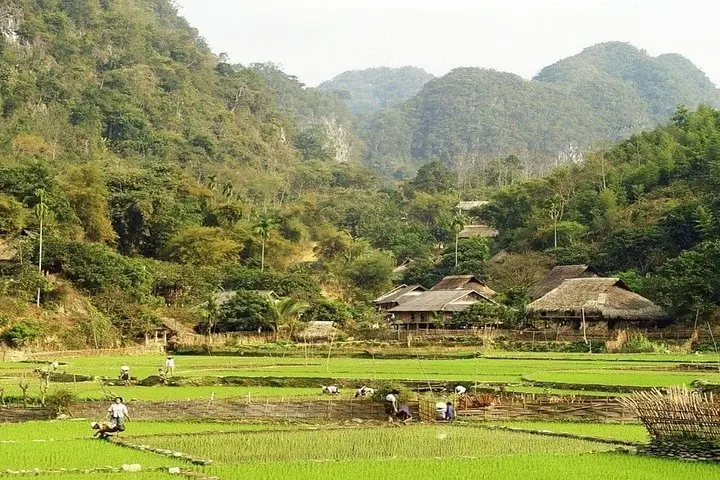
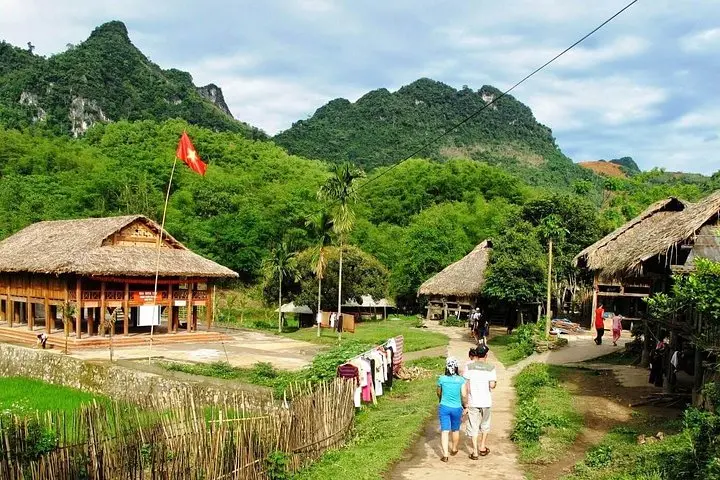
Mai Chau’s landscape is younger than the surrounding limestone towers of northern Vietnam; the valley floor is alluvial plain, shaped by centuries of riverine sediment. The Thai and Muong peoples have farmed these terraces for generations; their stilt houses sit on the lower slopes and edges of the flatland, elevated not as a flourish but to keep rice and life dry during the wet season.
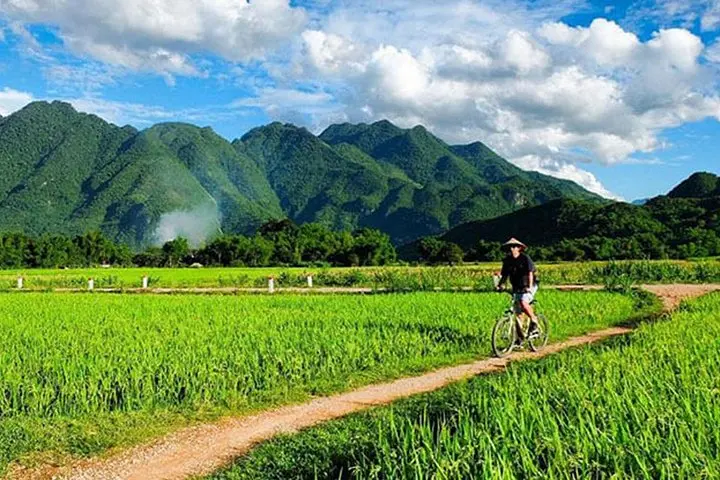
Culturally the valley is practical and tactile: weaving looms clack in open houses, and local brocades—minute geometric patterns made from hand-spun cotton—are as much currency of identity as they are market goods. Visiting a homestay here is less performance and more daily life: evening meals of smoked pork, sticky rice, and mountain herbs; morning cycles past water buffalo grazing at the paddy’s edge; conversations over tea about planting cycles and school schedules.
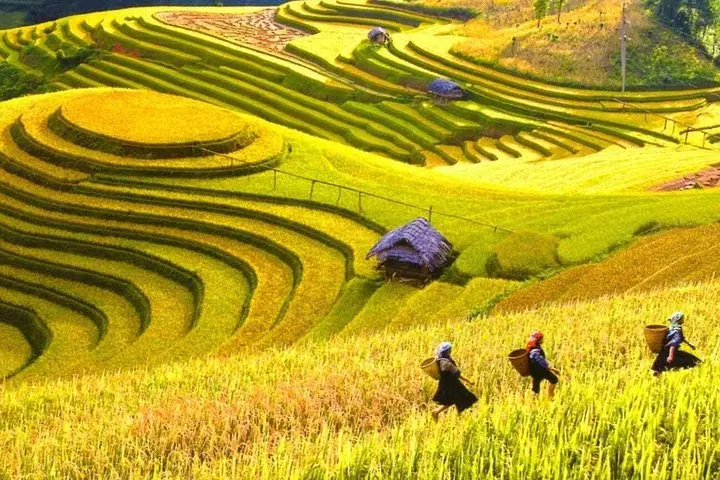
The tour balances easy sightseeing with active stretches: a 10–15 km afternoon cycle through flat valley lanes, a short trek the following morning to remote villages like Na Meo and Xam Pa, and time at the Thung Khe market at the pass where Muong traders display handmade wares. Guides point out how slopes become terraces and where seasonal irrigation channels divert life-giving water.
Practicalities matter: accommodation is a local homestay with simple comforts and shared bathrooms. Weather can change quickly—mornings are cool, afternoons warm and humid in summer. Bring a small daypack and expect to walk on uneven village tracks and muddy sections after rain.
Timing is everything: aim for the dry months (October–April) for clearer skies and easier cycling. The experience rewards low expectations—this is a place to slow down, listen to looms and night insects, and return to Hanoi with a clearer sense of the countryside that feeds the city.
If you want to prepare: break in your pedals and shoes, pack layers, and respect local customs—removing shoes before entering homes and asking before photographing people. This two-day excursion is compact, practical, and deliberately human-scale: a short trip that leaves the broader contours of northern Vietnam visible and inviting.
About 140–170 km depending on route; travel time is roughly 3.5–4.5 hours by van, with scenic stops en route.
Casual to moderate—routes are mostly flat valley roads with brief village tracks; basic bike-handling confidence is enough.
Overnight is in a local Thai-style homestay with shared facilities, simple bedding, and home-cooked meals.
Yes—lunch, dinner on day one and breakfast, lunch on day two are included; dietary restrictions can be accommodated if notified.
Yes, though infants must sit on an adult’s lap in transit; activities are family-friendly but check age guidelines when booking.
Light layers, a towel, toiletries, modest clothing for village visits, and cash for souvenirs and snacks.
Alotour operates guided outdoor trips and adventures with an emphasis on safety, stewardship, and memorable experiences.
The first morning out of Hanoi is a study in surrender: the city’s honks thin and are replaced by the snort of a diesel shuttle and the slow, encouraging green of rice fields unfolding like a map. By mid-morning the van climbs Thung Khe Pass and Mai Chau valley opens—broad bowl of paddy and low karst ridges—where the air seems to pull a fresh, cooling breath through your lungs.
The first morning out of Hanoi is a study in surrender: the city’s honks thin and are replaced by the snort of a diesel shuttle and the slow, encouraging green of rice fields unfolding like a map. By mid-morning the van climbs Thung Khe Pass and Mai Chau valley opens—broad bowl of paddy and low karst ridges—where the air seems to pull a fresh, cooling breath through your lungs.
Mai Chau’s landscape is younger than the surrounding limestone towers of northern Vietnam; the valley floor is alluvial plain, shaped by centuries of riverine sediment. The Thai and Muong peoples have farmed these terraces for generations; their stilt houses sit on the lower slopes and edges of the flatland, elevated not as a flourish but to keep rice and life dry during the wet season.
Culturally the valley is practical and tactile: weaving looms clack in open houses, and local brocades—minute geometric patterns made from hand-spun cotton—are as much currency of identity as they are market goods. Visiting a homestay here is less performance and more daily life: evening meals of smoked pork, sticky rice, and mountain herbs; morning cycles past water buffalo grazing at the paddy’s edge; conversations over tea about planting cycles and school schedules.
The tour balances easy sightseeing with active stretches: a 10–15 km afternoon cycle through flat valley lanes, a short trek the following morning to remote villages like Na Meo and Xam Pa, and time at the Thung Khe market at the pass where Muong traders display handmade wares. Guides point out how slopes become terraces and where seasonal irrigation channels divert life-giving water.
Practicalities matter: accommodation is a local homestay with simple comforts and shared bathrooms. Weather can change quickly—mornings are cool, afternoons warm and humid in summer. Bring a small daypack and expect to walk on uneven village tracks and muddy sections after rain.
Timing is everything: aim for the dry months (October–April) for clearer skies and easier cycling. The experience rewards low expectations—this is a place to slow down, listen to looms and night insects, and return to Hanoi with a clearer sense of the countryside that feeds the city.
If you want to prepare: break in your pedals and shoes, pack layers, and respect local customs—removing shoes before entering homes and asking before photographing people. This two-day excursion is compact, practical, and deliberately human-scale: a short trip that leaves the broader contours of northern Vietnam visible and inviting.