THE ADVENTURE COLLECTIVE® · Independent discovery and booking for outdoor travel

Escape Hanoi for a full day of cycling through emerald paddies, learning White Thai weaving, and dining with a homestay family in Mai Chau Valley. A balanced mix of easy cycling, cultural immersion, and hands-on craft work makes this a practical day trip for curious travelers.
Escape Hanoi for a full day of cycling through emerald paddies, learning White Thai weaving, and dining with a homestay family in Mai Chau Valley. A balanced mix of easy cycling, cultural immersion, and hands-on craft work makes this a practical day trip for curious travelers.
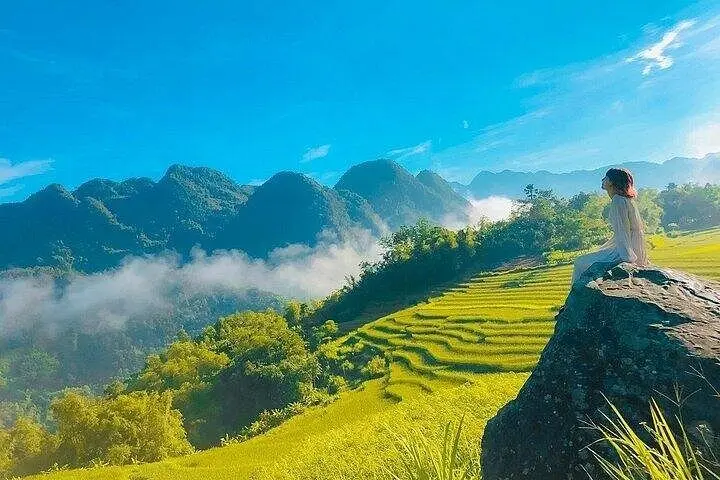
The day begins before dawn on a narrow street in Hanoi's Old Quarter, where the city’s honking and neon give way, gradually, to a quieter pulse. By the time the road curls up into limestone passes the air thins and the views open: ridges become stage flats, clouds sit low over terraced fields and a river below dares you to look down. Arriving in Mai Chau feels like stepping into a longer, slower rhythm — one measured in the creak of bamboo houses and the steady turn of bicycle wheels.
Verified experiences and guided adventures in the surrounding area.
Operated by Alotour · Mai Chau, Hoa Binh
The day begins before dawn on a narrow street in Hanoi's Old Quarter, where the city’s honking and neon give way, gradually, to a quieter pulse. By the time the road curls up into limestone passes the air thins and the views open: ridges become stage flats, clouds sit low over terraced fields and a river below dares you to look down. Arriving in Mai Chau feels like stepping into a longer, slower rhythm — one measured in the creak of bamboo houses and the steady turn of bicycle wheels.
Mai Chau is a valley carved by sandstone and limestone, held at roughly 700–800 meters elevation, where the White Thai people have farmed rice and woven cloth for centuries. The plain’s soils are alluvial; the surrounding karst ridges control drainage, funneling monsoon rains into a pattern of paddies and streams that sustain the valley’s small villages. Cultural history here is visible in architecture and craft: stilt houses, hand-dyed textiles, and the Hoa Ban Social Protecting Center, a community initiative that supports local women and keeps traditional weaving techniques alive.
The experience is organized as a full-day outing from Hanoi. Expect two or three hours of road travel each way through mountain passes, followed by roughly 10–15 kilometers of cycling on mostly flat to gently rolling village lanes, and a hands-on craft workshop. Terrain under wheel shifts from hard-packed dirt lanes to paved village roads; climbs are short and mild inside the valley, while the transfer road from Hanoi gains most of the elevation up to the plateau.
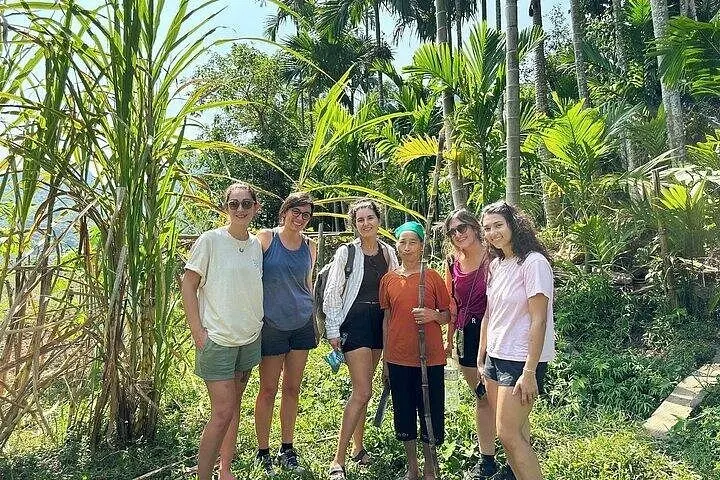
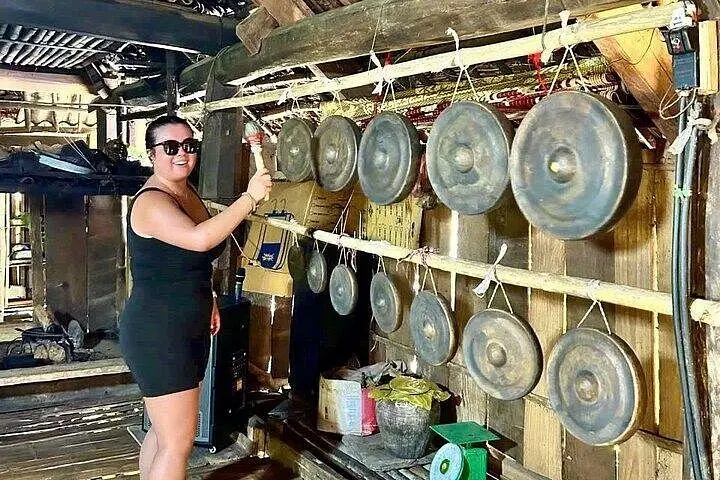
Beyond the logistics, the day trades in small human moments: a guide explaining natural dye methods, a grandmother showing a shuttle technique, children trailing the group on scooters. Lunch at the homestay is local and generous — sour-sweet fish, sticky rice, crispy fried greens — a practical reminder that this is agrarian life paced by harvest and season.
Practical advice matters. Start early; the van returns in the evening. Wear closed-toe shoes with some tread for farm tracks, bring a rain shell in monsoon months, and pack a refillable bottle — Mai Chau is remote enough that water access between stops can be limited. If you want photos, the low morning and late-afternoon light flatters the paddies and houses; midday is best for the workshop when colors pop.
For travelers who want authenticity without roughing it, this is efficient: a guided loop that balances cycling, cultural immersion and craft time with a local host family. It’s not a technical ride, but it is a day that rewards curiosity: ask about patterns on fabrics, the names of wild herbs on the trail, and the seasons that shape rural life here. Leave space for unplanned conversation — that’s where the valley’s real rhythm shows itself.
Expect roughly 3–3.5 hours each way depending on traffic and road conditions; the route climbs to around 700–800 meters elevation.
Yes; the cycling is on flat to rolling village lanes and covers about 10–15 km total, with a guide to set pace and routes.
Participants typically learn natural dyeing and basic weaving or embroidery techniques and complete a small fabric piece to take home.
Yes; lunch prepared by the host family is included and features local Mai Chau specialties.
Children can participate, but the tour notes infants must sit on laps and recommends moderate fitness; check with the operator for age limits.
Trips may be canceled for bad weather; bring a rain jacket and the organizer may adjust routes to avoid slippery tracks.
Alotour operates guided outdoor trips and adventures with an emphasis on safety, stewardship, and memorable experiences.

The day begins before dawn on a narrow street in Hanoi's Old Quarter, where the city’s honking and neon give way, gradually, to a quieter pulse. By the time the road curls up into limestone passes the air thins and the views open: ridges become stage flats, clouds sit low over terraced fields and a river below dares you to look down. Arriving in Mai Chau feels like stepping into a longer, slower rhythm — one measured in the creak of bamboo houses and the steady turn of bicycle wheels.
The day begins before dawn on a narrow street in Hanoi's Old Quarter, where the city’s honking and neon give way, gradually, to a quieter pulse. By the time the road curls up into limestone passes the air thins and the views open: ridges become stage flats, clouds sit low over terraced fields and a river below dares you to look down. Arriving in Mai Chau feels like stepping into a longer, slower rhythm — one measured in the creak of bamboo houses and the steady turn of bicycle wheels.
Mai Chau is a valley carved by sandstone and limestone, held at roughly 700–800 meters elevation, where the White Thai people have farmed rice and woven cloth for centuries. The plain’s soils are alluvial; the surrounding karst ridges control drainage, funneling monsoon rains into a pattern of paddies and streams that sustain the valley’s small villages. Cultural history here is visible in architecture and craft: stilt houses, hand-dyed textiles, and the Hoa Ban Social Protecting Center, a community initiative that supports local women and keeps traditional weaving techniques alive.
The experience is organized as a full-day outing from Hanoi. Expect two or three hours of road travel each way through mountain passes, followed by roughly 10–15 kilometers of cycling on mostly flat to gently rolling village lanes, and a hands-on craft workshop. Terrain under wheel shifts from hard-packed dirt lanes to paved village roads; climbs are short and mild inside the valley, while the transfer road from Hanoi gains most of the elevation up to the plateau.
Beyond the logistics, the day trades in small human moments: a guide explaining natural dye methods, a grandmother showing a shuttle technique, children trailing the group on scooters. Lunch at the homestay is local and generous — sour-sweet fish, sticky rice, crispy fried greens — a practical reminder that this is agrarian life paced by harvest and season.
Practical advice matters. Start early; the van returns in the evening. Wear closed-toe shoes with some tread for farm tracks, bring a rain shell in monsoon months, and pack a refillable bottle — Mai Chau is remote enough that water access between stops can be limited. If you want photos, the low morning and late-afternoon light flatters the paddies and houses; midday is best for the workshop when colors pop.
For travelers who want authenticity without roughing it, this is efficient: a guided loop that balances cycling, cultural immersion and craft time with a local host family. It’s not a technical ride, but it is a day that rewards curiosity: ask about patterns on fabrics, the names of wild herbs on the trail, and the seasons that shape rural life here. Leave space for unplanned conversation — that’s where the valley’s real rhythm shows itself.