
Mai Chau Day Escape: Cycling Rice-Paddy Trails & Thai Homestays from Hanoi
Leave Hanoi for a day and trade traffic for rice paddies, mountain passes and a family-style lunch in a Thai homestay. This one-day Mai Chau tour combines a scenic drive over Thung Khe pass with walking or cycling through villages, cultural exchanges and photo-ready valley views.
An Adventure In Hanoi.
Leave Hanoi for a day and trade traffic for rice paddies, mountain passes and a family-style lunch in a Thai homestay. This one-day Mai Chau tour combines a scenic drive over Thung Khe pass with walking or cycling through villages, cultural exchanges and photo-ready valley views.
Read the full experience
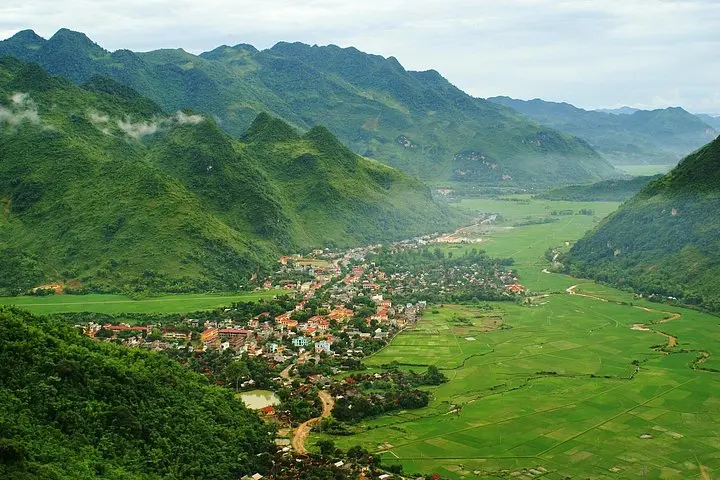
The bus eases out of Hanoi before sunrise and the city’s clamor thins to a steady hum. By the time the road climbs toward Thung Khe pass, limestone spires lean over the highway like watchful neighbors and a market on the ridge appears—vendors arranging baskets of mountain greens, spices and sticky rice as trucks roll past. From that high vantage the Mai Chau valley unfolds: a green bowl worked into terrace and field, dotted with low stilt houses and a handful of villages whose rhythms still follow daylight and water.
The bus eases out of Hanoi before sunrise and the city’s clamor thins to a steady hum. By the time the road climbs toward Thung Khe pass, limestone spires lean over the highway like watchful neighbors and a market on the ridge appears—vendors arranging baskets of mountain greens, spices and sticky rice as trucks roll past. From that high vantage the Mai Chau valley unfolds: a green bowl worked into terrace and field, dotted with low stilt houses and a handful of villages whose rhythms still follow daylight and water.
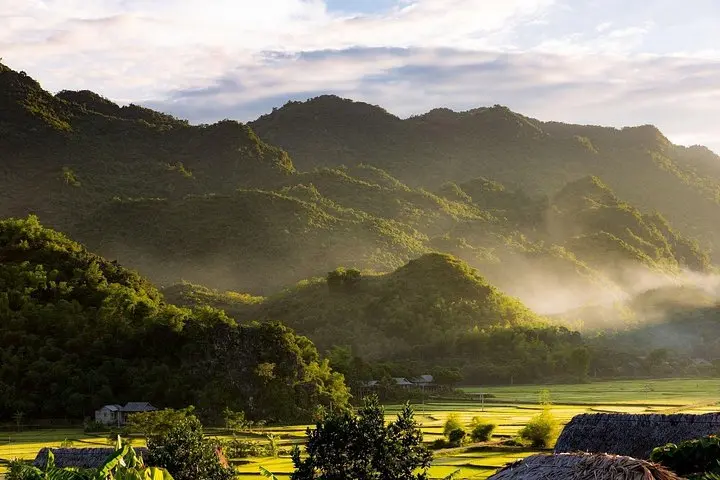
Mai Chau sits in Hoa Binh province and has long been a crossroads of ethnic communities—primarily the White Thai and nearby Muong people—who transformed the valley into a productive, low-elevation basin at roughly 400–600 meters above sea level. The karst geology of northern Vietnam frames the valley; the same limestone that forms dramatic passes also feeds clear springs that irrigate the paddy fields. The stilted Thai homes you visit are practical constructions raised to stay dry during monsoon swell and to store the harvest beneath.
This full-day tour is built for immersion: a three- to four-hour drive each way from Hanoi, a lunch in a family-run Thai homestay, and a guided walk or easy bike ride that winds through lanes between fields, past water buffalo grazing and kitchens firing up afternoon meals. Guides introduce local handicraft techniques, rice-growing cycles and the social role of communal houses where festivals and weddings still gather the village. There’s an option to tour by electric vehicle if you prefer to cover more ground with less effort.
Practical details matter. The day is long but low-impact: expect roughly 6–12 km of walking or cycling on flat, paved and dirt lanes, with minimal elevation gain. Pack sun protection and bring a refillable water bottle; the tour provides bottled water but refilling reduces waste. Bring small bills if you want to buy textiles or a snack at the market on Thung Khe. Respect local customs by asking before photographing people and removing shoes inside stilt houses.
Timing tip: travel outside the heavy monsoon months for dryer paths and clearer vistas—October through April offers crisp air and golden light. If you want fewer crowds, aim for weekdays and avoid national holidays when markets and homestays are busiest.
For travelers who want a hands-on cultural touch, volunteering to help with a simple rice task or joining a home-cooked dinner will deepen the experience. Mai Chau rewards quiet attention: the valley does not shout for your notice, it invites you to move with it, following irrigation channels and village lanes until the return trip to the city slows and the valley’s green recedes into distant hills.
Frequently asked questions
Expect roughly 3–4 hours each way depending on traffic and stops at viewpoints like Thung Khe pass.
No; routes are mostly flat in the valley and bikes provided are suitable for casual riders—choose walking if you prefer a gentler pace.
The tour includes hotel pickup, air-conditioned vehicle, lunch at a Thai homestay, bottled water and local admissions listed in the itinerary.
Homestays offer clean, simple rooms and home-cooked meals—expect basic comforts and friendly hospitality rather than luxury amenities.
Yes; the operator notes they can handle vegetarian, vegan and gluten-free requests if indicated at booking.
Infants must sit on an adult's lap during transport; the day is family-friendly but long, so consider pace and nap schedules.
About This Experience
Red Gecko Travel operates guided outdoor trips and adventures with an emphasis on safety, stewardship, and memorable experiences.
Adventure tips
Recommended gear
- Comfortable walking shoes: Sturdy flats or trainers handle paved lanes and muddy stretches after rain.
- Refillable water bottle: Hydration is key on a long day; refilling reduces plastic waste.
- Sun protection (hat + sunscreen): Valley lanes have little shade during midday, so protect skin and eyes.
- Light rain jacket: Quick storms can appear—packable rainwear keeps you comfortable during sudden showers.
Photos of the experience
Related adventures & guides
Read the full experience
The bus eases out of Hanoi before sunrise and the city’s clamor thins to a steady hum. By the time the road climbs toward Thung Khe pass, limestone spires lean over the highway like watchful neighbors and a market on the ridge appears—vendors arranging baskets of mountain greens, spices and sticky rice as trucks roll past. From that high vantage the Mai Chau valley unfolds: a green bowl worked into terrace and field, dotted with low stilt houses and a handful of villages whose rhythms still follow daylight and water.
The bus eases out of Hanoi before sunrise and the city’s clamor thins to a steady hum. By the time the road climbs toward Thung Khe pass, limestone spires lean over the highway like watchful neighbors and a market on the ridge appears—vendors arranging baskets of mountain greens, spices and sticky rice as trucks roll past. From that high vantage the Mai Chau valley unfolds: a green bowl worked into terrace and field, dotted with low stilt houses and a handful of villages whose rhythms still follow daylight and water.
Mai Chau sits in Hoa Binh province and has long been a crossroads of ethnic communities—primarily the White Thai and nearby Muong people—who transformed the valley into a productive, low-elevation basin at roughly 400–600 meters above sea level. The karst geology of northern Vietnam frames the valley; the same limestone that forms dramatic passes also feeds clear springs that irrigate the paddy fields. The stilted Thai homes you visit are practical constructions raised to stay dry during monsoon swell and to store the harvest beneath.
This full-day tour is built for immersion: a three- to four-hour drive each way from Hanoi, a lunch in a family-run Thai homestay, and a guided walk or easy bike ride that winds through lanes between fields, past water buffalo grazing and kitchens firing up afternoon meals. Guides introduce local handicraft techniques, rice-growing cycles and the social role of communal houses where festivals and weddings still gather the village. There’s an option to tour by electric vehicle if you prefer to cover more ground with less effort.
Practical details matter. The day is long but low-impact: expect roughly 6–12 km of walking or cycling on flat, paved and dirt lanes, with minimal elevation gain. Pack sun protection and bring a refillable water bottle; the tour provides bottled water but refilling reduces waste. Bring small bills if you want to buy textiles or a snack at the market on Thung Khe. Respect local customs by asking before photographing people and removing shoes inside stilt houses.
Timing tip: travel outside the heavy monsoon months for dryer paths and clearer vistas—October through April offers crisp air and golden light. If you want fewer crowds, aim for weekdays and avoid national holidays when markets and homestays are busiest.
For travelers who want a hands-on cultural touch, volunteering to help with a simple rice task or joining a home-cooked dinner will deepen the experience. Mai Chau rewards quiet attention: the valley does not shout for your notice, it invites you to move with it, following irrigation channels and village lanes until the return trip to the city slows and the valley’s green recedes into distant hills.
Make a day of it nearby.
Verified experiences and guided adventures in the surrounding area.