THE ADVENTURE COLLECTIVE® · Independent discovery and booking for outdoor travel

Leave Hanoi for a full day in Mai Chau where Thung Khe Pass, Mo Luong Cave and quiet rice-valley rides reveal Vietnam's karst highlands and Thai minority culture. This guided small-group day trip blends scenic overlooks, local craft visits and a countryside bike route—ideal for travelers who want active exploration with practical comfort.
Leave Hanoi for a full day in Mai Chau where Thung Khe Pass, Mo Luong Cave and quiet rice-valley rides reveal Vietnam's karst highlands and Thai minority culture. This guided small-group day trip blends scenic overlooks, local craft visits and a countryside bike route—ideal for travelers who want active exploration with practical comfort.
The morning starts before the city fully wakes: a limousine mini-van slips away from Hanoi's Old Quarter and we peel north into a landscape that makes the commuter grid feel like a different life. By the time the road climbs into Thung Khe Pass, limestone spires loom like an impatient audience and the wind pushes a cool, clean taste of the highlands into the van. From the overlook you can see the Mai Chau valley spread below—rice paddies threaded with tiny stilt houses—and Mo Luong Cave's mouth carved into Pu Kha Mountain, shadows swallowing the entrance like a slow exhale.
Verified experiences and guided adventures in the surrounding area.
Operated by Local Tours HALONG · Mai Châu, Hòa Bình
The morning starts before the city fully wakes: a limousine mini-van slips away from Hanoi's Old Quarter and we peel north into a landscape that makes the commuter grid feel like a different life. By the time the road climbs into Thung Khe Pass, limestone spires loom like an impatient audience and the wind pushes a cool, clean taste of the highlands into the van. From the overlook you can see the Mai Chau valley spread below—rice paddies threaded with tiny stilt houses—and Mo Luong Cave's mouth carved into Pu Kha Mountain, shadows swallowing the entrance like a slow exhale.
This route has shaped people and place for millennia. The karst geology—limestone dissolved by rain and time—creates caves and dramatic cliffs that early traders and later colonial maps noted as natural waypoints. Mai Chau itself is home to the White Thai community, who settled terraces and woven craft traditions into the valley; visiting a family workshop still feels like sitting inside a living archive of pattern and patience.
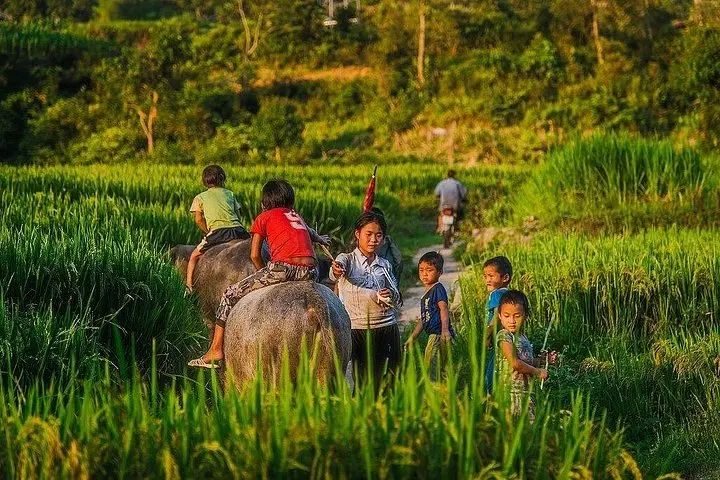
The day is paced: Thung Khe opens the curtain, Mo Luong reveals its slow-water-carved stalactites, and a long lunch of regional dishes gives a practical pause—stews, grilled fish and sticky rice that steady your legs for the ride ahead. The biking section is quietly memorable: country lanes that hug limestone ribs, narrow paths between paddies that reflect the sky, villagers moving with the same steady rhythm as the land. Farmers and water buffalo shoulder their routines into the background, allowing travelers a passing glimpse of everyday life.
Practicality matters here. The full-day itinerary is long—expect an early pick-up in Hanoi and a return after dusk—so plan for hydration, sun protection and a comfortable saddle. The cycling is mostly flat to rolling, on high-quality sports bikes provided by the operator, but basic bike handling and an ability to stay seated in the saddle for 45–60 minutes at a stretch help. Bring small bills for local purchases and be mindful when photographing people: ask first and respect local customs.
For travelers who want the essentials: go light, go early, and leave a little room in your schedule. Mai Chau rewards slowing down—its caves, passes and rice fields don’t rush, and if you match that pace you’ll leave with a sharper sense of place and the kind of quiet stories that travel is best at creating.
Pickup is arranged in Hanoi Old Quarter—provide your hotel name and address at booking; the operator confirms pickup time by email or WhatsApp.
The cycling route is mostly flat to rolling across village lanes and paddies; basic fitness and bike handling suffice.
A traditional lunch and three bottles of water per person are included; the operator can accommodate dietary requirements if requested at booking.
Children can join but must be supervised; check with the operator for child seat or bike size availability.
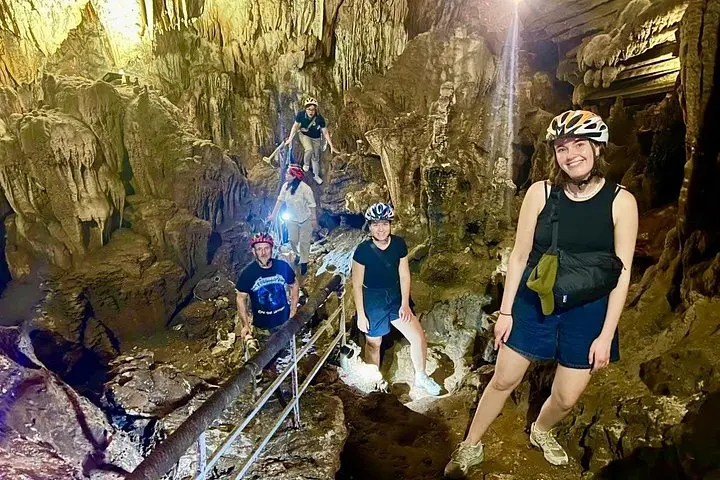
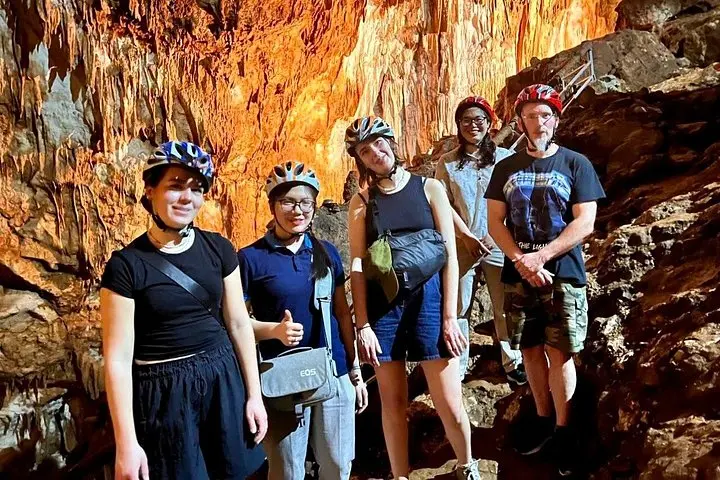
Bring a small flashlight or use your phone light, wear shoes with good grip and expect uneven, sometimes damp surfaces in Mo Luong Cave.
The tour involves some walking on uneven ground and cycling; it’s marked suitable for general fitness levels but not for those with serious mobility restrictions.
Local Tours HALONG operates guided outdoor trips and adventures with an emphasis on safety, stewardship, and memorable experiences.
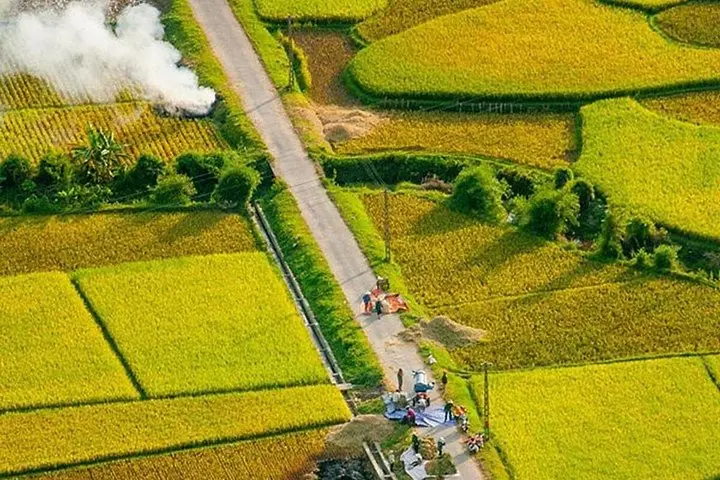
The morning starts before the city fully wakes: a limousine mini-van slips away from Hanoi's Old Quarter and we peel north into a landscape that makes the commuter grid feel like a different life. By the time the road climbs into Thung Khe Pass, limestone spires loom like an impatient audience and the wind pushes a cool, clean taste of the highlands into the van. From the overlook you can see the Mai Chau valley spread below—rice paddies threaded with tiny stilt houses—and Mo Luong Cave's mouth carved into Pu Kha Mountain, shadows swallowing the entrance like a slow exhale.
The morning starts before the city fully wakes: a limousine mini-van slips away from Hanoi's Old Quarter and we peel north into a landscape that makes the commuter grid feel like a different life. By the time the road climbs into Thung Khe Pass, limestone spires loom like an impatient audience and the wind pushes a cool, clean taste of the highlands into the van. From the overlook you can see the Mai Chau valley spread below—rice paddies threaded with tiny stilt houses—and Mo Luong Cave's mouth carved into Pu Kha Mountain, shadows swallowing the entrance like a slow exhale.
This route has shaped people and place for millennia. The karst geology—limestone dissolved by rain and time—creates caves and dramatic cliffs that early traders and later colonial maps noted as natural waypoints. Mai Chau itself is home to the White Thai community, who settled terraces and woven craft traditions into the valley; visiting a family workshop still feels like sitting inside a living archive of pattern and patience.
The day is paced: Thung Khe opens the curtain, Mo Luong reveals its slow-water-carved stalactites, and a long lunch of regional dishes gives a practical pause—stews, grilled fish and sticky rice that steady your legs for the ride ahead. The biking section is quietly memorable: country lanes that hug limestone ribs, narrow paths between paddies that reflect the sky, villagers moving with the same steady rhythm as the land. Farmers and water buffalo shoulder their routines into the background, allowing travelers a passing glimpse of everyday life.
Practicality matters here. The full-day itinerary is long—expect an early pick-up in Hanoi and a return after dusk—so plan for hydration, sun protection and a comfortable saddle. The cycling is mostly flat to rolling, on high-quality sports bikes provided by the operator, but basic bike handling and an ability to stay seated in the saddle for 45–60 minutes at a stretch help. Bring small bills for local purchases and be mindful when photographing people: ask first and respect local customs.
For travelers who want the essentials: go light, go early, and leave a little room in your schedule. Mai Chau rewards slowing down—its caves, passes and rice fields don’t rush, and if you match that pace you’ll leave with a sharper sense of place and the kind of quiet stories that travel is best at creating.